
Hear From Your Local Experts
The Allied Care Connect Podcast brings you conversations with allied health professionals across Calgary, Cochrane and Alberta. Learn what they do, who they help, and how to find the right practitioner for you.
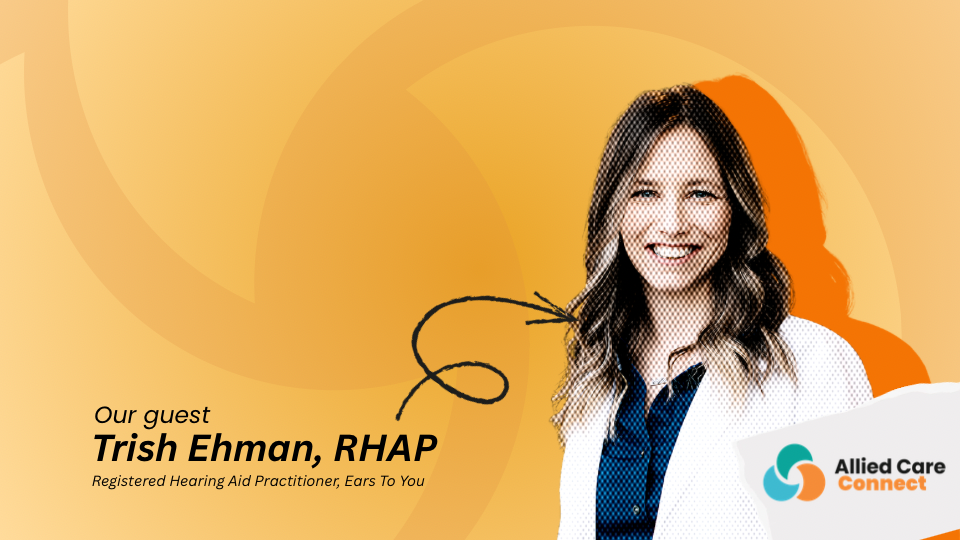
Hearing and Brain Health with Trish Ehman, Calgary, Alberta
Transcript Transcript note: this transcript was generated automatically and lightly cleaned for readability. [...] marks a word or phrase that could not be made out in the recording, and [unclear] marks words that were heard but could not be confirmed. Timestamps are approximate. Allied Care Connect (00:00)Today I'm joined by Trish Ehman, a Registered Hearing Aid Practitioner and the owner of Ears To You Calgary. Trish has 14 years of experience in hearing care and her team won a Canadian Choice Award. Ears To You is a mobile hearing clinic that brings hearing care to people, including [...] Today we're also talking about why hearing is so important for brain health. Welcome, Trish. Trish Ehman (00:33)Thank you for having me, I'm excited. Allied Care Connect (00:35)Awesome. So we'll dive into the first question. What drew you to hearing care, and what led you to take over the Ears To You franchise in Calgary? Trish Ehman (00:46)Well, while I was in school I was trying to actually get into social work and I didn't get in when I first applied and so I took a year of a program called Human Services Foundation. So it's basically a year to help you figure out what area of Human Services you want to be in and while I was in there I had met a couple people in this industry and had the opportunity to do some volunteering at a hearing clinic and also at a manufacturer as well and just realized it really fits me very well. I get to help people every day but maybe not in quite the same emotional capacity that social work would have led me down and I really like all the techy stuff and just learning about all these like changes as the years progress and so... And then they just talked about how it was a good opportunity to run your own business, which I didn't do for a long time, but now that I'm here, it's been good. I was working at a traditional clinic for over a decade, and just saw a huge need for better access to care. A lot of people don't realize that hearing care is not a one and done appointment. There's a lot of appointments in the initial stages and then follow up over the maintenance of hearing aids, and regular checkups, that kind of thing. So I was seeing a lot of my patients just not being able to keep up with getting to me all the time. And so I had sought out to start to buy a van and start a clinic and I happened to find Ears To You. I joined them as an employee in 2023. And then I bought the franchise, the very first franchise a couple months later. So it's been about three years now. Allied Care Connect (02:46)Wow. That's been a journey. Trish Ehman (02:48)It has been a very, very big and hard and rewarding journey. Allied Care Connect (02:52)Yeah. Okay, so for listeners who have never met one, what does a hearing aid practitioner do day to day? Trish Ehman (03:04)So we test the adult population, we test their hearing and work with just the 18 plus. And so typically you would find us in most cases in a clinic setting. So in a clinic where we do hearing tests and then fit people with hearing aids. But sometimes some clinicians may go working for a manufacturer to keep up with the research or training of different products, but that's just different from what an audiologist is able to do. So they have a much wider scope of practice and they are able to work with children and in some bit more of a medical... Allied Care Connect (03:46)Okay. So why does hearing matter so much for brain health? That's my first question. Trish Ehman (03:58)There's been so much research over the last four or five years shows how much untreated hearing loss affects our brains and like any muscle in our body, if you don't use it, you lose it. And hearing loss creeps up on us really slowly and the symptoms of it are not always very obvious. But there's been the last few years, some really interesting studies that has actually shown that untreated hearing loss puts it at a much higher risk for dementia and Alzheimer's. It's not to say it's going to cause one of those things but if you're already predisposed to it genetically or because of other health concerns then you have a much higher risk for it to progress and progress a lot quicker. And it's, I mean, it's such important information but I also, you know, don't want to use that as a scare tactic either. It's really just to be informative and really focus more on being preventative about our health as we are getting older. I always say to my patients, like, yes, we're living longer. Hearing loss is a normal part of just living, like from the time we're born to the time we die. We are losing our hearing, but that doesn't mean we shouldn't do something about it, right? And because we're living so much longer, we want to make sure we're actually living well and communication, being able to communicate with the people is one of the, I think, number one things that matter for how fast we decline as well. We need to be able to, we're social beings and we need to be able to stay in those environments that we love. We hear our environment, we hear the voice of our loved ones, we hear the barks or the meows of pets and also music, which is a big part of brain development and brain maintenance as well. Allied Care Connect (06:07)Okay, so what are some of the early signs of hearing loss do people tend to miss in themselves or in a parent? Trish Ehman (06:18)Well, a lot of times it's easier to see it on others than it is yourself, excuse me. Because that's a lot of times when people come to see us, it's like their family has already been bugging them, right? And a lot of the signs are really, really small. Things like turning up the TV just slightly, and you know, someone you live with is finding it's a bit too loud. But the really interesting thing about TV is we can turn the volume up louder, but it doesn't always mean it's actually easier to hear. And so that's usually a question I ask people, like, is it actually make it better or not? Because as we lose our hearing, it's more about clarity of sound and voices than it's just about volume. Like we can make it louder, but is the brain actually processing? So that's one thing. But it's things like, when you're in a social environment, there's background noise. Are you having to focus harder? Are you having to put more effort? A lot of people will say to me, well, I can hear it, so it's fine. People who just need to talk louder or talk slower. But if we're having to rely a bit more on visual cues, which our brain is really smart, and we'll just start doing, even realizing, or if we're just more tired after a social get together, because we've had to put a lot more energy and focus. The amount of people during COVID that would tell me they didn't realize they had hearing loss until everyone was wearing masks and they couldn't read lips anymore, right? And you don't even realize you're doing it, but your brain, it learns how to fill in the gaps. So, you know, it will use those visual cues, like our visual improves our communication by like 30%, like a huge amount. And also just, like, the context of conversations, right? So if you kind of know what's being talked about, your brain is just filling in a lot of the gaps for the words you've missed. I don't even realize it's happening. So it's like when you start to notice you need to face people to hear them better, right? If they turn when they're, and they're walking away while they're saying something, like those are all really, really like the first minor signs. And then it's just a matter of people no longer enjoying some of those more challenging environments because they're so hard to hear, right? Those are like further along, but those little mini signs are much easier to miss. And with the most common type of hearing loss, one to one conversations are no problem. Like we don't even notice it's an issue, right? It's just these other environments, there's a bit of noise or there's the TV speaker that was not very good quality or something else that is challenging. And a lot of people will say, I don't want to hear all those things, right? Like you're saying, the dog barking or the floor creak, or, hey, my fridge has a hum. And so we just think, well, that speech is important in the conversations, which of course, that's what usually brings us in to have these appointments. But our brain is learning how, like when we have normal hearing, our brain filters the unwanted sounds. [...] we lose the ability to do that. So it kind of is the challenging part when someone gets hearing aids, and I'm getting a little off topic. Sorry. It's usually the challenging part is hearing aids will bring back everything that you've been missing, whether it's something you actually want to hear or not. And your brain needs time to retrain and learn how to filter those unwanted sounds. But that's what helps you when you're in a noisy environment, is it's learned how to filter some of the sounds happening around so you can focus on the person you actually want to be hearing, which is typically the person in front of you or at the table. It can take a bit of work up front to get used to hearing everything again. So yeah. Allied Care Connect (10:37)Yeah, it's fascinating. So hearing really is more than just sensory input. It's like a big chunk of it is the brain processing and filtering out what is important. Trish Ehman (10:48)Like a lot of the research has come in now and why, I mean, I love to get into environments like this, that you've given me the opportunity to share that, because that's the thing. But saying before, like we can turn up the volume of the sound and the ear will get the sound, but the process from the ear to the brain is sometimes where that disconnect happens. And so the longer we have a hearing loss that is not being treated, the harder it is to get that connection going again as well. And so we can improve the hearing a lot, but if that connection is damaged, and really damaged... And with time, it can come back quite a bit, but it takes time and that's where the challenging part comes in. Like any good rehab, like I joke with people, it's like any physio. If you injure your arm or your leg, you're not going to one physio appointment and then it's all better. It takes time and that's a really big part of why a[...] always wear their hearing aids, which is another topic for another day. Allied Care Connect (12:01)But it's actually my next question. Trish Ehman (12:03)I have a whole presentation that I do on why do hearing aids end up in drawers, because the biggest part is that, like, those first few months... So I'll let you ask the question maybe and then I'll keep going. Allied Care Connect (12:19)I just want to add, so I think it's really important to have relationship with their hearing aid practitioner. Because that, again, like you said, it's retraining the brain. Trish Ehman (12:33)Yeah. You want to find someone that you trust and can be comfortable with, because I hate comparing myself to certain sales people. I used to compare myself to a car salesman because you're making a large purchase. You don't always know much about what you're buying, which is not great, but it's really about having the trust in the person that you're working with to be able to ask the right questions, to know that you're making a good decision, and you have someone that you can feel comfortable enough asking what you need, right? If something's not working, if there's a problem, you got hearing aids and they don't fit well, they're hurting, they're hard to put in, whatever it is, those early stages are so important that you have someone that you really trust, because you can talk to them about what's not working well, and they'll be okay to help you through it. Tell you what's normal about the adjustment, what's not, what options to make things better. That's actually a really important part of the success of someone getting hearing aids and treating their hearing, is having trust in the provider that they're working with, for sure. Allied Care Connect (13:50)Yeah, yeah, yeah. Amazing, amazing. So my next question is, like, why do you think, just based on your experience with clients, why do you think people wait years to get their hearing checked? Trish Ehman (14:07)Um, I think there's a mixture of reasons. One is that for a long time, hearing aids weren't really very good, so the technology wasn't there to be able to, I mean, it would improve hearing for sure. But the quality of the sound and the way it could improve, especially in background, right? Like that's the number one complaint that we hear as you start to lose your hearing, in noisy social environments, and hearing aids' ability to improve the hearing in that was limited. And so I would say over the last five years that's come a huge long way, but I mean it sticks in people's heads, right? You spend a lot of money on hearing aids, but really it's not just the device, and that's again another topic for another day, but you're spending a lot, you're investing in something that you want to make yourself better. [...] go well, it's really easy to get discouraged, or, you know, people talk, and so you can have some friends who paid some money to better themselves and it didn't work out. [...] That side of it, but the technology has come such a long way. I kind of joke now that my job isn't as difficult when it comes to actually helping people to hear better, like the hearing aids have come a long way. There's a lot of, like, research and testing that tells us how to program a hearing aid, so as long as you're doing all of those things to make sure that they're set up correctly, that part is usually the easy part now. It's like Bluetooth, my job is like Bluetooth troubleshooting all the time. You know, if iPhone doesn't update and now my hearing aids won't connect with the phone anymore. I joke, like, sometimes we're busier with that than just actual the sound quality of the devices is a problem. So there's definitely that, and then it's also that adjustment period at the beginning. So this is the number one thing. So with our clinic we have a program that we call our ReConnect program, and it's over a certain amount of time to make sure that we're setting something up for someone that's customized to them and their needs, like learning about them, what is the most important thing about getting a hearing aid, whether it's, you know, cosmetics, the fit, the ease of use, you want all the technology and all the bells and whistles, or you just want something super simple, right? So it's really understanding someone's needs, their lifestyle, and then also that time in early days of adjusting to the sound, right? Right, so a lot of times, you know, it's overwhelming at first, there's so much sound, they don't quite fit right, they take a bit of time to learn how to put them in. And so if there's too many of those things happening at once, it can lead to just, oh, this is too much work and I don't want to put it in. So personally what we do at our clinic is we actually set the hearing aids to their main targets, like we do the proper protocols for fitting, but we actually turn it down initially, because that part is super overwhelming for the brain. Like the brain hasn't [...] and then you're just giving it back all this sound. So usually my focus is just learning how to put them in and then use them. So let's build a habit first. And then once we do that and make sure they're comfortable, easily put them in, things are going good, then we slowly can continue to increase it. So that part can really make or break it for someone at the beginning, and then the long term too. The reason why I became a mobile business is the long term. Like your hearing will still change, right? It's not a one and done and then five years you get new ones. It's in a year or two, if your hearing has declined a little more, we retest your hearing and then we readjust the hearing aids and reset them for those needs. And things like, simple things like earwax is like the number one problem with hearing aids. And so for someone who has poor vision or poor dexterity or just isn't able to maintain their hearing aids on their own, you know, that could completely derail the hearing aids because they'll just stop working. So being able to either learn how to do that yourself or have help with someone like us or family to be able to help maintain them. And then I guess the last, or I mean there's probably so many reasons, but another big point to people not getting hearing [...] is just they, you know, they think it's based on their age, and it's like a bit of emotional, like, and grief sometimes for people to learn that they have hearing loss, right? Like, they think they're compensating well but then they're not, or they just see it as they're getting older, and then it's, some of it's just about the acceptance of it, right? And I had no clue when I was, I mean I've been doing it for a long time now, but I was getting into, right, having to give someone space to grieve how they thought they were. Maybe, you know, you think you're doing everything right, you're healthy, you're taking care of yourself, but you have hearing loss, and, like, just see it as a sign of getting older, even though, yeah, it really isn't always. Like I have patients 18 to 100. I actually have a lot of patients over 100 with being mobile. But, um, you know, it doesn't really, um, it's more time. Like that's what I always say, it's not really age, it's not about getting older, it's time, and your genetics will play a big role. But that's a huge thing, is a lot of it is just the emotional side of, I have hearing loss and now I have to do something about it, right? Allied Care Connect (20:23)Yeah, the processing part of and coming to terms with aging, I think, is pretty big. Trish Ehman (20:31)And independence, it's such a challenging part, right? I get to meet people in so many different areas now, being mobile, and different kinds of life transitions. And yeah, it's a big part of the independence because you no longer can hear well at doctor's appointments or just social environments, right? And so it really just pulls you back away from things. And yeah, a huge part of it. I think people just do not want to accept it. Allied Care Connect (21:08)You mentioned that there is a hearing loss that is a bit gradual and it's normal. Is there a difference from when it's more pathological, or there's like a, um, reason or cause behind it? Do you mean? Like a perforated eardrum or? Trish Ehman (21:33)Yeah, I mean the majority of hearing loss is gradual and just due to time. So naturally, the anatomy of our ear and the way sound goes, there's all these millions of little hair cells in our ear, right? And so the sound waves, and those hair cells get damaged over time because sound's just traveling and smacks them and smacks them and smacks them, and then they eventually get damaged. Things like noise exposure are going to make that happen a lot quicker. But with the shape of the ear, we lose higher pitch sounds the fastest, which is why clarity is a problem, because high pitches are what help us to understand, especially in the English language. Like certain languages are a bit different, but high pitches are all the consonants and the understanding of what someone has actually said. So because it happens so gradually, you don't realize that all these sounds are missing, because your brain does start to learn how to fill in the gaps, right? But if you've had some type of, you know, medical concern that's caused a sudden hearing loss, or like you said, a perforated eardrum, like from an infection or some kind of trauma, I mean that's going to be much more obvious of course, because it goes from good to not so good really, really quickly. But it's... did that answer your question? Allied Care Connect (23:07)Yes, yes. Trish Ehman (23:09)It just creeps up on us. And that's where, I mean, having regular checkups, you don't always know, right? So we make a point, with us being mobile, we do a lot of different hearing clinics in different areas of the city, whether they're at retirement homes or senior associations, community centers, just to give people [...] to have a screening and really just see where you're at. You don't know and you're not sure, like, at least you have a starting point, right? And then you can go from there. Because you don't always know. So yeah, just have that information. Allied Care Connect (23:41)Yeah, that's true. And people don't really think about it, or like, hey, I'm gonna make an appointment for a hearing test. But you do see it online. And you see it kind of, I guess, with some people who live in supportive living. They have people who come to them, people like yourself. Aside from you having that ability to come to people, are there any other advantages versus a traditional clinic? Trish Ehman (24:10)I would say just the personalized care that I'm able to give. Being in a clinic, I just found it was less personal. It's like a revolving door, but that's, like, what it became, right? Allied Care Connect (24:27)Like it was just very transactional. Trish Ehman (24:29)Yeah, it truly was, and this industry has become a little bit retail, where it's just about, you know, how many people can you see and, like, sell things the day. Like we are selling hearing aids and we're still a business, but I, you know, [...] people in their homes or where they are really having challenges, and it definitely just adds another layer to being able to build trust and a relationship for someone to allow me in their home. Allied Care Connect (24:59)Right. Trish Ehman (25:00)And I've had a gentleman who was having just a terrible time in noisy environments, so we actually just met at the cafe one day. It's like, let's go have a coffee or tea, and then we were able to troubleshoot his hearing aids in real time, and like I could adjust them just while we were sitting there in the cafe. And I don't do it a lot, um, but it was, it's pretty cool. Allied Care Connect (25:22)Because he's processing it [...] noisy environment. Trish Ehman (25:26)Yeah, yeah. Testing it out. We do everything in an office in a quiet room, and no one has trouble in a quiet room, and then you send them out in the world and you hope for the best. And it gives us the ability to actually help people where they are, where they actually need it, or, like, see their daily dynamics, right? I guess there's a little bit about being mobile, but like, you know, I have patients who, if they can't see, it's like me helping them figure out where their charger should go in their house to make sure, you know, it can be used well and, like, actually function for them. So there's like so many of my things... I guess I didn't fully answer your question, because that's why we're mobile and why it's so good. Allied Care Connect (26:13)It's really good. What I'm understanding is it is easier to translate it in real life settings because it's happening in a real life setting. Trish Ehman (26:20)Yeah. Yeah. It's happening where it's actually happening, all the time. Allied Care Connect (26:30)What happens during a hearing assessment? So for first timers out there, what would they expect? Trish Ehman (26:37)So with us, for a hearing assessment, for seeing someone privately, we see them for about 90 minutes. So it's a long appointment. And the first 20 to 30 minutes is just getting to know you. So, like, learning about you as a person, you know, what does your day to day look like? Where do you have challenges with your hearing? What areas are really [...] And then a lot of medical history, of course, because there's a lot of different diseases and other things like, you know, diabetes and some cholesterol or some heart concerns that can make you a little bit more predisposed to hearing loss. So, you know, we have to dig in and learn about that. And so as we go through a hearing assessment, we are looking in your ears. You know, sometimes it's as simple as we just have a buildup of earwax and we can't hear, and then we can clean that out. Sometimes there's other medical concerns with the eardrum or other mechanical issues. So we look in the ears, we do a test called tympanometry, which is telling us how is the eardrum actually functioning. So that way, if there is any actual, like, mechanical concern, or, like, if you've had ear infections, it's caused scarring or other problems. And your eardrum is a drum, and it needs to wiggle and move with the sound. And so if it doesn't, like, a horrible enough sound can't get through. So we need to make sure that that is all functioning normally. Then we do a bunch of different tests. So a lot of people might be familiar with the beep test, so we play sounds, have you respond with like a button or hand raised, and that tells us the level of someone's hearing. So is it normal, is it not, and then what degree of hearing loss does someone have. And then there's a bunch of speech testing, and the speech testing is super important because it tells us how is the brain actually taking the sound, right? And so one thing I always like to make sure people are aware of is how important that is. We all offer hearing screenings at a lot of places that you don't get all of these tests, right? We'll just do the quick beep test. But the speech testing tells, you know, how successful you may be with hearing aids, and then also maybe do you need more than just a hearing aid, or what other tools may you need to hear better, those scores are very poor. So we do what we call word recognition tests, which helps us know how is the brain processing words. You're just getting single words that you have to repeat back. Because again, we rely on visual cues and contexts of conversations and don't realize, right, how much that helps us. So when we are just having people repeat words, they start [...] And then a speech in noise test as well. So again, for a long time it was like everyone complains about hearing in noise and they're just testing words in quiet, right? So there's a couple different tests now that can be done to help understand how someone actually is hearing in noise, and then again just helps us figure out, you know, what hearing aids might be the best fit that can help with that separation, or accessories that might be needed. So those speech tests are really, really important. Like the beep test tells us how to set up a hearing aid, but those really help us to determine, you know, how much time it might take to get adjusted, how much work might be involved, and what some realistic expectations are to how well a hearing aid will actually help, because it is a hearing aid at the end of the day. And this is why, you know, being proactive is always the best, because, um, if we go a long time without hearing aids and we have a severe loss, like, it's not gonna be as successful as if we, you know, get them when it's a more mild loss. And I always just say that so, like, softly, because I never, never, never want it to be a scare tactic or to make someone feel bad for not doing something. You know, it's always like the best time to do it is now, right? Allied Care Connect (31:08)Well, yes. Now. Trish Ehman (31:10)It's like, never to make someone feel bad for not doing it sooner. But like anything, if we do it sooner, we do better, right? [...] help to maintain it a lot better, and that's a big part of it too, which we don't always focus on, our preventative side, right? Allied Care Connect (31:30)Not all the time. Trish Ehman (31:31)Yeah, all the time. Allied Care Connect (31:33)So that's why we have these education pieces. Trish Ehman (31:35)Yeah, well, 'cause, well-informed decision, right? That's all I'm there for. I just want people to know the information so they can make good decisions for themselves. Allied Care Connect (31:44)It also lifts the veil and they kind of, the assumptions that people may have. Trish Ehman (31:50)Yeah, yeah, that's all. Like, the more information you have is helping you to make good decisions for yourself. It doesn't mean you're ready for it yet, it just means you now know, and then you make the decision, right? I do think healthcare has really changed over the last decade, where before it was trust in your doctor to tell you this is a problem you have and this is what the requirement is to make it better, or what you do now, right? It was just, you do what your doctor says, and now it's a lot more about, you know, the shared discussions and care, right? And making decisions as a partnership, [...] just, I'm the professional and I'm telling you what to do. Yeah, like, of course, I am the professional. I have the expertise and knowledge. I see it every day. But because some people will tell me, like, well, do I need to have a hearing aid? And it's like, well, yeah, based on this, the test is telling us you have hearing loss, should have hearing aids. But me telling you to have it, and you actually actively, you know, wearing it and being happy with it, are two different things if you're not in a position to be ready for that yet, right? So it really needs to be, is getting hearing aids or treating my hearing loss in some way actually giving me a [...] and making me feel like it's improving my quality of life? That readiness is a very important part of it. And so again, having trust in who you're working with is also very important. So yeah. Allied Care Connect (33:30)Yeah. Okay, I have a question. Like, how does hearing loss affect, like, relationships? Like once they have the hearing aid and they're [...] What are some of the things that clients would typically say? Trish Ehman (33:52)Well, I do like to joke a little. I'm a marriage counselor, not quite in the way you think. I fix the hearing side of the communication, not the other part. I would say it's just, I mean, it brings back, like, more enjoyable conversation, instead of it being such a strain or a challenge between spouses, or, you know, the dynamic of someone with their kids. And it gives back the independence quite a bit, right? Like, before, going to a medical appointment, or being with your friends and being able to socialize again, actually engage in conversations. A big part of that, right, like independence, just enjoyment of these activities that we once [...] that have now become stressful because we can't hear. And, you know, we've all been in a situation where we get into a noisy restaurant [...] hear. And even with normal hearing, you're like really having to focus, and think how hard that is and how exhausting it is one time, never mind every day. You know, when you get to, like, the third [...] they say something, you don't know what they said, so you ask them to repeat, and then you said again, and you're like, oh, I still don't know what they said. And then you're just kind of like, okay, hoping you're not agreeing to something, or, you know, like, reacting in the wrong way. But those things happen for people constantly throughout the day if you have hearing loss. And so it's really just, you know, bringing back the ease, and just, yeah, I mean, I guess that would be it. Yeah, easier. That's all it is. So many times they say to people, it's not about do you hear or do you not, it's about how much effort, and we want it to be easy and enjoyable and fun, right? We just don't want to have to look over at our spouse constantly, what did they say, and, like, completely rely on that person. Because you do get used to people that you know's voice, right? So you'll have your spouse or your daughter or your son's voice that you're really good with, even with hearing loss. But it's like giving back that independence. So yeah. Allied Care Connect (36:09)I do have a question, it was not in the others. I'm just wondering, so is there a study about people who lived in the city versus lived in the country, like kind of the prognosis of, like, their hearing, and [unclear] people? Yeah, because that would be interesting, like the amount of noise that comes through. Trish Ehman (36:36)I mean, like, if they live in the country, they might be more prone to, like, farm, like noisy [unclear]. Is that what you mean, or just like... Allied Care Connect (36:44)Oh, I thought it would be the other way around, where city traffic, there's more people, whereas I guess in my head, in the country it's like quiet. Trish Ehman (36:54)I don't know, to be honest. I think lifestyle does play a role in it, right? But I don't know if there's a study about that. Allied Care Connect (37:07)Yeah, but I guess there is a point if you are operating machine[...] a farm, and I don't think people typically would wear protection. Trish Ehman (37:15)There's a fine line between having hearing, like, protecting your hearing if you're working with heavy machinery and it's loud and you're in a noisy place all day, versus also not reducing it so much that you're actually then having a safety [...] because you can't hear what's happening around you. So yes, we actually just started an industrial pro[...] for that reason, because we get calls all the time. But I mean, the preventative side is so important. So we're actively, actually working with a lot of workplaces now to help. Allied Care Connect (37:51)That's incredible. Trish Ehman (37:52)Regular annual screenings. So yeah, because, like, genetics is your number one kind of cause, or, like, what will make you more predisposed to it. Because I've had people who've worked in noise for a couple of summer jobs when they were younger and they have, like, a pretty severe noise-induced hearing loss, and then someone who's worked in construction for 30 years with equipment that's noisy and it's only affected them in a mild to moderate way. Your genetics will play a huge role in that. So people will ask me all the time, is my hearing normal for my age? I'm like, it's really just not, there's no way to tell you that, because there's just too many factors that make it happen. Whether it's noise, whether it's other traumatic things that happen. Allied Care Connect (38:46)Are there ways to reduce risk factors, or how can we protect our risk? Trish Ehman (38:54)Well, of course it would be, you know, like, making sure you have proper hearing protection in noisy environments. Like, we've all gone to, you know, a loud concert and then left with our ears ringing for a day, two, three, if it was loud enough, and, you know, that is the little hair cells having some damage. So, you know, you do that enough times and there will be some permanent damage happening. I kind of joke, like, I do, I drive my hearing clinic van, and, like, you blare my music sometimes, so, like, we still have our life, like, enjoy it, right? But really, I mean, yeah, noise exposure would be the number one thing. And then treating our hearing once we actually start to have a hearing loss. That would be better: the sooner you treat it, the better you will do. Your brain, if it's getting that information, it's a muscle and it will stay stronger and be functioning a lot better if we're treating it a lot sooner. Allied Care Connect (39:56)Okay, thank you so much. I have one last question. So what should someone look for when [...] a hearing care provider? Trish Ehman (40:06)Well, I think, like, the big one is the trust. Like, you would, you know, obviously you're meeting someone for the first time, we don't always know, but I know someone that takes time with you to go through all of those things I kind of talked about, you know, go through a really in-depth discussion about you as a person, what your actual needs are, what your concerns are, does a thorough assessment. And then also, when it comes to the sales side of it, is not, you know, a salesperson. Like, of course, again, I have to, but in their best interest. And someone who gives you multiple options to choose from, or doesn't pressure you into making a decision, and really is choosing the right option for what your needs are, right? So many times I've had people tell me they've gone to a clinic and they have hearing loss, but their concern is something like ringing in their ears. And then they were like, well, you just need these $6,000 hearing aids and there you go. But really, it's like, once I get down to learning more about them, it's like, hey, did you know, because you worked in noise, ringing is a really common effect of noise-induced hearing loss, and you would actually have coverage to get hearing aids through WCB. But because I learned that about the person, I can help them through that, instead of just, like, oh, these $6,000 hearing aids are going to fix your hearing, when really all the person's concerned about is the ringing, even though it is because of the hearing loss. So it's really just someone who understands your concerns and will work with you to make them better, as best as we all can as people. And, yeah, we just feel confident enough to ask the right [...] I actually, when I go do some [...] have a little one-page sheet of, like, something to bring with you. I'm a list person, I will forget things the minute they're said to me, so I have a sheet and I'm like, bring this with you, bring a partner, like a spouse, a friend. That's, like, actually something we track, is having a companion with you, not because you can't make decisions, but just because there's so much information. So, you know, I've rescheduled appointments or had a secondary consult with someone because that person, whoever it is... Like, I have one patient whose sister lived out of town and actually [unclear] and wanted to be there, because she was so overwhelmed by the end of it. Like, what do I even do? Um, [...] we rescheduled the visit for when her sister could be there and, like, help, you know, make decision, help her, because she'd already kind of gone through that journey. Um, and so it wasn't all about, like, just make a sale today, right now, get this person into something. It's, like, making sure they feel comfortable and not pressured or rushed to make that decision, and it's at the right time, right? Someone that can help someone feel empowered and successful in this journey. Allied Care Connect (43:29)Yeah, totally. I mean, having someone else there to just help, you know, catch some of the information, help make decisions, and, like, really just make it more successful. Trish Ehman (43:39)It's actually a huge, huge part of people being successful. I guess that was another answer to earlier's question about being successful. Having kind of, like, a friend or a partner of some kind, whoever it is. Not that, you know, I'm all about, like, female empowerment. I'm independent. It's not anything to do with that. It's just, yeah, these things can be overwhelming. So having some super pushy [...] and you can trust and feel good with, that's really the biggest thing, I think. Allied Care Connect (44:11)All green flags. Trish Ehman (44:13)All green flags, totally. And then those, like, proper protocols, but that's a conversation for another time. Yeah, I truly think that that is, like, the biggest thing. If you feel comfortable enough to, like, say what you need to, and not just, like, oh, the person told me this, so this is what's happening. Right. That will definitely make it go much smoother and be a lot more successful, for sure. Yeah. Allied Care Connect (44:37)Okay. Thank you so much, Trish. This has been very enlightening, and hopefully to all the other listeners that are going to come across our podcast, that it kind of shone a light into, I guess, assumptions about hearing aids. And hopefully people who are feeling a little bit more hesitant can be more open to this information, and that it does take time and you need to find someone to trust. Trish Ehman (45:06)Definitely. Yeah. Thank you so much, Valerie. This has been great. I love what you're doing. Just being able to share all these different areas of healthcare, right? Like, that's what we're trying to do, and [...] people aware of it. I think what you're doing is just also so wonderful. Allied Care Connect (45:23)Thank you. Before we close, where can people find you? Trish Ehman (45:29)So they can find us on our website, which is https://earstoyou.ca/location/southern-alberta/. We're on all of the social media platforms. Christa, who works closely with me, she helps manage all of those, because we're on Instagram, Facebook, I think we're even on TikTok, to be honest. YouTube. I do have a YouTube, which is just Hearing with Trish, but the rest are all just Ears To You Calgary. Allied Care Connect (45:55)And yes, yeah, you're kind of everywhere. Okay, awesome, we'll put it on the show notes. Trish Ehman (46:00)Awesome, thank you so much. Allied Care Connect (46:02)Thank you so much for giving me your Sunday. Trish Ehman (46:06)Yeah, of course, not a problem at all. Have a great rest of your day. Allied Care Connect (46:11)You as well. Bye.
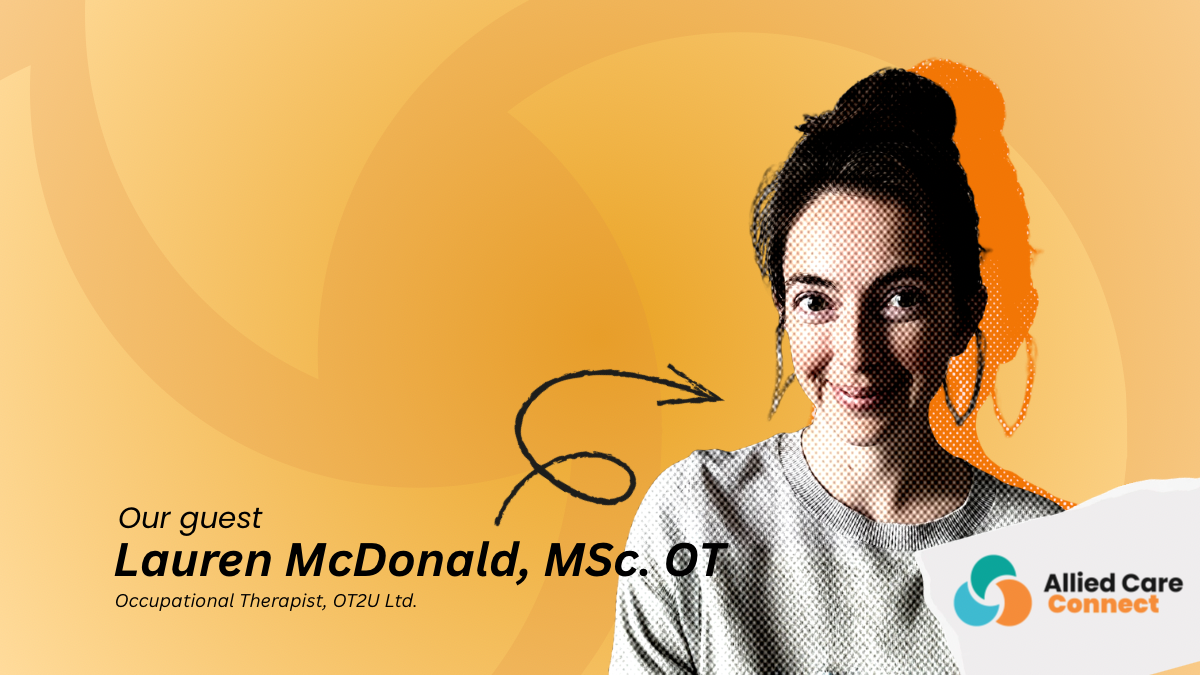
ADHD in Women with Lauren McDonald, OT in Calgary, Alberta
Allied Care Connect (00:00)Hello, listeners. Welcome to the Allied Care Connect podcast. I am your host, Valerie, the founder of Allied Care Connect. And today we are joined by Lauren McDonald. ⁓ She is an occupational therapist and owner of OT2U Limited here in Calgary. Lauren has over 10 years of experience in occupational therapy. Lauren McDonald (she/her) (00:08)Go ahead. Allied Care Connect (00:32)And today we're going to be talking about ADHD in women, especially women who are diagnosed later in life. Welcome to the show. Lauren McDonald (she/her) (00:40)Thank you. Allied Care Connect (00:42)Thank you. Awesome. ⁓ So Lauren, can you take us back a little bit and tell us how you got started on your professional path and what made you choose occupational therapy? Lauren McDonald (she/her) (00:54)Mm-hmm. ⁓ So ⁓ I think I was like many people, didn't really know what occupational therapy was. ⁓ A lot of people don't know what occupational therapy is until they need it. ⁓ And I didn't actually need an occupational therapist, but ⁓ when I was in high school, they had us complete one of those like job personality quiz type things. ⁓ And one of the results I got was an occupational therapist. Lauren McDonald (she/her) (01:22)And I had never heard of that before. ⁓ so I looked into it and I just thought it sounded so cool because when I was, you know, in grade 12, I was contemplating what I should be doing. If I wanted to go into like nursing, psychology, teaching, I kind of knew I wanted to work with people and help in some capacity. And then when I saw what OT was, it kind of combines elements of all of that. ⁓ so I decided to pursue that. ⁓ Lauren McDonald (she/her) (01:50)I did my undergrad in community rehab and disability studies, which kind of focuses a bit more on the social aspects of disability and is a really neat program. If anyone is looking for a bachelor to do before their master's ⁓ in occupational therapy, ⁓ it kind of made me think a little bit about whether or not I did want to go into OT or if I wanted to, you know, be more part of the nonprofit world. ⁓ And so in between my bachelor's and my master's, Lauren McDonald (she/her) (02:20)I ultimately worked at a place in Calgary called Arbi, ⁓ the Association for the Rehabilitation of the Brain Injured, which is also a wonderful program. ⁓ and I was working there as like a receptionist, but I thought it would give me good exposure to like the nonprofit world and the OT world. And literally, like after my first day working there, I was just like, okay, no, I want to be an OT because it was so neat just to see the impact. Lauren McDonald (she/her) (02:45)That they had on the clients that were coming there ⁓ and how much change they promoted, how much hope they were giving to families. ⁓ so then I buckled down, went into my master's and never looked back. ⁓ and so now here we are 10 years later, which was so hard to believe ⁓ that I've now been practicing as an occupational therapist. Allied Care Connect (03:05)That's amazing. Thank you so much for sharing that story. My next question is when adults discover that they have ADHD later in life, what are some of the common signs or breaking points ⁓ that usually make them more kind of realize that there's something going on? Lauren McDonald (she/her) (03:08)Yeah. ⁓ Lauren McDonald (she/her) (03:25)Mm-hmm. ⁓ So I think for a lot of the people that might have been missed in childhood, they're more likely to notice during a life transition. ⁓ so when we think of what those life transitions are, that could be somebody who is going from high school to university. ⁓ It could be somebody who's maybe single, going to marry, moving into a home for the first time. ⁓ then, you know, after marriage maybe comes kids. Lauren McDonald (she/her) (03:52)⁓ so now you've got kids, maybe you now have more kids than in the later life. It's like now you're caring for teenagers and potentially your aging parents as well. So as we go through life, the demands and responsibilities that we have kind of add up, up, up. ⁓ and so what can happen is I find that there's normally people have different thresholds for what they can tolerate, but it's typically at one of those transitions where they begin to realize like, Lauren McDonald (she/her) (04:22)whatever my old systems were, however I was coping potentially with this unbeknownst to me diagnosis in the past, you know, it's just not working anymore. So people will start to reach out, you know, to healthcare professionals saying, like something feels off, like I'm working too hard at ⁓ managing life really. Like, and it could be, you know, I'm just struggling so much to pay attention at school or get my assignments in on time. ⁓ Lauren McDonald (she/her) (04:48)⁓ but it could also be like I'm just like struggling to eat, like I can't even remember when to take my meds or when to have my meals. And you know, it really is gonna vary what those indicators are. But I think the most common thing I see is people come to me when they're overwhelmed. That is one word that is, you know, comes up again and again. Just I'm just so overwhelmed. Lauren McDonald (she/her) (05:12)⁓ and so I think it's really important, you know, if people are feeling overwhelmed to start that conversation with their healthcare provider. ⁓ and then that might, you know, through those conversations that they're having with them, ⁓ sometimes it's then the healthcare provider, whether that's a counselor, psychologist, doctor who might bring up a suggestion of ADHD or through their own, ⁓ you know, process of providing standardized tests and conversations, they might be able to find some of that out. ⁓ Lauren McDonald (she/her) (05:42)⁓ but I think the other thing is that a lot of people also look to their peer groups ⁓ and a lot of people are gonna look to social media as well. ⁓ and there's a lot of information that exists out there, and so ⁓ people can really, you know, connect ⁓ to that information in a variety of of different ways ⁓ in terms of how they come to suspect. Lauren McDonald (she/her) (06:06)That ADHD might be something that they fit the profile of. ⁓ and the most important thing is just to kind of continue to pursue that. Because even if it's not ADHD, I think the underlying thing is something feels wrong, right? ⁓ And you don't want to go through life feeling like every day is a struggle. It shouldn't feel like a struggle every day. Of course, life is gonna come with some level of challenge, ⁓ right? But you'll hear people in the ADHD kit. Allied Care Connect (06:22)Yeah. Lauren McDonald (she/her) (06:35)immunity talk about kind of like living life on hard mode. ⁓ I didn't know I was living life in hard mode ⁓ and like I just want to flip the switch. ⁓ so I think that that's yeah the most common reason people come and that the transitions are ⁓ a more significant time that people are more likely to reach out. Allied Care Connect (06:44)Yeah. Allied Care Connect (06:57)Okay, that that's very enlightening. And in my head I'm just thinking about how people transition into entrepreneurship from ⁓ from being employed and kind of realize, ⁓ you know, when the balls fall. ⁓ yeah. Lauren McDonald (she/her) (07:14)⁓ Yeah, absolutely. Right. ⁓ and so it is interesting with entrepreneurship and I know like with Allied Care Connect that a lot of the people ⁓ who are using that site are are entrepreneurs themselves, they're self-employed. ⁓ Lauren McDonald (she/her) (07:33)⁓ and so it is interesting, like when you're working for a company, a lot of the logistics are going to be taken care of by the company. ⁓ whereas when you become self-employed, ⁓ oftentimes when you're starting out, right, like you are going to be filling all the roles where you are the admin, you're answering the phone, you're sending the bills to the clients, you're responding to the emails, ⁓ right? ⁓ and there's not Lauren McDonald (she/her) (08:00)somebody holding you accountable either, ⁓ where you don't have a boss to tell you, hey, I need this report ⁓ now or at such a time, right? ⁓ so for some people that flexibility is freeing. And for some people, it actually is less effective where they almost benefited from the structure that like a more formal setting was providing them before because there was somebody keeping them on track and kind of Allied Care Connect (08:07)Yep. ⁓ Lauren McDonald (she/her) (08:26)enforcing those checks and balances. Whereas once you're on your own, you're on your own. ⁓ And not completely, obviously, because you can ⁓ hire out help as needed and maybe as your income that's coming in allows. ⁓ but yeah, I think ⁓ it it can certainly be a challenge ⁓ but also come with a lot of ⁓ benefit from ⁓ maybe some of the creativity that it allows people to pursue ⁓ Lauren McDonald (she/her) (08:55)the flexibility with their time. ⁓ so it's a double edged sword for sure. Allied Care Connect (09:02)That's that's a great response. Thank you. I'm just I think things are being more clear now in my in my head as I talk to you right now. ⁓ I might have to talk to you later. ⁓ Lauren McDonald (she/her) (09:13)Mm-hmm. ⁓ Lauren McDonald (she/her) (09:16)⁓ Uh-huh. Uh-huh. Well, so ⁓ Valerie, you might like, ⁓ so it's interesting. ⁓ entrepreneurs ⁓ studies kind of vary depending on where they are, right? And like what the the clientele is that they've sampled, but they think that people with ADHD are like two to five times more likely to start their own business than somebody neurotypical. ⁓ Lauren McDonald (she/her) (09:41)⁓ so I think there are certain communities of people where you do tend to see more ADHD diagnoses and entrepreneurship is is one of them. ⁓ Allied Care Connect (09:53)Yes. Awesome. ⁓ huh. I'll ask ⁓ more questions later, but we'll move on to the next one. So a lot of the earlier studies about ADHD were heavily focused on males, ⁓ but now we have much more awareness in how it presents in females, like and how it's also influenced by hormones. Can you speak to this a little bit more? Lauren McDonald (she/her) (09:59)No problem. Lauren McDonald (she/her) (10:15)Mm-hmm. ⁓ Yeah, so I think the biggest thing and maybe ⁓ kind of like the image that a lot of people have in their head of ADHD is like the little boy in the classroom who can't sit still. ⁓ and maybe they're disruptive and like they're the jokester of the class or they keep interrupting the teacher. And ⁓ that can be an ADHD presentation, but part of the reason that we think that Lauren McDonald (she/her) (10:41)you know, females are less likely to receive a diagnosis earlier in life ⁓ is because females tend to show more inattentive symptoms. So ⁓ ADHD is a combination. You can either have inattentive ADHD, hyperactive ADHD, or a combination of both. ⁓ And so when you think of kind of like that little boy disrupting the classroom, ⁓ that gets the teacher's attention because that's making it hard for them to teach. Lauren McDonald (she/her) (11:09)And so they might flag that and say, Hey, I think like, you know, something's going on, go get them assessed. ⁓ Whereas with females, ⁓ what the inattention can look like is like that difficulty sustaining attention. So maybe like they're quiet in their seat, ⁓ but Lauren McDonald (she/her) (11:25)So they're not disrupting the teacher, but they're also not really like absorbing the information. Maybe they're the like the daydreamer thinking about something else, staring out the window. Maybe they're doodling in their notebook instead of taking notes, right? But it's not disruptive. They might do okay in school. ⁓ right? There's not always ⁓ like the ⁓ somebody's grades are not a direct reflection ⁓ of how bad they're struggling with their ADHD. Lauren McDonald (she/her) (11:51)⁓ and so because the inattentive symptoms tend to be ⁓ more predominant in females, ⁓ they're less likely to kind of get flagged early on. ⁓ And then when it does come to some of that hyperactivity, again, ⁓ a lot of that can be more internal. So it will feel like racing thoughts, it's repetitive thoughts. Lauren McDonald (she/her) (12:13)⁓ it's kind of your mind wandering off different paths, often like off topic. You know, you might start here and now you're over here and you might not get back to here. ⁓ It can be hard, right? So there's lots of different paths maybe ⁓ that your mind is going. ⁓ and it might also be somebody who's very talkative. And this was me, right? Like I love talking. So great choice going into mental health counseling. I get to talk a lot, but I also get to listen a lot. ⁓ Lauren McDonald (she/her) (12:42)⁓ and you know, but that definitely, right? Like I was okay in school, but if there was a note on report card, it was kind of like, ⁓ like maybe I talk a lot, like she could just like keep it quiet a little bit more. ⁓ But again, it's kind of like not enough to flag maybe an actual assessment because I'm not disruptive enough. I'm not doing bad enough almost like ⁓ at school. And there's just an added ⁓ societal pressure. Lauren McDonald (she/her) (13:12)on women ⁓ to conform to kind of be, you know, the ⁓ good girls or follow right, ⁓ kind of like to be polite so and to wait your turn to speak. Lauren McDonald (she/her) (13:25)And ⁓ to be the emotional regulators. So even if that's something, a skill that you struggle with, there's almost this expectation that you regulate your emotions and you hear that, right? Like, even like I think in elementary, like hopefully not now, but people would say that, right? Like, ⁓ like, do you have PMS? If it's like, you know, like it's an insult almost, right? And it's like, a real thing. ⁓ Maybe I do. I don't know. So then when you talk about hormones. Allied Care Connect (13:48)Mm. Lauren McDonald (she/her) (13:54)Right, and you think about the hormones ⁓ that ⁓ will impact a neurotypical individual as well. ⁓ those hormone changes just tend to have more of an impact on somebody with ADHD because when there's that decline in your hormone levels, which can happen kind of ⁓ in that week leading up to your period, the first at the beginning of your period, and then absolutely in perimenopause as well. ⁓ Lauren McDonald (she/her) (14:20)So when you think of those times that like your estrogen is decreasing ⁓ and that that's already gonna have an impact on somebody's mood and cognition, but those are areas that people with ADHD are already struggling with, ⁓ it just makes those times that much harder. ⁓ So right now, ⁓ I think when it comes to looking at the impact of hormones on ADHD. ⁓ Lauren McDonald (she/her) (14:44)⁓ it is a newer area that people are starting to look into. There's not a ton that's been done on it. ⁓ but there was a European special interest group that kind of identified like here's some of the next steps we need to take. ⁓ and hopefully when you know ⁓ you put all of this together, maybe we can add a few links to some interesting articles in that. ⁓ but ⁓ Allied Care Connect (15:06)Yes. Yeah. Lauren McDonald (she/her) (15:09)I think the the takeaway is that like more research does need to be done in terms of its impact. But one of the thoughts from like the psychiatry world is kind of looking at, you know, how medication has the opportunity to influence that. Because typically when medication is prescribed right now, ⁓ you know, it would be like take 10 milligrams of ⁓ X per day. ⁓ so there's all different types of medication you can go on for ADH to D, and everyone will have a different diag. Lauren McDonald (she/her) (15:38)or dosage level that they would you know be prescribed by maybe their psychiatrist or their general practitioner. ⁓ So that's who you talk to about that. But I think that ⁓ people kind of just prescribe a standard dose. They're not saying, hey, take this amount at this phase of your cycle, take this amount at this phase of your cycle. And that's where some of the studies are starting to go to see what impact that has. Lauren McDonald (she/her) (16:02)And so ⁓ there was one study done, but it was like a sample size of nine people. So very small, but when they did have their dosage adjusted kind of based on their cycle, ⁓ it was really promising. Everyone chose to continue with kind of like the added dose at that stage. ⁓ And that's what ⁓ like obese can also help with during perimenopause is looking at like HRT treatments, seeing if they can help a little bit with that ⁓ regulation. ⁓ Lauren McDonald (she/her) (16:30)But as an occupational therapist, even though I have kind of some general knowledge of these areas because we're always working with other practitioners, ⁓ I don't prescribe medication. ⁓ And you know, I always defer to whoever the prescriber is ⁓ in terms of people having that conversation with whoever they're working with. ⁓ So when it comes to occupational therapy ⁓ and how you know that impacts what we work on. ⁓ Lauren McDonald (she/her) (16:58)I think it's ⁓ you know, helping people to recognize just ⁓ what impact their hormones do have on them and kind of setting themselves up for success within those stages. ⁓ So like if they know they're going to be ⁓ you know, maybe like lower in energy, lower in mood ⁓ in the week kind of leading up to their period and at the beginning of it, you know, we might have a conversation just around like, okay, well. Lauren McDonald (she/her) (17:25)What could we do that's gonna make that time more manageable? Right. ⁓ so what are we going to set up? What can we have in place so that the demands that are on you at that time don't feel so demanding? And then that's what we have a conversation around, whether that's putting strategies in place, whether that's ⁓ like outsourcing tasks that need to get done so that they might be like relying on more help at that time. ⁓ and I think it's important to note as well that even though it's great to have all these Lauren McDonald (she/her) (17:54)like information about just like general trends with how hormones impact us in our cycles. There's also lots of people who don't have regular cycles ⁓ or who like during perimenopause, your periods aren't regular, right? So it's a lot harder to predict like what is the impact of my hormones, right? So if you do have regular cycles, it can be helpful in kind of like planning for those days how you want to set yourself up. ⁓ But again, oftentimes the conversation that I'll then have with clients is Lauren McDonald (she/her) (18:22)less about hormones and more just about okay, you know, what ⁓ can you expect of yourself like on a low capacity capacity day versus like medium capacity or high capacity day, right? And so helping individuals to really learn to check in with themselves more to see kind of like where their capacity is at, ⁓ and then basing what they're going to do kind of based on that. So really Lauren McDonald (she/her) (18:49)figuring out like what their expectations are for themselves and if those expectations are realistic. ⁓ because that can be a challenge with ADHD, is kind of thinking like, yeah, I'm gonna like 10 different things done and then maybe getting none of them done. closing the leaf can be hard sometimes. So ⁓ yeah, that's how I would kind of tie it back though to OT and ADHD. ⁓ Allied Care Connect (19:12)Awesome. Thank you. ⁓ My next question is what ⁓ are typically the goals that client come to you for? yeah. ⁓ Lauren McDonald (she/her) (19:20)Mm-hmm. Yeah. ⁓ So I mean, like you and I ⁓ like we talked already about like overwhelm, right? Like like that is the main thing. So I think a lot of it is like, I want to reduce overwhelm. ⁓ but then it's kind of like that how, right? And so what occupational therapists do, one of the main things we focus on is really ⁓ breaking down tasks and goals. So ⁓ Allied Care Connect (19:29)Yes. ⁓ Lauren McDonald (she/her) (19:47)I think one of the things that makes occupational therapy unique is it's a very solutions-focused discipline. ⁓ so we're really looking at like what are your kind of challenge areas? What are the things ⁓ where you're struggling most? And then we would ⁓ look at how to make that basically feel more manageable, feel more functional ⁓ based on the presentation that they're coming with. ⁓ because even with ADHD, right? ⁓ Lauren McDonald (she/her) (20:15)Different people are going to have different presentations, going to be more impacted by certain symptoms than others. Lauren McDonald (she/her) (20:22)And also, right, like all of our lives look so different. You could have a student with ADHD, you could have a new mom with ADHD, right? And so their goals can look very different, where the student might be like wanting to be able to, ⁓ you know, like pay better attention, let's say, in a lecture, or at least be able to get the useful information that they need ⁓ out of it. ⁓ whereas the mom might be like, like I need to figure out these routines or like a more consistent sleep schedule. Lauren McDonald (she/her) (20:52)And right, so it can really vary on the individual and what stage of life they're at. ⁓ But kind of what a typical conversation would be ⁓ would be just exploring, you know, ⁓ what are the current challenges you're having, right? ⁓ What is kind of like weighing on you the most? What would be like the nicest thing to have off your plate if you didn't have to deal with that anymore? Like what would that feel like? ⁓ so that it gives us an idea of where to start. ⁓ Lauren McDonald (she/her) (21:21)Because I think ⁓ with how ⁓ broad ADHD symptoms are, ⁓ like how many different cognitive domains it impacts ⁓ when it comes to like attention, time management, planning organization, emotional regulation, these are all functions that are involved in so much of what we do. ⁓ and so it's then figuring out, you know, what is our starting point? Because ⁓ Lauren McDonald (she/her) (21:50)I hear a lot like I want to change it all, ⁓ right? ⁓ and it's kind of like ⁓ there's ⁓ absolutely the potential to make change and shift in so many different areas. ⁓ but then part of what I do is also help kind of people with that prioritization piece of okay, like I know we want to change it all and we can. Lauren McDonald (she/her) (22:12)But we gotta do that incrementally. ⁓ because with that ADHD, there's also kind of like impulsivity and that excitement and just like wanting everything now, wanting it all at once. So then part of it is, okay, how do we just bring it back to like picking one point to start on, figuring out a strategy for you to implement, ⁓ giving you a few weeks to implement it, and then ⁓ a person will come back to the session to let me know. Lauren McDonald (she/her) (22:40)Hey, either like this worked or it didn't. And if it worked, great. You know, how do we apply maybe some of what worked to then these other areas that are challenging? ⁓ Or if it didn't work, why? Where was the breakdown? So then, you know, we can figure out what the barrier was and how to work around that. So it really just becomes an ongoing conversation, ⁓ ongoing experimentation, and then ongoing conversation. So we adapt as we go. Allied Care Connect (23:07)Okay, awesome. ⁓ It's great because it evolves with the person and their lifestyle. Yeah. ⁓ So you use tools like the pinch framework in your ⁓ in in your practice. ⁓ can you kind of speak more about the pinch framework and ⁓ how how what's it like? Yeah. Lauren McDonald (she/her) (23:12)That's yeah. Lauren McDonald (she/her) (23:29)Yeah, of course. ⁓ So ⁓ I really like this framework. ⁓ like it's something, there's an article again that we can link that I share with pretty much every client at the beginning. ⁓ because I find one of the biggest challenges that people with ADHD face is ⁓ the staying engaged in cat tasks and initiating tasks. And so ⁓ what the PINCH framework is, it's an acronym. Lauren McDonald (she/her) (23:58)So it stands for passion, interest, novelty, challenge, and hurry. ⁓ and so the kind of original ⁓ system was proposed by a guy named Dr. William Dodson. ⁓ and he, you know, mentioned that people with ADHD have an Lauren McDonald (she/her) (24:18)interest-based nervous system ⁓ as opposed to an importance-based nervous system that might be more common in neurotypicals and that importance is kind of based on ⁓ like values but also ⁓ like deadlines consequences ⁓ and ⁓ it's not that like people with ADHD are not ⁓ motivated I guess like by rewards but it's more they might not be consistently Lauren McDonald (she/her) (24:48)motivated by that. ⁓ And so the idea behind the the pinch ⁓ framework ⁓ is that when you find a way to infuse a task with something you're passionate about, you find a way to make it interesting, you you find something novel about it, ⁓ to kind of get yourself reinterested in it, or you make it challenging, ⁓ where like maybe you gamify the task that you have to do. ⁓ Lauren McDonald (she/her) (25:17)⁓ that that can make the task easier to complete. ⁓ and I left off H hurry, but I think that ⁓ that is oftentimes what people are most familiar with. It's very common for people with ADHD ⁓ to kind of like procrastinate what needs to get done, not necessarily like by choice. ⁓ there can be a lot of reasons that they might be avoiding a task or not engaging in the task. ⁓ and so they default though to just Lauren McDonald (she/her) (25:47)like needing the sense of urgency almost to get things done, waiting for that fight or flight system to kick in ⁓ and the adrenaline to get going to give them the that extra push over the the finish line. So while most of the clients I work with are familiar with that strategy and have figured that out on their own at some point, ⁓ it's really nice to take the time to kind of explore how those ⁓ other ⁓ areas Lauren McDonald (she/her) (26:14)have the potential to influence what they're able to do. Allied Care Connect (26:19)Okay, that's awesome. ⁓ we talked a little bit about entrepreneurship and in business. ⁓ Allied Care Connect (26:30)How would OTs be able to support business owners in ⁓ kind of if they have or suspect that they might have ADHD? Lauren McDonald (she/her) (26:40)Yeah. ⁓ So ⁓ I think that like if somebody suspects they have ADHD, ⁓ oftentimes like it's great, we can have some really ⁓ helpful conversations just around like, you know, why that is, what are the things they're struggling with. ⁓ but occupational therapists don't diagnose. ⁓ it's something that's actually like under Allied Care Connect (27:00)⁓ Lauren McDonald (she/her) (27:02)review right now where it might be changing in the next few years. But at this time, ⁓ if somebody wants a diagnosis, then they would go to like their GP, a psychiatrist, or ⁓ a psychologist ⁓ for that diagnosis. ⁓ Maybe a nurse practitioner, but I'm not sure. ⁓ And so I think I know psychiatrists, GPs, and psychologists can. Lauren McDonald (she/her) (27:25)⁓ so if they were wanting like a more formal diagnosis, that's who they would go to. ⁓ with the main, I guess, like advantage of that being that ⁓ they would then potentially have access to medication, which I've mentioned is not something occupational therapists can do. ⁓ and the reason that could still be useful ⁓ is that sometimes we'll talk about like to gain the most benefit from any intervention, it's gonna be pills and skills working together. Lauren McDonald (she/her) (27:54)so not just one, not just the other. ⁓ because ⁓ occupational therapists can give people lots of skills and strategies to implement. ⁓ but sometimes, right, it's just that ultimately that's still taking a certain amount of willpower and mental load to implement, ⁓ and medication can take Lauren McDonald (she/her) (28:14)can help take some of that away. And everybody's gonna respond differently to medication. So again, it's very much like an individual conversation to have with their doctors. ⁓ But it it is, you know, nice to have them working together. And so I think if somebody's an entre entrepreneur and they're coming and they're seeking occupational therapy services, right? ⁓ I do work with lots of other entrepreneurs. Like we said, there's more of us that tend to go into this this area. ⁓ Lauren McDonald (she/her) (28:43)⁓ then you know, it's similar to what I would do with any other client. It just might have more of a work focus on it, right? So it might be looking at, okay, like if we're struggling with like the planning and organization, you know, ⁓ if we have all these ideas about what we want to do with our business, but we're then getting stuck on like the implementation process, then it might be having a conversation again around like, okay, well, where are we getting stuck? Why, what's, you know, like ⁓ Allied Care Connect (29:10)Mm. Lauren McDonald (she/her) (29:10)What's holding you back from implementing that? Is that gonna be something that's more like emotional, fear based? Or is it that like there's just so many steps in the process and that in itself feels overwhelming? So then how do we break down, you know, what actually needs to get done so that it's gonna feel more manageable in terms of implementing? How do we take this like really big idea that maybe has like 20, 30 steps that you need to take to get towards it? How do we bring it back to like what step one? Allied Care Connect (29:34)Yeah. Lauren McDonald (she/her) (29:37)doesn't need to be broken down further. Ha ha, you know? ⁓ so I think again, it comes back to those same principles of just like really like breaking down the task, ⁓ having people be able to like reflect and identify their own needs, but then giving them some structure and support for like how do we move forward with this? Allied Care Connect (29:57)a lot of our listeners are in very interested in this topic and also could relate to some of these ⁓ big ideas and then how do you get there 2030 steps. ⁓ Okay so I just want to wrap ⁓ ask you if there's anything else that you'd like to add and then I'll ask my next question, my last question. Lauren McDonald (she/her) (30:03)Yeah. Lauren McDonald (she/her) (30:17)Sure. No, I mean I think that right, it's I I know you sent me some questions, so you're gonna ask a little bit about the misconception still? ⁓ Yes. Okay. ⁓ because I think that's an important topic ⁓ to address. ⁓ and so I mean really, you know. ⁓ Allied Care Connect (30:27)Yes, yeah, that's okay. Lauren McDonald (she/her) (30:37)I think that as with anything, this is a brief conversation, right? So ⁓ as you said, maybe some wheels started turning, some light bulbs came on for you, and it's always gonna bring up ⁓ more questions. So I think there's just like there's so much information ⁓ that exists. ⁓ and it's just it's nice to be able to just continue conversations beyond an initial intro, beyond just like, you know, what Lauren McDonald (she/her) (31:05)set of questions that are maybe asked within this podcast. If it's something that's, you know, piqued your interest or that you've related to but that you're wanting more information on, then I think this is a great great opportunity ⁓ to reach out ⁓ either to myself or to look into occupational therapy or to talk to any of like your existing healthcare providers. Allied Care Connect (31:29)Okay, awesome. Are there any misconceptions about OT in general or ADHD that you'd like to clear up? Lauren McDonald (she/her) (31:37)⁓ Mm-hmm. ⁓ Yeah, so ⁓ I like this question. ⁓ and I think that there's like a lot of misconceptions ⁓ about ADHD. So I'm gonna touch on just a few, ⁓ and then just briefly I'll touch on ⁓ occupational therapy. ⁓ I think the biggest misconception with occupational therapy is honestly our name does not do us many favors. A lot of people think that as occupational therapists, we only ⁓ Lauren McDonald (she/her) (32:06)⁓ focus on like work-related problems. ⁓ and this gets complicated by the fact that we do help people with work-related problems. ⁓ so we often help people with return to work if they've been injured or if they've been off work for a stressed leave, right? Like I do ergonomics. ⁓ So even though we do help people with work as an occupation, ⁓ I think the biggest thing that I want people to know ⁓ is that occupational therapists help you in any of the things that you occupy. Lauren McDonald (she/her) (32:36)your time with. So that's where the name comes from is an occupation is really anything that you have to do in your day-to-day. ⁓ And ⁓ so that makes our field very broad. ⁓ But you can see even just within this conversation how we use ⁓ you know, certain frameworks in terms of how we look at those tasks that you need to do to help you to be able to re-engage with them. And then we're always considering things ⁓ Lauren McDonald (she/her) (33:05)From not just a cognitive standpoint, but also your emotional well-being and physical well-being. So even if you're coming to us for more of a cognitive-related challenge like attention in ADHD, ⁓ we we're always looking at you as a whole and we're also always considering the environment that you're a part of. So I really love occupational therapy for how holistic it is. ⁓ Lauren McDonald (she/her) (33:31)And how practical and functional it is. And so ⁓ I'm excited for people to know that. ⁓ And then the other ⁓ thing I did want to mention is just that when it comes to occupational therapy, ⁓ a lot of people don't know that they ⁓ have insurance coverage for it. ⁓ So it's not something that's provided ⁓ under all private health benefit plans. ⁓ But you should look into it to see if you do have. Lauren McDonald (she/her) (33:58)OT coverage because it's always nice if you don't have to pay for services. ⁓ And if you don't have any OT coverage under your plan, ⁓ the Society of Alberta Occupational Therapists has a link where they've like pre-populated ⁓ a ⁓ letter that you can submit to your insurer so that hopefully as more people ask for occupational therapy, more and more providers. Lauren McDonald (she/her) (34:24)choose to include it in those extended health benefits. ⁓ So that's what I would say around occupational therapy. ⁓ When it comes to ADHD ⁓ and misconceptions, ⁓ I think you know you and I could have another full episode ⁓ dedicated to this. ⁓ But I think what often comes up as a topic of conversation is people feel like ADHD is a trend. Lauren McDonald (she/her) (34:53)⁓ like, yeah, you know, like everyone has ADHD these days. It's just a thing, right? Like you people just want attention, or you hear like these types of things. ⁓ and so I just want to bring back the fact that right now, like in Canada, only about four to six percent of the population has ADHD. And there's a few reasons that I think people can end up feeling like, yeah, this is just something everyone has right now. ⁓ Lauren McDonald (she/her) (35:23)⁓ so one of the things I wanted to mention is ⁓ that ADHD has a genetic component to it. ⁓ so sometimes ⁓ you know, as maybe somebody ⁓ is starting to connect the dots and thinking, like, yeah, like I think I might have ADHD. And maybe they're telling this like to their mom or their sister or their cousin, and they're like, well, that's not ADHD, like that's how I think. ⁓ Right. And so it's ⁓ interesting to just Lauren McDonald (she/her) (35:50)Keep in mind that there's ⁓ if one parent has ADHD, then their children have, each child has a 50% ⁓ chance of having ADHD. ⁓ So it is very common for maybe a sibling, ⁓ your parent, a cousin to also have ADHD. And so that could maybe skew your perception of it. ⁓ I think that people naturally gravitate towards other neurodivergent people if they're neurodivergent themselves. Lauren McDonald (she/her) (36:17)So unbeknownst to them, they've kind of collected this friend group where it's like, you know, you've associated and connected these people, maybe for a reason that you weren't aware of. And then it's like, ⁓ one person gets a diagnosis and then the next does, and then the next does. And it doesn't mean that each of those individuals doesn't have ADHD. It's just that likely they maybe felt like more comfortable in the presence where they just didn't have a name for it yet. ⁓ Lauren McDonald (she/her) (36:42)⁓ and so ⁓ yeah, I do I think that that's maybe another reason. And then of course, ⁓ right, we talked a little bit about like some people maybe figuring out that they have ADHD because of social media. And I think social media can get a bad rep. ⁓ where ⁓ you know, y you do need to maybe be aware of the quality of content or where that content is coming from. ⁓ but one of the psychiatrists I worked with Lauren McDonald (she/her) (37:11)was kinda like, well, you know, ⁓ like our primary form of consumption for media used to be the newspaper. And if you had read an article in the newspaper about, you know, somebody who had ADHD and it said X, Y, Z, right, you might take that to your doctor and then say, well, this is me. Like how does that relate? Lauren McDonald (she/her) (37:28)⁓ and so I think that that's the same thing, right? ⁓ is maybe not relying solely on social media to diagnose you, but absolutely like if you're connecting to that information ⁓ and you're seeing content and rate, you're like, ⁓ well, is that me or is that ADHD? Like, wait, what's the line? Then I think that is like kind of an indicator to just go have a conversation. ⁓ Lauren McDonald (she/her) (37:53)⁓ with your healthcare practitioner because they're the ones that are trained in diagnosing and assessing. ⁓ And so a lot of people might relate to components of ADHD, ⁓ right, where they're like, yeah, well, like I lose things too, right? But I think ⁓ one of the biggest distinguishing factors is the intensity and the frequency that somebody experiences these symptoms. Lauren McDonald (she/her) (38:20)⁓ and so it's just recognizing that like if somebody has gone through the process to to get a diagnosis, ⁓ right, it's not ⁓ unfortunately the most straightforward process. ⁓ so I think we discredit ⁓ I guess a lot of people by just saying like, it's just a trend, right? Like ⁓ and ⁓ it makes people less likely. Lauren McDonald (she/her) (38:46)Reach out for support. They don't want to be seen as like needy or asking for accommodations at work. And it's really doing people a disservice ⁓ by ⁓ kind of just creating shame and ⁓ that, you know, ⁓ just fear to reach out for being perceived maybe differently. ⁓ so just keeping in mind four to six percent, right? ⁓ so I think that's important. Allied Care Connect (39:08)Yeah. ⁓ Lauren McDonald (she/her) (39:10)⁓ and then the other biggest misconception I hear is just like, well, you know, ADHD is just like laziness. You know, if you wanted to, you could. ⁓ and so again, I think it's important that people recognize, if only it were that simple. ⁓ Right? ⁓ there can be so many different reasons that, you know, initiating a task, completing a task can become overwhelming and feel challenging. ⁓ Lauren McDonald (she/her) (39:39)And it's interesting because I think that often the case is that people with ADHD are actually putting in like 10 times more effort just to complete the most basic functions. Yeah, life in hard mode. ⁓ And so then the irony of them being called lazy ⁓ when likely they've been putting ⁓ more effort in just to sustain what maybe comes naturally to the rest. Allied Care Connect (39:52)Hard mode. Yeah. Allied Care Connect (40:09)Mm-hmm. Lauren McDonald (she/her) (40:09)The population ⁓ is pretty insulting. ⁓ But ⁓ so I think people just need to be careful and assess where like that perception comes from, right? ⁓ And ⁓ look into you know the impact of executive functions on being able to complete tasks. ⁓ And as people gain a better understanding of the relationship between ADHD and executive functions. Lauren McDonald (she/her) (40:37)I hope that that builds more compassion in individuals so that they don't have that perception of like, well, this is just, ⁓ you know, like a laziness, or like if you want to teach, because ⁓ it really is just so much more. ⁓ so I think those are the two ⁓ biggest misconceptions ⁓ that I hear about. Allied Care Connect (40:57)Thank you. Might I also add that individuals who are experiencing or have ADHD can also increase their capacity of compassion for themselves once they understand. Yeah. Lauren McDonald (she/her) (41:07)Absolutely. ⁓ Yeah. ⁓ That's a big part of, you know, what we do in therapy ⁓ as well. Because, ⁓ you know, especially with a late diagnosis, ⁓ it you've spent a lifetime accumulating a lot of negative beliefs about yourself where it very much feels like that that voice of the external world has become your internal voice of well, why can't I just do this? If I wanted to, I would why don't I want to? Allied Care Connect (41:33)Yeah. Lauren McDonald (she/her) (41:37)Why can't I? Right. And so it's really looking at ⁓ building that understanding. And that's where ⁓ I find that pinch frame framework can be so enlightening for individuals because it's really about ⁓ once you understand what does align with ⁓ you and your interests, ⁓ and how to incorporate that into your your day, things get Lauren McDonald (she/her) (42:04)much easier because now you've kind of like figured out ⁓ how ⁓ to keep yourself more stimulated, more engaged based on what you already know about yourself. ⁓ And so it's a really fun self-discovery process ⁓ journey that I get to go on with individuals. And ⁓ I find it really rewarding to just see people ⁓ make these connections for themselves. Allied Care Connect (42:33)Wonderful. This sounds amazing. Thank you so much for your time today. Before we leave, I would like to ask you, how do people find you, Lauren? Lauren McDonald (she/her) (42:42)Yeah, absolutely. So ⁓ they can go to our website online. So it would just be www.ot2u.ca. We're on Instagram. So it would be at O T dot to T. No to U. ⁓ There you go. It's like a tongue twister, I guess, with the dot in the Allied Care Connect (43:02)Yeah. Lauren McDonald (she/her) (43:03)And this is why hopefully we can just link it again. ⁓ but we're on Instagram as well. I think it links to Facebook, ⁓ but normally I'm just monitoring the Instagram account. So I would say best way ⁓ to reach out to us is to either go online. There's lots of different pages about all the services we offer because it's not just ADHD counseling, but ⁓ this is an area that I'm passionate about, having kind of gone through my own journey as somebody late diagnosed. Lauren McDonald (she/her) (43:31)⁓ and seeing kind of this gap in service where ⁓ I don't think there's as many people ⁓ kind of just focused ⁓ specifically on supporting women with a late diagnosis, right? So kind of creating what I wish I had. ⁓ and so I really hope that ⁓ you know, if there is somebody who connects to this, that they find their way to our website or our Instagram page, and then reach out, and I'd be happy. Lauren McDonald (she/her) (43:58)⁓ I offer 15 minute like free consults for anyone who wants to just have a bit of a conversation and we can go from there. Allied Care Connect (44:05)Awesome. Thank you so much, Lauren.
Aquatic Therapy with Ashley McCune, Cochrane Recreation Therapist
Allied Care Connect (00:12)Today I'm joined by Ashley McCune, a certified therapeutic recreation specialist and co-founder of Sagewood Wellness Incorporation in Cochrane, Alberta. Ashley supports older adults and families through individualized, evidence-informed recreation therapy and aquatic therapy with a focus on well-being, independence, and quality of life. Welcome to the show, Ashley. Ashley (00:38)Thank Thanks Valerie. Allied Care Connect (00:41)Thank you. Awesome. Okay, let's dive into the first question. Ashley (00:46)For sure. Allied Care Connect (00:49)Can you share about a bit about your background in aquatics and what led you into recreation therapy? Ashley (00:54)Hmm. Okay, so I'll try to kind of narrow it down a bit, but I would say, like many recreation therapists, I started out working as a lifeguard swimming instructor, camp counsellor, as a teen. When I was in my early 20s, I took the opportunity to go work up in the Northwest Territories as a traveling waterfront director in the day chill region. Loved that experience coming from Southern Ontario. It was very eye-opening. It was an absolute privilege to be able to see that part of the world that, you know, many people never get the opportunity to visit. So loved my first year up there and went up for three more summers to run the seasonal swimming pool up in Fort Simpson. The pool there was, I think, three feet deep, so barely up to my waist and about 15 meters long. And so for the community of Fort Simpson, at the time there were about 1,200 people living there, the pool became a hub in the summertime. So I would teach advanced aquatics training, swimming lessons to all the kids in community, school-based swimming lessons in water safety, aqua fit. You name it, we did it at the pool. We were operational seven days a week. It was a really busy place. And so that definitely shaped my career. Following my undergrad, I pursued postgraduate training in addictions counseling. So I did that for a number of years, specifically working in youth addictions in Northern. Alberta, working for ADAC back then, then AHS, traveling to remote communities, doing education, working with outreach schools in the area, and subsequently moving to Calgary where I worked in a school-based mental health program. So while I was at home raising kids, I took the opportunity to really reflect on what I wanted to do when I returned to the workforce. So pursued a degree in recreation therapy. So back when I had done my undergrad and other schooling, I didn't know about recreation therapy. I didn't learn about it until I had worked in the field. And so it really kind of brought together all of my passions. You know, my approach to working with youth up north was very experiential. And so I pursued the University of Lethbridge program while at home raising two babies and graduated and have since been working in the field mostly with youth and mental health. But last year I took the jump into private practice. And so really wanting to focus on older adults because I really have learned that they are an under-service population and bringing my background in aquatics into it. I connected with Tanya Selwich-Hoffert who has been doing aquatic therapy in the area here for the last 17 years and so took some training with her. and have been working alongside her and Healing Waters Foundation to increase accessibility to aquatic therapy for individuals with disabilities predominantly. So again, so many shifts in my career when, you know, just when I think I know what I'm doing, like I said, with my practice, it's really shifted and I'm now, you know, spending a lot more time working with persons with disabilities and learning a lot along the way. recently took training, some very advanced training in aquatic therapy. The methodology is called Water Specific Therapy Halowick. So we had a trainer come from the Netherlands to come and teach at the pool here in Cochrane. So after 46 hours of intensive training and five days, I completed my exam and past the competency and so really excited to be able to offer this to community and so again kind of shifting back into working with those older adults. The HALWIC methodology really focuses on learning skills in the water where it's safe so fall prevention things like that you know really important skills of daily living like getting out of bed and so there are specific exercises you can be doing in the pool that translate to goals on land. So I'm really excited to be offering that at Spray Lake Sports Centre in Cochrane here in the fall. So, yeah. Allied Care Connect (06:13)That sounds so exciting. And I love asking this first question because you can see the passion of the practitioner and the journey that led them to the present moment. Yeah, so thank you for sharing your story. I just have a bit of a follow-up question. When you mentioned that you were working in the Northwest Territories, you said that it was eye-opening. And can you elaborate more on what was eye-opening word in there? Ashley (06:15)Okay. I think just the lack of resources available. You know, the swimming pool program that I worked in was, I believe, developed in the 1980s. And so there are these above ground swimming pools all over Northwest Territories, none of it in remote communities to help teach water safety, because that's a really big thing up there. A lot of people that live on the land, you know, or maybe at risk of drowning. And so this was an initiative by the government. So I can't even remember how many pools are kind of scattered across the Arctic. But they're only open for a few months of the year. They're all above ground because of the permafrost. And so they would often have to bring people from the south as they as they call it to work up there and train local staff. initiative was meant to allow the communities to become self-sufficient. But I was up there in the early 2000s and so, you know, often it was really difficult. I had a great group of youth that I had trained while I was up there. And so, very important work. But again, the resources, so the pool I worked at, you know, there was a lot of... challenges, I guess, with accessibility to chemicals and equipment and things like that. This was before the days of Amazon. So if I went up there and ordered things, often took months for them to come in because for a part of the year, Fort Simpson was a fly-in community only because the ferries were out of the water and the ice road wasn't in yet. again, access to basic goods and services was quite limited. And again, I think being so remote as well. Just yeah, limited sort of expertise of people to work in community that could. Yeah, sorry. You lost me there for a second. I think you know, I think the community really comes together beautifully though, like it's one of those things where I was even mentored up there by a teacher that was Allied Care Connect (08:43)Yeah. It's okay. It's okay. Yeah. Ashley (09:02)working in the same aquatics program in the same community where I was, you know, years before. And so she supported me throughout my time there and kind of helped guide me in just getting familiar with the community and helping me to build that trust there as well. Allied Care Connect (09:24)Thank you for that. That's that's an incredible experience you've had. In yeah, and Ashley (09:30)Yeah, I remember the first, no it was the second year I had gone up there and I kind of knew what to expect in terms of groceries. So coming up there mid-May is when you know there's breakup and you know it's difficult to get goods and so the grocery shelves would honestly be empty. And so I think for about three days the only thing I had to eat were Oreos which I mean it's not the worst thing. But again it's an amazing community. I had a friend bring me over to her house for meals and deliver lunch at the pool for me, because everybody really, you know, tries to support one another and work together. But yeah, amazing experience. Allied Care Connect (10:03)Yes. That's beautiful. Yeah. Another question that I would have is, how would you explain recreation therapy to someone who doesn't know about it? Ashley (10:16)Sure. So as somebody in private practice now, I've had to do a lot of explaining and yeah, just trying to build people's understanding of it and the value. I had come from an environment where I was working in a day hospital program. So everybody there's familiar with recreation therapy, values it, of understands. the role within the clinical team, but in community. When you say recreation therapy, I've had a lot of people say, well, why do I need help to, you know, do this, that, or whatever? So it's not necessarily something that everybody needs. So how I have kind of explained it in the most simplest way is that I use recreation and leisure to support client goals. So, you know, if I have, if I'm working with somebody who is maybe needing some support with regulation. We might explore some different sensory art-based activities or we might do some different things in the gym. So again, the intervention really aligns with the client goals. So it might look like we're just playing board games, but... Allied Care Connect (11:41)Yes. Ashley (11:47)We're focusing on some of those executive functioning skills. So taking turns, planning, communicating. You know, there's lots of things that go into it. And so what I love about recreation therapy is that it is an evidence-based discipline. So I'm always out there reading and learning and trying to explore new ways to support my clients in the most comprehensive and best way possible. Allied Care Connect (12:14)Thank you. I know a lot of these practices are always dynamic. Like we're always learning whenever we have a new client or whenever clients have changes within the time period we're serving them. So Ashley (12:21)Yeah. No, I agree. And I think like the the opportunity for some collaboration as well, because, you know, this this field brings people with so much expertise in so many different areas. I know you and I have connected through the private practice community of practice that you hold. And it's amazing to hear of different opportunities that are out there. You know, like I'd like to share on how I am implementing therapeutic horticulture into my practice because I think, you know, it really has tremendous benefits and it's one of those things that's a bit unique. So bringing that in, kind of teaching how it can be utilized is quite valuable. Allied Care Connect (13:16)Awesome. And just looking back to your background and working in the Northwest Territories, that sense of community is pretty much ingrained in the recreation therapy field. Ashley (13:29)It is a very small community. so having that ability to connect with other practitioners, I know when I took the leap into leaving. hospital-based work into private practice. I reached out to all of the clinicians that are working in private practice and everybody was so supportive. It wasn't one of those gatekeeping things where people saw one another as a threat because I think we see the strengths that each of us brings to it. I know you and I have some shared clients and work in a smaller community, but there's tremendous benefit to that because I know that I can't be everything to everyone. And so really understanding what the client needs and being able to provide that to them is so important. Allied Care Connect (14:22)Yes, absolutely. So my next question is, when would someone refer to a recreation therapist? Like what kinds of goals? You met you touched on it a little bit with older adults. What kinds of goals could you support? Ashley (14:34)Good job. my gosh, this is so broad. And it really is, I feel like it's kind of one of those dynamic things where somebody might come to me with the goals of reducing social isolation, maybe improving some of their their physical health, health, and maybe some Allied Care Connect (14:42)No, Ashley (14:58)you know, cognitive stimulation. But as we get to know each other, as I go through the assessment process, I discover that there are, you know, other maybe areas that they want to work on that they didn't even recognize. And so a big part of what I have been doing is leisure education, right? And so who can benefit from these things, this approach to wellness and what it can look like, right? So, you know, the referrals might come from older adults where somebody has had a recent loss, whether that's loss of health status, loss of their loved one, loss of anything can really impact mental health. And so what I have learned from years of working in mental health is that recreation and leisure is often the first thing to go, right? Because it's that thing that you don't need to do. day to day and so when you are just struggling to get through, often that goes first. employment, ADLs, all of those kind of things often sort of decline from there. But what I have found and what seems to have the most benefit is bringing that back in right away. It's those things that you do that keep you going, right? So, you know, get out of bed in the morning and you know, you have like a big eight hour workday ahead of you. It can get overwhelming, but knowing, you know, maybe getting out of bed, knowing that, you know, you can go do a gentle yoga practice or some art to kind of, to, to regulate you, to ground you, to kind of set your day off the right way is often extremely beneficial. Allied Care Connect (16:47)No. Ashley (16:52)So when I had been working with adolescents, we really worked hard to, you know, nurture those interests that maybe they had in the past or to find some new interest, right? So a lot of the kids I had worked with, a lot of their identity was tied to maybe some recreation, leisure, sports teams, things like that. But that became, you know, negative for them at a certain point, whether it was because of an injury and they were no longer able to participate or, you know, just social dynamics of the group or whatever. so giving that opportunity to explore and find something new, find a new passion was such an amazing opportunity to help people discover. And then we would sample a lot of those things. So whether it was in the program that I had worked in or referring out to communities. So. I guess broadly answering your question there is that it really can be for anyone and everyone. You know, I think that another really cool thing is family leisure. So I know a lot of families struggle to connect because everybody's running in different directions and things like that. And so that's something that I am kind of it's something to come in the future, but how to reconnect as a family, explore those values and incorporate connection time, I think, you know, is quite valuable because it is something that is lost and is something as a parent of, you know, a 12 year old and a 15 year old, I'm consistently hearing from other families is that it is, yeah, it is just, it is difficult and people don't know where to start. so, Allied Care Connect (18:19)Yeah, that's Ashley (18:36)I think there's opportunities to support that, Allied Care Connect (18:36)That's remarkable. Okay. I'm just also, I just want to add, in this digital age, it's so much easier to face a screen than to kind of connect in person for for a lot of us. And and then it kind of I think translates into our home life as well. So I'm really looking forward to to this new of sorry family leisure. Yeah. Yeah. Ashley (18:47)Yeah. Mm-hmm. Yeah. Yeah, family leisure. it's, yeah. I think that's the best part of working in private practices. I've been able to really pursue some different things, make some of those connections within community, partner with other providers and just kind of have that autonomy to explore what this really can be and how we can incorporate. Allied Care Connect (19:10)Okay. Thank you. Yes. Ashley (19:36)reparation therapy into anyone and everyone's lives. Allied Care Connect (19:42)Awesome. Thank you so much. So my next question would be I think I've already asked that. Or it's already been covered. Okay. I'm gonna talk a little bit more about aquatic therapy and your training and your experience. What makes water such a powerful space for therapy? Ashley (19:56)No worries. For sure. Allied Care Connect (20:10)confidence and kind of that translation of skills from water to land. What makes it what makes water so special? Ashley (20:20)It's fun to be honest. I had the opportunity to attend the ICEBAT conference in Toronto this year. So it's the international conference on evidence-based aquatic therapy. We had presenters from all over the world. And what really stuck for me was one presenter who is a speech language pathologist working with children with autism. in South Africa. And so just understanding that there is so much therapy fatigue with these kids and families and bringing it into the water is not only very regulating for the body, it was also you know, very playful and the opportunity to, you know, incorporate that learning and practice those skills in that environment didn't feel like therapy for the families. That's what I had taken away from that. And so I think, I think if you have the opportunity to come and observe or shadow one of the sessions or take part, you'll just see the magic of it. Every single time I'm in the water with someone, I learn something new. I am able to see so much joy. this week, this past Sunday, I have been working with a young man who's just turned 15. I have consent to share a bit of information. So he has I've been working with him for the last year. We started out working in an adapted life jacket. And so just, you know, for different safety reasons, he's big, he likes to splash around. And so we have progressed to the point where this past week I had him in the water with his disability, he is unable to walk on land, his hypomobility just doesn't allow for that. He was able to walk independently in shoulder depth water this week and just to see the joy for him doing that for the first time, you know, exploring his environment and moving and you know, so the joy that he experienced, but also the physical benefit, you know, the confidence that's building in him. And then this translated for me, being able to work with him on his sit to stand. He was so excited to do it because he would sit. stand and then move across the pool. And so that's going to make transferring him easier on land if we keep building those muscles and that as he grows. So it's amazing what it can do. For older adults, one of the projects I'm working with, Spray Lake Sports Centre and Healing Waters Foundation is incorporating a fall prevention program. So again, you've got that safety where There are things that we can practice in the water that you just can't practice on land. So, you know, with the HALOIC, the water specific therapy HALOIC approach, we can create turbulence, we can create obstacles and different things like that. And people can learn how to fall properly in the water where there aren't those big consequences. You know, people can just experience a lot of pain relief. I work with a lot of people that experience profound pain in their bodies and so that hydrostatic pressure, just that offloading is amazing. People are able to move in ways that they just can't on land, which translates to pain relief, right? The independence, I could go on and on and it's simple. For example, last night I had a client who, you know, was struggling and so simply even just being in the water that benefits to your body are still tremendous. the again, the hydrostatic pressure, it is good for digestion, it is good for blood flow and different things like that. And so simply just even being in the environment is beneficial. Allied Care Connect (24:34)Amazing. that's incredible. I have only truly kind of understood a bit more when I met you and and the work you've been doing with Tanya as well in Cochrane, Alberta. my next question. what risks or safety considerations do people need to understand? Ashley (24:37)Yeah. Yeah. Yeah. Allied Care Connect (25:00)When it comes to aquatic therapy first and then we'll do just recreation therapy and it could be mostly on land. Yeah. Ashley (25:05)For sure. So with new clients, there's a rigorous intake process because we want to make sure that people are the right fit for the approach. So often if they're recovering from surgery or something like that, we want to make sure that there's no open wounds. There are a number of health conditions where warm water therapy is contraindicated. those with MS, that increases body temp. And so being in a warm water therapy pool is not a great idea. with those clients, I'll move to either the leisure pool or a lap pool so that we don't risk that. lost my words. Just getting overheated essentially, falls. So that's another big thing is slippery decks, things like that. And so there are ways that we can mitigate that risk. And so the pool where I work has an amazing setup where there are adult change tables, lifts and slings and Allied Care Connect (26:08)Yes. Ashley (26:30)and that sort of thing. All of the staff there have been trained in using that equipment, although they're not the ones that would be doing that, but they can teach. There are wheelchairs that can go into the water. There are walkers that can go into the water. And so again, it's, think, being able to give an orientation. So for new clients, I walk them through the process of coming into the recreation center. from the minute you go past the front desk towards the change room, what to expect, what are the potential risks, just kind of easing some of that anxiety because I think for a lot of people, it's overwhelming and you don't want to look like you don't know what you're doing. And so I often support people in that process. And again, just lots of education. Yeah, I think that there are risks. And so if somebody is questioning whether it is the right approach for them, it's best to just check with your doctor. And so for some of those clients coming in, we've got a medical waiver form. And so again, we just want it to be a positive experience for everybody. Yeah. Allied Care Connect (27:47)Okay, awesome. How about in recreation therapy? Not necessarily on water. Ashley (27:56)You know, I think there are risks, but as a clinician, I think it's important just to communicate, right, and share and teach. And so, you know, I might be working with soil if I am doing, you know, a therapeutic horticulture activity. Ironically, one of the horticulture therapists that I have worked under and shared that there is lot of benefit to eating dirt, although I don't recommend it. I think, you know, there are there are risks, but that informed consent is really important. And really looking at whether the benefits outweigh the risks, right? So, you know, we are highly trained, but I think it's important for people that are looking for a recreation therapist to Allied Care Connect (28:28)Couldn't do enough. Ashley (28:53)really check into those credentials because we know recreation therapy, aquatic therapy, those are not title protected roles at this point and so anybody can come in and call themselves that so I think you know for the public it's really important to look into the credentials, the training and if you don't know there are places you can go like the Albert therapeutic recreation association and verify. So yeah. Allied Care Connect (29:25)Awesome. Thank you, Ashley. Is there anything else that you would like to add? Maybe, well, this I didn't put it on the questions I sent you, but are there any misconceptions of people about recreation therapy that you want to clear up or any any topic within your field? Ashley (29:46)Hmm. That's a tricky one. think that, you know, when I say I'm a recreation therapist, people sometimes assume that it is I do gym and things like that. And that is all. Sometimes I, you know, there is misinformation about, know, that essentially we're occupational therapists or physical therapists in some way. And so I think it's really sharing what training in that we do have. I think, you know, the there is sort of that foundational training that most of us have, but then, you know, looking at those other pieces that people often bring to their practice, and just being transparent in what you can and cannot do. And as you and I have found, it's, it's amazing when you you work with a community. And you can refer somebody on to those appropriate services rather than perhaps doing something that is outside of the scope of your role. I think safety is of the utmost importance and being able to deliver high quality services. That's why I have been so committed to ongoing learning. Yeah, there's lots of great training out there and available. Yeah. Allied Care Connect (30:45)Okay. Awesome. Thank you so much for your time today. Before we close, how can people find you? Are you on Instagram or your website? Are like any ongoing projects or events that you have currently? Ashley (31:13)brushy. yeah. no go for it. my gosh. I am diving in and dabbling into the world of social media. It's not something that is a strength for me. And so I am learning from fellow clinicians in private practice on how to kind of utilize this to attract new clients and share. the great work that I'm doing, but best place to find me is our website. So it is www.sagewoodwellness.ca or you can find me at the pool in Cochrane, which I mean is not ideal, but I spend most of my days there. So that's the best way to find me. Hopefully social media coming soon. I do collaborate with Allied Care Connect (32:01)Yeah. Ashley (32:12)Spray Lake Sports Centre here in Cobhrin and have partnered with them on a few different things. if you're looking for some of those programs, you can find them there. Allied Care Connect (32:24)Awesome. Thank you so, so much for your time. Ashley (32:27)Thank you so much for giving me these opportunities. Exciting and yeah, nice to connect with you and hopefully share some of my learning and insight with everybody else. Thanks Valerie.
Music Therapy for Autism with Laura MacLeod, Cochrane, AB
Allied Care Connect (00:00)Okay. Today I'm joined by Laura McLeod, a certified music therapist and counseling therapist with Heartland Music and Wellness here in Alberta, Canada. ⁓ Laura has over 15 years of experience supporting clients across hospitals, schools, community settings, long-term care, and private practice. ⁓ She also has experience supporting autistic children and families. Allied Care Connect (00:27)And today we're focusing on autism in children and the role music therapy can can benefit them. All right, welcome to the podcast. Laura MacLeod (she/her) (00:36)Thanks so much for having me, Valerie. I'm so glad to be here. Allied Care Connect (00:40)Awesome. Let's start off with share ⁓ a bit about what music therapy is and how you came into the field. Laura MacLeod (she/her) (00:48)Good question. So many people, even music therapists, sometimes struggle to communicate a definition. So I'm gonna give you two if that's okay. ⁓ One's a bit ⁓ yes. So the first one is my personal definition of music therapy, and that is music therapy is ⁓ the art and the science of using music and musical elements by a certified music therapist to affect change. ⁓ And I'll give you another definition and then I'm gonna just flesh it out a little bit because ⁓ it can be ⁓ so much easier to see it in action. Allied Care Connect (00:55)Yes. Allied Care Connect (01:14)Yes. Okay. Laura MacLeod (she/her) (01:18)Than to hear a definition, but ⁓ music therapy is a clinical, goal-based therapeutic modality in which a certified music therapist uses music to improve communication, ⁓ regulation, and social skills, not just playing music, ⁓ but really using music as a tool. ⁓ so I learned about music therapy for the first time ⁓ when I was in my third year of a music degree. ⁓ I was going to be a music educator because that's kind of what I assumed I could do with music, ⁓ and ⁓ Allied Care Connect (01:35)Mm-hmm. Laura MacLeod (she/her) (01:48)A music therapist reached out to a prof of mine and was looking for someone to record a project. So I got involved thinking it was just a recording project. ⁓ and then it turns out that this music therapist was using music ⁓ and musical tools and songwriting to help this individual with dyspraxia communicate their feelings and communicate their thoughts to the world. ⁓ So ⁓ Laura MacLeod (she/her) (02:10)When I first heard the words music therapy together, it's like, you know when people say like they have an aha moment or like a light bulb goes on? Well for me it's like the whole theater was just like flooded with light. It it just made sense. Like something clicked in me where I was like, ⁓ music therapy, like it's it's using music to ⁓ help people in all kinds of ways. Laura MacLeod (she/her) (02:31)whether that to be ⁓ whether that's to increase something or to decrease something like increase ⁓ c communication skills or clarity in communication or whether that's to decrease pain or decrease anxiety. ⁓ so ⁓ I first heard about it from men ⁓ and that it's that scenario and I finished my undergrad ⁓ in music and then I went on to do another undergrad in music therapy at Capilla University ⁓ and have just been hooked ⁓ hooked line and sinker since then. Allied Care Connect (03:00)⁓ That's amazing. ⁓ It I've interviewed quite a lot of people, and it's always that aha moment ⁓ that ⁓ is very common in a lot of the answers that I've gotten. So ⁓ I I I think you're in the right place. I'm so excited to learn more about it. ⁓ so as a regular listener of music, consumer of music, ⁓ not really a maker, ⁓ how does music Laura MacLeod (she/her) (03:07)Hm. Laura MacLeod (she/her) (03:18)All good. Laura MacLeod (she/her) (03:26)Mm-hmm. Allied Care Connect (03:30)creep into a person's life and how is it used as a tool within ⁓ your sessions? Laura MacLeod (she/her) (03:37)Yeah, well, the good news is you do not have to be a musician to benefit from music therapy. So I I hear what you're saying about like I'm not really a music maker, and that's that is just fine. With music therapy, you ⁓ you definitely don't need to be an accomplished musician to sincerely benefit from the use of music therapy. ⁓ music is really just that tool that's helping motivate and helping give that container and that space to ⁓ affect all kinds of change. ⁓ so, like what we're talking about today specifically. Laura MacLeod (she/her) (04:07)With kids with autism. ⁓ Music isn't just something that they're learning how to play. I'm not teaching them how to play a scale. ⁓ I'm maybe doing something with improvisation on a drum and a xylophone where we're taking turns and we're listening to each other and we're waiting to take ⁓ to be able to kind of speak through music to each other as well. ⁓ Our attention is shared. ⁓ Allied Care Connect (04:15)Okay. Laura MacLeod (she/her) (04:30)in one area. We're both attentive to the music and attentive to each other. And it's incredible to see when an individual recognizes that I hear them and I see them, ⁓ when they play a rhythm and I echo it exactly back. And it's like this moment of like, they know. Like they know, they heard me. It's so exciting. Yeah. So ⁓ music can can creep in in in all kinds of ways, especially especially with with individuals with autism. Allied Care Connect (04:48)He's so moving. Yeah. ⁓ Allied Care Connect (04:59)Can you talk talk more about autism and like what a person with autism might experience, the world, how they experience the world? Laura MacLeod (she/her) (05:08)Yeah. Laura MacLeod (she/her) (05:08)Yeah. And and I'm speaking as someone who's not autistic. So ⁓ I'm recognizing that I am speaking as ⁓ as someone who works and lives with and loves a lot of autistic individuals. ⁓ but ⁓ just wanna recognize that that that I can't speak to the personal experience of it, but what I see and what what I witness ⁓ is that s oftentimes music is a language for ⁓ all people. ⁓ music can be this this vessel ⁓ by which ⁓ individuals who Allied Care Connect (05:22)Yeah. Yeah. Laura MacLeod (she/her) (05:38)don't speak, ⁓ can communicate laughter, can communicate ⁓ longing, can communicate frustration, and it's safe, ⁓ it's wanted, it's welcome, it's celebrated. ⁓ And music therapy really meets the individual where they are, ⁓ so that there's not this like ⁓ Laura MacLeod (she/her) (05:58)be more this or don't do that. It's more like who are you and what do you have to offer? What are your strengths? What are your capabilities? What are your interests? Let's take that in music and then let's expand. Let's explore, let's connect. ⁓ Allied Care Connect (06:12)⁓ what I'm hearing is like creating an avenue where individuals with autism can be seen who they are, not yeah, yeah. ⁓ Laura MacLeod (she/her) (06:20)Yeah. ⁓ Yeah, definitely. Like I think of, ⁓ I'll give you some personal examples, because oftentimes that can be a little bit more concrete ⁓ if you if you haven't seen it in a session. I'm thinking of one individual who ⁓ had a really ⁓ difficult time communicating verbally. ⁓ and ⁓ Allied Care Connect (06:26)Yes. Allied Care Connect (06:28)Yeah. Laura MacLeod (she/her) (06:39)They chose to communicate through different sounds, ⁓ different humming, different things like that. ⁓ And what we did is we ⁓ recorded those kind of samples of their voice and put it into a song, ⁓ by which like they were playing the piano or they were making rhythms on the drums ⁓ and through garage band and all the technology we have now. Like it was it was so beautiful and so cool to see like who they are and what they sound like be ⁓ really put into this really cool ⁓ Laura MacLeod (she/her) (07:09)soundtrack that they could share with their family and friends and be seen in that context and celebrated for that strength. ⁓ I'm thinking too of like ⁓ there's this amazing girl band out in Montreal that I got to work with and these are girls with autism ⁓ and ⁓ Laura MacLeod (she/her) (07:24)⁓ some of them were communicating verbally, some of them were communicating not. ⁓ And these girls ⁓ are able to meet every single week and be able to make friends with other children who have the same kind of interest that they do and and connect in different ways. ⁓ And ⁓ it's just so beautiful to see how music can be this like shared experience, ⁓ this shared ⁓ focus, ⁓ and this vessel for them to write songs together. So they have a welcome song about their fireball. Allied Care Connect (07:47)Mm-hmm. Laura MacLeod (she/her) (07:54)rainbow group. ⁓ and ⁓ yeah, it's just really cool to see how music can really bring people together and connect people within that context. ⁓ Allied Care Connect (07:56)Okay. ⁓ Allied Care Connect (08:04)Yeah. Seems to be across all abilities, across all cultures, across whether you're verbal or not verbal, or whether you communicate verbally or not. ⁓ yeah, there's a way to connect. I think I'm getting it a little bit more now. ⁓ So ⁓ Laura MacLeod (she/her) (08:14)Definitely. Yeah. ⁓ No, for sure, for sure. ⁓ I mean we think of like when we're at a concert and we have a shared experience, ⁓ or when we're doing a meditation after yoga, and you have this kind of shared sense of like ⁓ we did that together. ⁓ and sometimes for a lot of people, not just not just people on the spectrum, ⁓ but for a lot of people, sometimes ⁓ Allied Care Connect (08:34)Mm-hmm. ⁓ Laura MacLeod (she/her) (08:41)connecting with typical forms of communication, there's just there there's some awkwardness or there's some anxiety about it. ⁓ there's some ⁓ hesitation. ⁓ And music is just this nice ⁓ Laura MacLeod (she/her) (08:54)third thing in the room where we can attend to that ⁓ and then learn from each other by focusing on that in a way that's strengths based and person centered. You know, like I had one individual that I worked with every Saturday and they always wanted to hear the same song. ⁓ And I loved it. Like it was great. It was their song. We celebrated it each time ⁓ and in what other context would someone be like, good, let's hear ⁓ like jingle bells in May again, you know? ⁓ Allied Care Connect (09:23)Yeah, exactly. Yeah. Laura MacLeod (she/her) (09:24)⁓ But that was that was for them, and that that that was a great way for us to connect. And ⁓ and in that, so in that structure of that song, we were able to take turns or explore using a high voice, using a low voice, ⁓ using different feeling sounds to express ⁓ ourselves of like, okay, let's sing jingle bells like monsters, or let's sing jingle bells like we're really sad about it. ⁓ and that just ex helps people ⁓ explore the range ⁓ of of their feelings and be able to learn how to communicate it in a Laura MacLeod (she/her) (09:54)safe ⁓ in a safe way. ⁓ Allied Care Connect (09:57)Okay, awesome. Can people feel catharsis within a session and how ⁓ and ⁓ cause that's what I'm ⁓ I guess inferring to that's what I'm kind of because when I listen to music, there are songs where ⁓ it shifts me and that's how powerful it is. Yeah. ⁓ Laura MacLeod (she/her) (10:14)Yeah. ⁓ definitely. Yeah, definitely. And I've seen that so often, especially with autistic children, ⁓ where ⁓ before a session, like I see them in the waiting room, they're a little bit anxious or they're fidgeting or they're just kinda like not really grounded. ⁓ And then through the activities in the music session, ⁓ Laura MacLeod (she/her) (10:33)The beautiful thing in in music therapy too that we use a lot is there's some flexibility, but there's also a container. So we have a plan and we choose the plan with with the individuals. So there's always a welcome song, there's always a goodbye song. There's these rituals we do together that are predictable that a lot of individuals with autism ⁓ Laura MacLeod (she/her) (10:50)love and and feel grounded by and feel ⁓ contained in in a really nice way. And then within that structure, we offer that flexibility to expand and explore and grow in different ways. ⁓ So I've seen be from beginning to end of a session, it's amazing to see parents collect their children afterwards and just see the children just kind of bouncing out the walls, like ⁓ bouncing out the door with a smile on their face and like just ⁓ feeling like they really accomplished something and they were really connected to something. Allied Care Connect (11:13)Okay. Allied Care Connect (11:19)Yeah. ⁓ Laura MacLeod (she/her) (11:20)⁓ So yeah, definitely there can be catharsis in in a session. I mean you've experienced it in life without a music therapist as well. So imagine having a certified music therapist who's trained how to use the power of music ⁓ in this ⁓ like contextual, ⁓ concentrated way. ⁓ definitely it can be and be it can be really, really therapeutic. ⁓ Allied Care Connect (11:25)Yeah. ⁓ Allied Care Connect (11:33)Yes. Allied Care Connect (11:37)Mm-hmm. Allied Care Connect (11:41)Mm-hmm. And also very healing, I would say the word healing. Yeah. ⁓ Laura MacLeod (she/her) (11:46)⁓ Definitely, definitely. You can definitely say that word. ⁓ yeah, music music ⁓ there's there's an organization actually out in Vancouver called Music Heals and they raise millions of dollars for music therapy work. ⁓ and so we're we're all about ⁓ yeah, we're all about the message that music can heal. It doesn't always like a like a music therapist isn't going to cure someone ⁓ of of certain things, but but music is healing for sure. Allied Care Connect (12:00)Wow. Allied Care Connect (12:08)Yes. Yeah. Yeah. Allied Care Connect (12:15)Hmm. Thank you. ⁓ So what would a session look like? For example, for someone who might be very curious and someone who's listening that I'm interested in that. ⁓ you mentioned also having a welcome song or and then a goodbye song. ⁓ Depends. ⁓ can you speak more about that? Laura MacLeod (she/her) (12:33)Yeah, well that's a really good question. ⁓ so if you were to enter my music therapy studio in Cochrane, Alberta, ⁓ you would be met with ⁓ a welcome song. ⁓ And ⁓ like I said, music therapy is person-centered and strength-based. So it would be age appropriate to you, it would acknowledge who you are, ⁓ and maybe you would even have input into that welcome song of like, okay, what's our first song we're gonna do together? ⁓ and then there would be activities ⁓ that foster whatever ⁓ needs or whatever. Laura MacLeod (she/her) (13:03)⁓ Maybe aches or challenges you have or areas of growth you want to pursue. ⁓ If an individual is wanting to work on communication, it might involve ⁓ singing. We might involve doing some singing with a microphone. We might involve ⁓ doing certain songs that focus on certain ⁓ vowels or consonant sounds. ⁓ If your goal is more regulation, we might be doing some improv that involves like turn-taking, like drum improvisation or ⁓ Laura MacLeod (she/her) (13:32)Drum improvisation on the piano where we're listening to each other, we're stopping, we're starting. ⁓ it would always involve maybe one of your favorite music activities or favorite music songs. ⁓ Maybe it involves even listening to a song together ⁓ and either discussing it afterwards or ⁓ playing along in some capacity. ⁓ Laura MacLeod (she/her) (13:54)Music therapists use live and recorded music ⁓ when appropriate. ⁓ And then at the end we would close with some kind of ritual that's repeated each time. And that could be a goodbye song for a child. It could be saying their name, like, goodbye, Valerie. Goodbye, Valerie. It was nice to see you today. ⁓ Or it could be just their favorite song. Like, okay, at the end of music, we we're gonna do ⁓ we're gonna do this pattern on the drum and we're gonna play as loud as we can and be excited that we're we did it and we're finished and it's great. Laura MacLeod (she/her) (14:23)and proud of ourselves ⁓ and then I would see you next week. ⁓ Allied Care Connect (14:28)⁓ That's so great. ⁓ I love it. ⁓ Thank you so much for sharing that. I'm just so curious since ⁓ music is so universal, like what training did you have to aside from school? Like I'm assuming you need to know how to play music instruments or know how to sing. Tell me more about that. Laura MacLeod (she/her) (14:31)⁓ Ha ha ha ⁓ Laura MacLeod (she/her) (14:50)Yeah, that's a good question. So certified music therapists definitely have that university degree. We ⁓ we all have undergrads in Canada. There's a Canadian Association Association of Music Therapists that regulates ⁓ that that gives guidelines for what music therapists need to have. And so there's an undergrad, there's a thousand hours of practicum, ⁓ there's placements, ⁓ sorry, thousand hours of internship, but before that you're doing practicums in different sites, getting experience with populations such as Laura MacLeod (she/her) (15:21)long-term care, working with seniors, ⁓ maybe in an educational setting, maybe in a community setting, maybe in a medical setting, ⁓ maybe in private practice. So you have experience with a variety of different settings. ⁓ Now in Canada you need to write an exam as well ⁓ and pass that exam to be a music therapist. You need to maintain credentials. So ⁓ every year doing communic continuing education. Laura MacLeod (she/her) (15:45)⁓ So I say all that, all that to say a lot of music therapists are also getting additional master's degrees like master's in counseling, ⁓ master's in social work, kind of ⁓ allied ⁓ fields that that help round out the services we provide. ⁓ I did my master's in music therapy and specialized in neonatal intensive care unit music ⁓ music therapy. Laura MacLeod (she/her) (16:09)So my thesis was about using music with ⁓ premature infants ⁓ and how ⁓ that can benefit them and their parents and staff and ⁓ all kinds of things like that. ⁓ But I will also say that music therapists have years of their life that they've already been training. They've already been taking piano lessons since they were five, or they've already been taking voice lessons or guitar lessons or investing in self-self-study. ⁓ So when you see a music therapist, you don't just see this ⁓ certificate that they've received afterwards. Allied Care Connect (16:26)Yeah. ⁓ Laura MacLeod (she/her) (16:39)like maybe a year after high school, they have at least four years of an undergrad, they have at least a thousand hours of an internship, and they've been playing music probably their whole lives as well. ⁓ Allied Care Connect (16:49)Yeah. ⁓ Laura MacLeod (she/her) (16:50)And to get into universities in Canada for a music therapy degree, you need to be proficient. You need to be really good ⁓ on at least one instrument. There's one university in Canada that you could do like flute or violin or things like that. ⁓ The university I went to at Capilano ⁓ in Vancouver, you had to be proficient on piano and guitar and voice. ⁓ So your music therapists have a variety of tools to use when they're working with clients. Allied Care Connect (16:59)⁓ Allied Care Connect (17:17)Wow. Okay. ⁓ Proficiency in both piano, guitar, and and sorry, what's the other one? And boys. ⁓ okay. ⁓ So this is like an entrance exam or like an entrance. Okay. Yeah. Laura MacLeod (she/her) (17:24)And voice, yeah, singing. ⁓ Yeah. ⁓ Laura MacLeod (she/her) (17:30)Yes. ⁓ Yeah, you have to audition. ⁓ there's a panel t that will audition you and interview you and it's pretty in depth, which is good because we want music therapists across Canada to be skilled ⁓ and to be ⁓ yeah, providing excellent care to everyone. ⁓ Allied Care Connect (17:39)Yeah. Allied Care Connect (17:42)Yeah. Allied Care Connect (17:46)Absolutely. I have more questions about that. ⁓ So do you ⁓ do you study different songs ⁓ or I don't know, I'm trying to like these yeah the repertoire of songs that you continue to use. Yeah, okay. Laura MacLeod (she/her) (17:50)Perfect. ⁓ I love talking about it. ⁓ Laura MacLeod (she/her) (18:01)⁓ Yeah, yeah. So if you were to look at my iPad at all the songs that I have on there, you'd be like Laura MacLeod (she/her) (18:07)just floored by the variety, I think, number one. ⁓ I worked for many years in long-term care and I absolutely love the songs that I was singing in that population because we want to use music that's client-centered, that honors and acknowledges who that person is, their likes, their familiarities. So when I was working in long-term care, I was often singing songs like, ⁓ My Bonnie Lies Over the Ocean, or You Are My Sunshine, or songs by Elvis. ⁓ Laura MacLeod (she/her) (18:33)⁓ And each song, like there's no one prescriptive song that will heal the world. ⁓ although I'm sure there are many artists that are trying to write that magical tune. ⁓ but yeah, that it really depends on the person. So, with a lot of children with autism that I work with, it's whatever they're listening to. Sometimes ⁓ there were individuals that I was working with, young kids that ⁓ had an amazing ear for music, ⁓ and they would just listen to a song on the radio and just be able to play it on the piano. Allied Care Connect (18:39)Yes. ⁓ Laura MacLeod (she/her) (19:03)⁓ Or they were able to hear a song ⁓ anywhere in a movie and be able to like kind of sing it verbatim back to you after one listens. So ⁓ the music and the instruments, it's all like who is that person? What's their interest? ⁓ what's appropriate for them, ⁓ and then bringing that to the musical therap music therapy space. Allied Care Connect (19:24)Yes. Okay. Beautiful. ⁓ I am curious about when you work with children at autism, do you what are the cues that you kind of watch out for? ⁓ if initially they might be hesitant or shy or ⁓ like we ⁓ can you talk more about that? Laura MacLeod (she/her) (19:45)Yeah, cues that I'd be looking for. That's a good question. ⁓ so I would say that music therapists are really ⁓ one of our ⁓ biggest ⁓ trainings and and the feedback that we get when we're in school is our skills of observation and reading the room. ⁓ a lot of times we're working with groups ⁓ or with one-to-one clients. And if I'm working in a classroom, ⁓ an adapted classroom with children of all different needs ⁓ and all different skill sets and interests, ⁓ I have to have eyes in the back of my head, eyes coming out of my fingers. Allied Care Connect (19:47)Yeah. Allied Care Connect (20:00)Yes. ⁓ Allied Care Connect (20:14)Yeah. Laura MacLeod (she/her) (20:15)Like being very attuned to what's happening in the room. And ⁓ honestly, who isn't a little bit hesitant or shy when they meet someone new as well? ⁓ So ⁓ you acknowledge that and and and see what you can do to create a safe space for that person and a fun space, an engaging space. ⁓ So I'm looking for ⁓ eye contact. I'm looking for ⁓ when I worked in the NICU with premature infants, I would often look at the hospital monitors to see what their oxygen saturation was or what their heart rate was telling me. ⁓ Allied Care Connect (20:21)⁓ Yeah. Allied Care Connect (20:42)That was my next question. Okay, keep going. ⁓ Laura MacLeod (she/her) (20:45)Yeah. It's very ⁓ it's very helpful when there's an actual T V screen being like, this is what's happening, it's going well ⁓ Or maybe change this. ⁓ Allied Care Connect (20:51)Yeah. Laura MacLeod (she/her) (20:55)Yeah, I I worked in ⁓ my most recent job was working in oncology at BC Children's Hospital. So I would look at the monitor, but I'm also looking at yeah, looking at energy level, looking at eye contact, signs of engagement, signs of tiredness. ⁓ So with children with autism, ⁓ that I've worked with, they they tell me who they are. They show me who they are, they show me h how they're feeling ⁓ Laura MacLeod (she/her) (21:18)without any verbal s verbal communication. ⁓ So I'm looking for, yeah, just their energy in the room and and feeding off of that in the music too. And what is their music telling me? And ⁓ what is their tempo, their speed of playing music? ⁓ how can we is like is is that a good feeling? Do we follow that? Or does it need redirection? ⁓ A lot of it's intuitive, a lot of it is years of experience, ⁓ and a lot of it is getting to know that individual. ⁓ Allied Care Connect (21:39)Yeah, mm-hmm. Laura MacLeod (she/her) (21:45)By paying attention, paying really good attention. ⁓ Allied Care Connect (21:47)Yeah. ⁓ Awesome. ⁓ What do you think makes music so powerful? This is a person. Yeah. Laura MacLeod (she/her) (21:54)Ooh, yeah. ⁓ if I get science-y and like a little neuroscience-y, I'd say ⁓ that music is so powerful because it interacts with every single part of our brain. ⁓ When someone is making music, ⁓ their hippocampus is lighting up, both spheres, the hemispheres of their brain are are lighting up, their corpus callosum is going crazy, if they're if they're doing things with both hands or both sides of their body, ⁓ the amygdala, like every part of our brain ⁓ lights up when we Allied Care Connect (21:58)Yeah. ⁓ Laura MacLeod (she/her) (22:24)Do music. ⁓ So I think that we were wired for music, just how we were designed or or what's in us. ⁓ We've had rhythm ⁓ in our bodies and surrounding us since before we were born. ⁓ there are so many research studies that prove that a mother's voice is the baby's favorite sound when they come into the into the world. ⁓ And we also know that even in end of life, ⁓ Allied Care Connect (22:24)Yeah. Laura MacLeod (she/her) (22:48)music can still really, really impact ⁓ a person's ⁓ a person's somatic system. ⁓ so I'll say that like ⁓ physiologically and neurologically, we are wired to be affected and to engage with music. ⁓ And then I'll just say on a personal level, ⁓ there's something ⁓ Allied Care Connect (22:56)Mm-hmm. ⁓ Laura MacLeod (she/her) (23:10)that's not within the senses, like the immediate. Like it's there's something inta intangible ⁓ about the magic of music. And that's what I love seeing every day is that intangible ⁓ Allied Care Connect (23:13)⁓ Yes. ⁓ Laura MacLeod (she/her) (23:22)Not quite able to place it with words, not quite able to describe it. ⁓ Moment where you're in the music ⁓ and magic's happening and connections happening and people are feeling themselves ⁓ and they're feeling grounded in themselves. ⁓ so yeah, there's there's the neuroscience-y ⁓ version of why music ⁓ just gets us and gets to us. And then I think there's that ⁓ mystical level and layer as well that yeah, we can't always describe the feeling, but it's there. Allied Care Connect (23:44)Yeah. Laura MacLeod (she/her) (23:52)Yeah. ⁓ Allied Care Connect (23:53)Yes, can't we haven't measured everything just yet, but it doesn't mean it doesn't exist. That's yeah. ⁓ I was in a drum circle once and they always talk about how we are our own bodies, our ourselves are musical instruments, like our heartbeating. ⁓ And ⁓ I was wondering like if you could speak more about that and how I don't I know across cultures ancient and modern, like drums are a great tool ⁓ to like invoke ⁓ Laura MacLeod (she/her) (23:56)Hm. ⁓ Laura MacLeod (she/her) (23:59)Yeah. Laura MacLeod (she/her) (24:09)Mm. ⁓ Allied Care Connect (24:24)I guess a state. ⁓ Yeah. Yes. Yeah. Laura MacLeod (she/her) (24:26)Yeah, no, definitely. And can I tell you something exciting that I learned when I was learning about Nikki music therapy, so music therapy with premature infants. ⁓ There's one technique out of New York where they use ⁓ a tongue drum to ⁓ help a baby learn how to suck to the rhythm, ⁓ when they're nursing. ⁓ So ⁓ even from premature infancy, like even from like before term, ⁓ infants can l can use rhythm, ⁓ Laura MacLeod (she/her) (24:54)very very like very expertly like a music therapist would need specific training about this, be very attuned to that infant. ⁓ But even from infancy, ⁓ rhythm can help with things like feeding and ⁓ pacing of s of feeding and sex strength of feeding. ⁓ And then ⁓ even ⁓ even throughout the lifespan I think of kids that I've worked with with autism and how rhythm can be really grounding and rhythm can be like once there's that kind of crossbody, both hands motion, ⁓ there's Laura MacLeod (she/her) (25:24)sense of like yeah like this yes moment of ⁓ of engagement of connection and and when I'm doing the same tempo as that person they're feeling hurt they're feeling like yeah I'm in the space too they're in the space too and it's good ⁓ Allied Care Connect (25:31)Mm-hmm. ⁓ Allied Care Connect (25:41)Mm-hmm. ⁓ Laura MacLeod (she/her) (25:41)I think of doing drum circles in long term care. ⁓ and maybe not everyone has exact rhythm, ⁓ but when we're jamming to Hound Dog by Elvis, ⁓ there's this like exciting atmosphere and there's this this like ⁓ energy lift, you know, when you're in a group setting, maybe you experienced this in your in your drum circle ⁓ where you felt like energized by this pulse around you. ⁓ Allied Care Connect (25:44)Yeah. ⁓ Allied Care Connect (25:50)Yeah. Allied Care Connect (25:58)No. ⁓ Allied Care Connect (26:01)Yes. Yeah. Allied Care Connect (26:06)Mm-hmm. Laura MacLeod (she/her) (26:09)Yeah, I need to get in a drum circle, that's what I'm thinking. I need I need to find a drum circle to to be part of right now. ⁓ okay. ⁓ Thank you. That's exciting. Okay, please do. ⁓ Allied Care Connect (26:10)So cool. Yeah. ⁓ There's one in Inglewood. Yeah, there's one in Inglewood. Yeah. Every Friday. ⁓ Anyway, I'll send you details. ⁓ So uh ⁓ uh have a couple more questions here. ⁓ Um you are dual certified. Do you also do counseling with adults? And do you also bring in music ⁓ or is it mostly talk therapy? Laura MacLeod (she/her) (26:37)It's it's all when it's appropriate and all when it's ⁓ wanted. ⁓ So ⁓ with adults, ⁓ sometimes songwriting can be a really, really valuable tool. ⁓ and this is for someone who's either neurotypical or on the spectrum. ⁓ all people can can communicate in so many different ways. So maybe it's songwriting, maybe in the session we're exploring a scenario or a feeling, ⁓ and then we bring it to the piano ⁓ and ⁓ Laura MacLeod (she/her) (27:06)maybe sing a phrase over and over again or ⁓ start with a feeling ⁓ and then sing like sing that feeling like I'm feeling whatever ⁓ and then move it to ⁓ but I know and then some kind of positive message or some kind of ⁓ but I want or ⁓ and ⁓ and I also know this about the world or about myself or about the possibilities of something. So sometimes it's it's ⁓ Laura MacLeod (she/her) (27:31)It's as concrete as that, ⁓ where it's a little bit of songwriting. Sometimes it's sharing lyrics of like, I had this song come to me ⁓ and like I can't tell you how I'm feeling, but this song really does. Let's listen to it together. ⁓ Allied Care Connect (27:33)Yes. Laura MacLeod (she/her) (27:45)So we listen to it together ⁓ and do a lyric analysis. ⁓ So maybe that person is just like, I'm not into singing. I d I I don't want it. ⁓ But I can tell you what this means to me. And that that song can be a vessel ⁓ for ⁓ yeah, this ⁓ this aligns with me, this doesn't. ⁓ Allied Care Connect (27:45)Okay. Laura MacLeod (she/her) (28:03)so that can be really useful with that kind of counseling piece, like that verbal processing, and then that experiential piece of the music. And that's all what people are comfortable with, what they what they want to try and explore. ⁓ yeah, and it's really fun to do. ⁓ Allied Care Connect (28:18)That's really cool. ⁓ Yes, that's really cool. ⁓ And I'm just kind of imagining it, imagining it in my head. ⁓ so it's really cool that music therapists have this like tool ⁓ skill set that you can bring in lyrics. Cause sometimes you would go to therapy and I would listen to a song and I would bring it in the therapy space ⁓ and it kind of ends there at times. Although it Laura MacLeod (she/her) (28:27)Mm. Laura MacLeod (she/her) (28:41)Mm. Allied Care Connect (28:45)And at times people would prod into it, but with someone who's a music therapist, you can expand more within. Am I getting it? Yeah. Yeah. ⁓ Laura MacLeod (she/her) (28:52)Yeah, no, I love that you said expand. Like that's exactly it. It's it's someone brings something that they're they're offering of like, this is what I have. ⁓ And then a music therapist is like, yes, tell me more. ⁓ Like what else? ⁓ there music therapists aren't aren't afraid to dive deep into ⁓ more of that. So what you said, explore, expand. That's that's exactly it. Allied Care Connect (29:03)Yeah. ⁓ Allied Care Connect (29:15)Thank you. ⁓ that's really cool. Is my last question is ⁓ what do you wish ⁓ the public knew ⁓ or well maybe there's a misconception that you would want to clear about music therapy, or it's just like a knowledge that you would like to share right now to have whoever is listening about music therapy. Yeah. It's okay. ⁓ Laura MacLeod (she/her) (29:38)that's a really good one. ⁓ I'll try to keep it to three things. ⁓ and one is what I said at the very beginning is you don't need to be musical to benefit from music therapy. ⁓ it can be something else that you try. Like ⁓ you know, I see I see my own personal counselor to grow in my own personal life. ⁓ And that's part of my team, my wellness team. So music therapy can be an amazing addition to your wellness circle, to your village of care. ⁓ Allied Care Connect (30:00)Yeah, yeah. ⁓ Allied Care Connect (30:05)Yes. ⁓ Laura MacLeod (she/her) (30:05)⁓ So I'd say yeah, you don't have to be musical. ⁓ Two, I would say that ⁓ a lot of people don't know the training that comes ⁓ with a music therapist, a certified music therapist in Canada. ⁓ Not everyone could just call themselves a music therapist. We've done years and years of study and intentional work to hone our observational skills, ⁓ to hone our musical skills, ⁓ to expand upon our knowledge about various ⁓ conditions, diseases, disorders, ⁓ strengths. Laura MacLeod (she/her) (30:35)And populations. So music therapists have usually worked with like from age zero to 106. have a wide variety of experience in our in our tool belt, and ⁓ it is an evidence-based modality. ⁓ The things that we do are research-based and research-founded. ⁓ So ⁓ even when I was writing my thesis, I wasn't just saying, we think music therapy works for babies because it's cute. ⁓ I was saying, ⁓ I was drawing on all the research from many, many different countries. ⁓ Allied Care Connect (30:50)Thank you. ⁓ Laura MacLeod (she/her) (31:05)countries, the States, Australia, ⁓ Asia, there's so many different places that have already done incredible research that proves and ⁓ quantifies the benefits of music therapy. So ⁓ Laura MacLeod (she/her) (31:19)I would say also it's not just hoity toody floofy ⁓ fairy dust. It's it is evidence-based. And then the last thing I would say is just ⁓ you can find a music therapist. Reach out. I love talking about music therapy, as I'm sure you can tell through our conversation. ⁓ So please reach out to me at Heartland Music and Wellness. But there are many, many music therapists all across Canada that would love to answer more questions and give a taste of what music therapy can do. Allied Care Connect (31:30)⁓ Mm-hmm. ⁓ Allied Care Connect (31:46)Awesome. Thank you so much, Laura, for your time. I was gonna ask again, like, because you already mentioned where can they find you and like if you have a website as well, this is your time to tell ⁓ them. Yeah. ⁓ Laura MacLeod (she/her) (31:58)I love that. Thank you. Well, ⁓ that's very generous of you for giving me a space for that. ⁓ They can find me straight up Google, Heartland Music and Wellness. You can see ⁓ me on Google there. ⁓ And the same on all platforms: Facebook, Instagram. The website is on route, ⁓ so stay tuned for that. But you can already find me being very active on Instagram and Facebook with different ⁓ tips and tools and ways to get connected. ⁓ So if you're in the Cochrane area, I would love to chat with you. Laura MacLeod (she/her) (32:28)music groups that I'm doing for parents and babies ⁓ and parents and th children three and under but ⁓ yeah excited to expand a whole lot more so stay tuned for all the good stuff coming up. Allied Care Connect (32:41)Thank you so much, Laura, for your time. Laura MacLeod (she/her) (32:44)My pleasure. Thank you so much for having me. It was a pleasure to chat. Allied Care Connect (32:47)Thank you.
Neurodivergence in Couples with Ben Hofs, Cochrane Counsellor
Allied Care Connect (00:00)Today I'm joined by Ben Hoffs, a certified Canadian counselor with Vital Mind Psychology in Cochrane, Alberta. Ben works with individuals and couples in areas such as relationship challenges, intimacy, grief, life transitions, anxiety, depression, and neurodivergence. In today's conversation, we're going to focus on neurodivergence in relationships. Welcome, Ben. Ben Hofs (00:29)Thank you so much for having me. I'm very excited. Allied Care Connect (00:32)⁓ all right, let's dive into it. To start us off, can you share us can you share a bit about who you are and the work that you do? Ben Hofs (00:42)Yeah, so ⁓ I ⁓ am ⁓ a man in his forties who woke up ⁓ two and a half years ago going, ⁓ I want to change. ⁓ And my wife said, Okay, what are we doing? ⁓ And we really went through a big change. We moved, I went back to school, ⁓ I finished my master's of counseling and now working full time as a therapist. So that was a a lot of change in the span of two and a half years. Ben Hofs (01:12)⁓ I love what I do. I love being in the therapy office, the therapy space. ⁓ And ⁓ it's really exciting to find sort of a a ⁓ second chapter to your work life. ⁓ but I have found what's been really interesting is how much in therapy my greatest asset is my personal life as well, which I'm sure we'll touch on as we go further into this. Allied Care Connect (01:38)Yes. ⁓ Okay, what does a counselling ⁓ counsellor do? Ben Hofs (01:43)Yeah. ⁓ good qu what do I do? no. ⁓ I sit in this room. No, well th this actually is my therapy office. ⁓ I think a counselor's job ⁓ is to ⁓ walk alongside people. And I think I say that slowly because often sometimes we might say, a counselor is a guide. And and I don't think my job is to walk in front of people. Allied Care Connect (01:52)Yeah. Ben Hofs (02:13)Because I'm not telling them where they should go or how to get there. ⁓ but I'm walking alongside them. But the idea is I can maybe provide perspectives ⁓ and see around corners ⁓ and give alternate thoughts that they may not have considered. Because often if you're coming to therapy, you're stuck. You're stuck in something in some way. ⁓ And you have run it through your mind and yet you're still stuck. Allied Care Connect (02:33)How we Ben Hofs (02:40)And so I think a counselor can come in alongside you ⁓ and start providing alternative ways of thinking and feeling and processing and moving through things. And then the idea is you if you can embody some of those, if they resonate with you, now you can unstick yourself, which is a which is I think the goal of many people who are coming to therapy. Allied Care Connect (03:00)Mm-hmm. Allied Care Connect (03:04)Yeah, awesome. So let's pivot a little bit and talk about ⁓ neurodiverse clients and couples where neurodivergence is present. How do you explain that word to people who may be new to the topic? Ben Hofs (03:19)Yeah, so this is a a great thing I'll I'll say to a client. ⁓ do you know what neurodiversity is? And some have an idea, some have a great answer, and some are like never heard that word before. The idea is that many of us have operated under the belief we all have the same type of brain that is sort of built the same way and processes the world in a similar way to everybody else, but that's actually a myth. Ben Hofs (03:49)We have different brains, the idea of neurodiversity meaning different brains. And the idea that we it might not just be like differences of personality, but fundamental differences of experiencing in sensory inputs, emotional processing, ⁓ how we even think and conceptualize things. And so the idea is the the neurodiversity movement. Ben Hofs (04:17)kind of encapsulates some neurodiverse populations like people with autism, people with ADHD, and things of that nature. And so ⁓ though neurodiversity actually kind of does include neurotypicals, that would be the language language for those who don't experience autism or ADHD. ⁓ But I am just still a different type of brain. And I think at the core of it is not that there are people with the right brain, Ben Hofs (04:46)And that there are people with broken brains, it's like ⁓ we have to fundamentally scrap that idea and it's brain A, brain B, maybe brain C, and they're just different. That's what we're talking about. Allied Care Connect (04:53)Mm. Allied Care Connect (04:59)Mm-hmm. It's really fascinating. Think about it. Ben Hofs (05:04)Yeah. Allied Care Connect (05:06)Yeah. ⁓ Again, like coming back to what you spoke about ⁓ earlier and what counseling does is that offers new perspective. Right. So ⁓ I mean it comes to relationships, like what drew you into specializing in this type of work? Ben Hofs (05:07)Ha ha ha. Ben Hofs (05:16)Mm-hmm. ⁓ Ben Hofs (05:25)Well, I remember ⁓ a professor saying, ⁓ couples counseling is a very different beast ⁓ than individual counseling. And I was like, ⁓ isn't it just individual counseling like with two people? ⁓ Yeah, times two. And then I in my practicum I asked my supervisor, can you send a couple my way? I want to dip my toes in this. And ⁓ it was a Allied Care Connect (05:41)⁓ Times two. ⁓ Ben Hofs (05:54)very different experience. ⁓ it's almost like there's not just two more people in the room, there's like three more people in the room because it's like this person, this person, and like this relationship entity that exists between them. And so it's like you have to bring your a game into that space while holding that my job is not to Ben Hofs (06:22)pick this client or this client, but really to serve that entity, that relationship in the middle. And I kind of love the challenge of it. I mean, and I'm also a big believer in relationships. I'm a very relational human being. I believe that we are meant to be connected to each other and that our greatest joy comes from our connections with each other, but also probably our greatest distress comes from those same connections. And so Ben Hofs (06:49)I love entering into that space because with every couple that comes and sits on this couch, there is there is still often a desire to find each other again. And it's like, okay, let's dig into it and see if we can bring you two closer together. And I love the challenge of it. I I really do. And I love watching people find their partner again. It's Allied Care Connect (07:03)Mm-hmm. ⁓ Ben Hofs (07:17)probably one of the most beautiful things to witness. And I get to like witness it. That's amazing. Allied Care Connect (07:22)Yeah, this is making me emotional too. So thank you for saying it's so so lovely. Like there is so much truth to it, right? So what happens when your divergence is present? What are considerations? What what are common patterns that you see or challenges? Ben Hofs (07:24)⁓ Yes. Ben Hofs (07:31)Mm. ⁓ Ben Hofs (07:36)Mm. Ben Hofs (07:39)⁓ Yeah, I'll say the number one common pattern, the number one, is that the couple doesn't know its present. ⁓ And that's that's a that's a big place to start, right? Where they come in and I've got these two people and they're sharing their story, and then inevitably they're sharing sort of their patterns, the way they get into cycles of conflict or the issues that they're coming up with. ⁓ And I'm like, Allied Care Connect (07:49)Yeah. ⁓ Ben Hofs (08:09)⁓ my my spidey sense, my radar is going off that actually one of these people is potentially neurodiverse. And so, you know, gently and thoughtfully, I'm kind of like in exploring that if that is in their awareness. And I I'm ⁓ fairly surprised at just how often it's not. It's not in their awareness, right? Especially for couples who are probably like 30 years or older. Allied Care Connect (08:26)Mm-hmm. ⁓ Ben Hofs (08:38)⁓ individuals. It's just it's not a part of ⁓ wasn't part of the culture or vernacular to understand yourself in that way. And so then I ⁓ it's kind of two things have to happen at once. I have to explain that I'm potentially seeing neurodiversity present in one of the partners, but ⁓ but also ⁓ that it might be actually impacting the relationship. Ben Hofs (09:05)Because I think people are like, okay, so he has ADHD. ⁓ so what? And I'm like, that might actually explain most of what your struggle is working together. Because you are fundamentally approaching the world differently. ⁓ so that would be a big pattern I would see. Another big pattern would be ⁓ when conflict arises, ⁓ how ⁓ the two individuals process. This is a a really big one that I see that ⁓ as a Allied Care Connect (09:05)Yeah. ⁓ Allied Care Connect (09:31)Yeah. Ben Hofs (09:36)As a neurotypical individual, ⁓ I have the ability to hold cognitive thought while experiencing emotions, and I can do that simultaneously. It's why when I get in an argument, I can feel heated, my body's physiologically changing, and yet I've got ⁓ snappy retorts ⁓ and you know thoughtful debate, like and I can go, go, go. Both can happen. Whereas Allied Care Connect (09:53)Yeah. Allied Care Connect (10:05)Hmm. Ben Hofs (10:06)the ⁓ somebody else who's neurodiverse, often they can either feel emotions or they can be cognitively processing ⁓ and ⁓ speaking. They can't really do both at once. There's just their brain is structured differently. And so what will happen is they'll be like, yeah, we'll get it, you know, I'm trying to have this conversation and my partner shuts down. But they're interpreting it as my partner doesn't care about me. Allied Care Connect (10:18)Okay. Allied Care Connect (10:29)Mm-hmm. Ben Hofs (10:35)They're disengaged, they're not invested, ⁓ it's their way out, they're using it as an excuse. When in reality, that partner feels the emotion flood their bodies, and very literally their cognitive brain goes offline. And so they come to me and like, yeah, we try to talk through these things, and you know, she just shuts down. And I'm like, ⁓ and then of course they're personalizing it. Allied Care Connect (10:53)You know. Allied Care Connect (11:00)Mm-hmm. Ben Hofs (11:04)And so it's like stepping back and saying there is something very big at play here. So those would be some and there are definitely more and I can get into them, but that those would be some of the initial patterns I would see. Allied Care Connect (11:17)Okay. I am quite curious about communication and someone who may be in the autism spectrum ⁓ and kind of what challenges ⁓ as well do people experience. ⁓ to elaborate a bit more. ⁓ Ben Hofs (11:30)yeah, absolutely. ⁓ so at this point I have no problem sharing this and and I've talked to my wife about it. My wife is on the spectrum. ⁓ and so when we first got married, we were running into some pretty significant communication challenges, and that was because we didn't understand that neurodiversity was present at that time. So since learning that and working through things, a lot th a lot more has become apparent. So Ben Hofs (11:57)In terms of communication, what might happen with somebody on the spectrum is ⁓ a couple things. So one, they're bottom-up processors versus top-down. Bottom-up means you focus on the details, right? If you're building a puzzle, you're looking at each and every individual piece. When you pick that piece up, it's like the puzzle almost ceases to exist, and this is this is where I'm at. Whereas a top-down processor Allied Care Connect (12:22)Mm-hmm. Ben Hofs (12:26)starts with the big picture and then goes down to the details. So that is fundamentally different starting places. Both have value. They both absolutely have value, but they're very different starting spots. ⁓ Another communication difficulty would be ⁓ Allied Care Connect (12:34)Yes. ⁓ Ben Hofs (12:47)⁓ people with on the spectrum struggle to ⁓ read between the lines. They they're not inferring things. If you're implying something, they're likely to miss it. So this is very classic scenario. My wife goes, ⁓ like, you know, how are you doing? And I'm like, I'm fine. She's like, okay. ⁓ And I'm like, ⁓ what like? Allied Care Connect (12:52)Mm-hmm. Allied Care Connect (13:08)⁓ Ha ha ha. Ben Hofs (13:14)it clearly like read my tone, my body language, like there was a lot behind that I'm fine. Just ⁓ because direct communication is best. And I actually like so this is like it's funny as a neurotypical I'm like, ⁓ how are they not you know, how is she not seeing this? And I'm like, ⁓ but all she's asking for is direct communication. That actually has a lot of value and and so I have to like Ben Hofs (13:45)Just because ⁓ I ⁓ see it one way doesn't make it the right way. And so direct communication becomes very important ⁓ of just speaking very clearly to your wants, to your needs, how you're feeling, because so many couples come in and they're really frustrated and their partner's like, You're hurt? And they're like, and they're so offended, like, yeah. And I'm like, Did you tell them you're hurt? Well. Allied Care Connect (13:50)Mm-hmm. ⁓ Ben Hofs (14:14)No, but like they should know. And I'm like, no. No. Their their best way of knowing how you're doing is you clearly telling them. So this is this is the type of thing and and and it's hard again when you just have this assumption that everybody processes the way you do. Like ⁓ I can tell when someone says, I'm fine, I'll be like, tell me more. It sounds like you're not fine, right? Allied Care Connect (14:16)Mm-hmm. ⁓ Allied Care Connect (14:24)Hmm. Allied Care Connect (14:34)Yes. ⁓ Allied Care Connect (14:42)Yeah, yeah. ⁓ Ben Hofs (14:43)And so I assume every other brain I encounter can do that. No. Every brain has different set of abilities and strengths and we approach things differently. Allied Care Connect (14:51)⁓ Yes. Amazing. Thank you. ⁓ This puts me into my question next is like, where do you kind of see the line between support ⁓ and self-responsibility for ⁓ like you mentioned for the neurotypical? It's like you have to really redirect, but for ⁓ the the more neurodivergent person, like ⁓ where's the line? Yeah. ⁓ Ben Hofs (15:16)Right, right. This is this is a great question. So fair, fair. ⁓ Allied Care Connect (15:20)This is a per asking for a friend. ⁓ Allied Care Connect (15:24)Ha ha ha. ⁓ Ben Hofs (15:32)I think I'm gonna give my best attempt at the ⁓ at at an answer to this because I think you could ask ten different people and they would say ten different lines. So this is just me taking a stab at this. But ⁓ I know lots of couples where specifically if one of the partners is ⁓ on the spectrum has autism, ⁓ is the partner will complain that they don't look me in the eyes. They don't make eye contact with me. Ben Hofs (16:00)And now they're personalizing it, of course, right? They don't respect me. They don't want to be intimate with me. They're, you know, they're they're ⁓ they they're they're elsewhere. They won't give me the time of day by just even looking at me, right? I've I've heard this from multiple clients. Ben Hofs (16:17)If it's was just support and not accountability, self-responsibility, it would just be like, well, I guess you have to just, you know, you'll never get that. So suck it up. Right? We, you know, this person struggles because as we know, people on the spectrum really struggle with eye contact. It actually makes it harder for them to listen because there's so much stimulus coming into them at once, so much input, that by not looking at you, they actually can listen better. ⁓ Allied Care Connect (16:29)Yeah. Allied Care Connect (16:34)Mm-hmm. Ben Hofs (16:45)So if it was just support, it'd be like, well, sorry. Or there might be like self-responsibility would be the person with autism saying, I hear what you're saying. Is there any other way I can make you feel connected? What if you put your head on my chest as you talk to me? And the person might be like, Well, that would be really great. I'd feel really close to you. I'd like I could hear your heartbeat and your arms would be around me. Allied Care Connect (17:10)Mm-hmm. Ben Hofs (17:15)And so then it's it's realizing that it might not actually be about eye contact so much as it is about the desire to connect. And so that's where that's where I would say the line is in the sense of you don't have to maybe ⁓ meet or meet your partner's need in the exact specific way they ask for it, but meet the underlying need. And I would say that's kind of the line. Does that make sense? Allied Care Connect (17:24)Okay. ⁓ Allied Care Connect (17:40)Mm-hmm. Yes. Ben Hofs (17:45)Am I explaining that well? Allied Care Connect (17:45)Yes, it makes total sense. Absolutely. Yeah. ⁓ When you mention the underlying need. And it could be in a different way, not in the yeah. And it would vary per cup. Ben Hofs (17:54)Yeah. Ben Hofs (17:57)Yes, absolutely. Allied Care Connect (18:00)So my next question is, what strengths do you often see in neurodivergent couples that deserve a bit more recognition? Ben Hofs (18:08)Yeah, yeah, absolutely. Well, and there's a lot of strengths. I love when couples really start to see each other's strengths. ⁓ where, you know, one partner's like, ⁓ I love ⁓ how organized her thinking is. I need that in my life. Like without her our family would be lost. Or one partner saying, I love that ⁓ Ben Hofs (18:34)She's so he or she is so like sensory superpowered, because often people on the spectrum, their sensory is so heightened, their sensory landscape, and so the things they taste, the things they smell. And some I love the idea that a partner like wants to harness that in their partner. They're like, that's so awesome. I'm so glad and lucky to have that in my life. ⁓ Or if you think, like I said earlier, about the idea of direct communication. Allied Care Connect (18:44)No. ⁓ Allied Care Connect (18:54)Yeah and ⁓ Ben Hofs (19:03)I actually think direct communication, sorry, neurotypicals, but might be the better way of communicating, ⁓ just to be really clear about our wants or needs. It could be sort of off-putting at first when, you know, I'm like, hey, ⁓ loving darling wife of mine, like, can I ⁓ give you a back rub? And she's like, no, I do not want to be touched right now. ⁓ Initially, it's like, whoa, but it's also like. Allied Care Connect (19:03)Mm-hmm. Allied Care Connect (19:07)⁓ Ha ha Ben Hofs (19:33)⁓ it's not me. She just isn't in a space to be touched right now. And that I don't actually have to fill in the gap and create my own story. So when couples learn to harness their different differences and accept them, I think they actually can go to some pretty incredible places because they have something to learn from their partner. Allied Care Connect (19:39)Mm. Allied Care Connect (19:55)Mm-hmm. Yeah. Yeah. That's amazing. Thank you. I have another question. Like I probably am neurotypical. I think I think. ⁓ And and ⁓ you're right, like I communicate more than just words. There's tone, there's body language. ⁓ And I guess we can talk a bit about more as to how you arrive ⁓ where you can be more direct as well. ⁓ Ben Hofs (20:06)Mm-hmm. ⁓ Allied Care Connect (20:26)I would say personally that that's difficult for me as well. And and kind of I guess speaking to the ⁓ self-responsibility and accountability piece for neurotypicals. Like how do you shift? ⁓ It's really hard to shift from like because you we do person I personalize it. ⁓ how can I get my head out of it? Ben Hofs (20:39)Yeah. Ben Hofs (20:51)I think it's okay to ask for clarification. So when my let's say my wife says, No, I don't want to be touched right now. Ben Hofs (20:59)I might have to say, hey, like, oof, like, ⁓ just want to check, because that kind of landed hard on me. Like, is it anything I did? Is it something about me? And they may say, No, I actually have been wearing this uniform for work for the last three hours, and I feel like my skin's growing. But I bet if I go for a walk, I'd be up for it. ⁓ It's like, right? It because Allied Care Connect (21:04)Mm-hmm. Allied Care Connect (21:07)Yes. ⁓ Allied Care Connect (21:19)Mm-hmm. Allied Care Connect (21:22)No. Ben Hofs (21:28)Because sometimes that direct communication style can yeah, it can definitely be a lot. ⁓ or they ⁓ I find ⁓ people specifically on the spectrum don't always like fluff up their language. ⁓ They don't add all the niceties, they just gotta get right to the meat of it. ⁓ which again I do think is a strength. But it's okay to say, Hey, I just wanna clarify, you said that very clearly. Allied Care Connect (21:43)Yeah. Allied Care Connect (21:58)Mm-hmm. Ben Hofs (21:59)Abruptly, does that mean you're angry at me? And they may look at you confused, like, how did you get angry from that? I was just telling you what I was thinking. And it's like, I'm just checking and they're Nope, I'm not angry. Like, okay, good. So I do think it's okay to like to if you're feeling off, it's always okay to clarify. Allied Care Connect (22:07)Yeah. Allied Care Connect (22:21)Mm-hmm. Great advice. Great advice. ⁓ Okay. ⁓ So for someone that's listening who may be, hmm, like ⁓ I might neurodivergence might be present in my relationship. ⁓ What feels most important for for them to know? Ben Hofs (22:41)You're not broken. You're not. Because I think that's a big thing. I I always ⁓ something I I say to clients and people who ⁓ are neurodiverse or are who are wondering if they are. I've come to learn that neurodiverse people move through their entire life thinking one of two things and sometimes switching between the two. I'm too much or I'm not enough. Ben Hofs (23:11)And and that fundamentally feels like the neurodiverse person's experience moving through a neurotypical world. ⁓ interrelationally, ⁓ in in any arena. I'm either too much or I'm not enough. And ⁓ I think it's important to understand you're not broken. You're not broken. You have a different brain and you process the world differently, and you deserve the right to understand that, that you shouldn't be Allied Care Connect (23:20)Hmm. Ben Hofs (23:41)Forced to just adapt to the way that neurotypicals do it. There needs to be space for your experience, the way you move through the world, the way you process. ⁓ and so it's sort of like allowing that for yourself. ⁓ and if you can start from the the place of I'm not broken, I'm not wrong, I am different. Ben Hofs (24:08)That would be the best place to start. And then it then it would be exploring with a professional. ⁓ you know, is this the case? Am I actually neurodiverse? There's lots of ⁓ tests and quizzes you can do online that maybe don't definitively ⁓ would say one way or the other. That's if you're actually wanting a diagnosis, you would have to get assessed for that, or ⁓ you know, through either through a psychologist, a psychiatrist, or a family doctor. Allied Care Connect (24:20)Yeah, you know. Ben Hofs (24:35)But there's lots of people who self-diagnose. They do the research, they watch the YouTube videos, they read the articles, they talk to other people, and they're like, yeah, this is this is my experience. This is what is happening for me. So I don't I want to be clear, I don't think that everybody needs to go get ⁓ medically diagnosed. I think self-diagnose is is very valid because you know yourself better than anybody. So trust that. ⁓ but with those online tests and quizzes, it it'll certainly point you in a direction. Ben Hofs (25:06)I I've done them because I thought, as a neurotypical, like I want to see, and I'm like, yeah, I score like low. So there is there e and and I and my then I my wife and I did it and she did it and I've watched and it's like, we are answering things that I thought I actually thought we thought the same about things or experienced things and I'm like even watching her do the test I realized just how different we are. Allied Care Connect (25:10)Mm-hmm. Allied Care Connect (25:24)Yeah, ⁓ Allied Care Connect (25:32)Okay. Thank you so much for your insight and perspective. Is there anything else that you'd like to add? Ben Hofs (25:38)⁓ I I will say this. If you are wanting to go to couples counseling, because ⁓ one or both of you even are neurodiverse, I really think the best care you're going to receive is somebody who understands neurodiversity. Because ha the strategies I ⁓ would give clients would change dramatically if I knew a neurodiverse partner was present. Something again, let's ⁓ to a Ben Hofs (26:08)Referring to something earlier, I wouldn't tell a couple to face each other on my couch and stare lovingly into each other's eyes for 10 seconds if one of them was on the spectrum and found that really uncomfortable. But that might be something that a typical couple counselor might say as a strategy. And so ⁓ you deserve specialized care with somebody who understands that your brain is not broken, but it is different. Allied Care Connect (26:14)Mm-hmm. Allied Care Connect (26:36)Amazing. Thank you so much for your time today and your perspective. Can you tell people how they can find you? Ben Hofs (26:43)Yeah, you can find me. well, first of all, if you want to physically find me, you can find me in Cochrane, Alberta at ⁓ Vital Mind Psychology. ⁓ come upstairs to the second floor. But digitally, if you want to find me, you can send me an email at ⁓ so Ben at VitalMind Psychology.com or check me out on ⁓ our clinic's webpage, which is VitalMind Psychology.com. ⁓ Allied Care Connect (26:47)Yeah. Allied Care Connect (27:09)Yeah. I just also want to add, I know you have an Instagram page as well. Yes. Ben Hofs (27:13)Yes, I yeah, sorry. I'm I haven't been in social media for a while. I'm on it now. Yes, I have an Instagram page. I don't know how to tell you how to find me. Put it on the thing. Yeah, I ⁓ I I'm embarrassed. I am showing my age here right now. Yeah. I definitely am on Instagram and I'm active on it. I just don't know how to tell you to find me on it. ⁓ Allied Care Connect (27:24)That's okay. I I we'll put it on the show notes. But ⁓ Allied Care Connect (27:40)⁓ Awesome. We'll put it on the show notes. ⁓ Thank you so much for your time today and I really appreciate your insight perspectives on neurodivergence in relationships. Ben Hofs (27:51)Well, thank you so much for having me.
Imposter Syndrome with Eric Kang, Psychologist in Cochrane, AB
Allied Care Connect (00:00)Today I'm honored to introduce our first guest on the podcast, Eric Kang. Eric is a registered psychologist with Vital Mind Psychology in Cochrane, Alberta. He supports teens and adults in areas such as trauma, emotional regulation, self-confidence, addiction recovery, and relationship issues. Welcome to the first Allied Care Connect podcast, Eric. Glad to have you here. Eric Kang (00:33)Thank you, Valerie. It's great to be here for the inaugural episode of the podcast series. Thank you. Allied Care Connect (00:39)Awesome. Awesome. Okay. My first question for you is how did you get into psychology? Eric Kang (00:47)I got into psychology ⁓ at the age of seventeen when I took ⁓ a psychology class in high school. ⁓ And ⁓ you know, any seventeen-year-old, when tasked to try to decide what is the vocation that you are likely going to ⁓ try to commit to for ⁓ ideally the rest of your life, is kind of what people say. ⁓ I really didn't have any ideas other than Eric Kang (01:16)psychology because it was the most interesting class that I was taking at that time. And so ⁓ when it came time to ⁓ picking a major in post-secondary, I found that it was interesting enough for me, even though I had no idea ⁓ really what I wanted to do with it. I thought maybe research back then or working in some sort of lab. But it took me to ⁓ the realm of counseling psychology, of which Eric Kang (01:45)I'm very grateful for as it is now my job as a psychologist, ⁓ to do counseling with people. And so in a way I kinda got lucky that what I found interesting then is something that I still find interesting now. Allied Care Connect (02:01)⁓ Mm ⁓ mm yeah, for how many years have you been practicing? Eric Kang (02:08)Hmm, ⁓ probably close to twenty in some capacity in the realm of health and mental health. And so I was kind of fortunate to have found a job straight out of my undergraduate working in a hospital setting where I could see people, ⁓ even in a kind of a different capacity, maybe not so much one to one, but doing intake, doing a little bit of testing, ⁓ running a a small group. Eric Kang (02:39)for for patients there ⁓ and I gained a lot of experience there. And so ⁓ I think for most people ⁓ coming into the profession, you ⁓ kind of have to continue on with schooling before you can get that kind of education, ⁓ hands-on education. And so I was able to test out, you know, if this really was for me. And I had continued to enjoy the work that I was doing and learned a lot, just meeting with people, understanding Eric Kang (03:07)what their problems were. This was an addiction center. So understanding the connection between mental health ⁓ and addictions ⁓ and ⁓ just even starting to talk to people and learn more about what a psychologist might be doing. So that was a cool experience for me. ⁓ And I've been able to grow and learn from a number of different ⁓ areas and settings ⁓ since that time, ⁓ including the hospital, a functional medicine center, Eric Kang (03:37)long term care center and then now private practice. Allied Care Connect (03:41)Yeah. What was the journey like from these different settings and what drew you to private private practice? Eric Kang (03:49)The journey's been ⁓ an interesting one. ⁓ So I think it was good for me to be in the hospital setting because I worked in a multidisciplinary system where I got to be around nurses, psychiatrists, other psych psychologists, social workers, occupational therapists, ⁓ and ⁓ so I got a quite an eclectic blend of perspectives and ideas around how people approach ⁓ mental health. Eric Kang (04:19)And I I found that after some time that setting really wasn't for me. I think it was a bit constricting in terms of the areas that I wanted to ⁓ look further into. And so I had to ⁓ move to move out. ⁓ I had to end that ⁓ relationship with Alberta Health Services ⁓ and ⁓ start to dabble in other areas of which Eric Kang (04:46)It was it was not easy to do that, and I think I understand why people stay in that system for a long time, actually, because there is a ⁓ quite a benefit of ⁓ I guess the sense of security and safety that comes with this kind of setting. ⁓ And so it wasn't easy to to leave that, but I found myself ⁓ trying to learn in Eric Kang (05:13)multiple different areas afterwards and I found that I was able to develop a more robust way of understanding ⁓ the connection between mental health and physical health and biology and all of these things. Eric Kang (05:31)are still very interesting to me. And so the journey has kind of taken me into ⁓ I guess having f more ⁓ freedom and control ⁓ and ⁓ I think private practice is the venue for me to really dive into whatever it is I want to learn more about. And I can start to practice ⁓ modalities or ways of treatment that ⁓ Eric Kang (05:59)maybe are a little bit outside of the ⁓ traditional ⁓ norm, let's say. Allied Care Connect (06:08)Mm. Mm-hmm. Can you expand more on that? The Eric Kang (06:12)So one of the modalities I use is called AIT, which is advanced integrative therapy, ⁓ and it is for ⁓ treatment of trauma. ⁓ And so I I've used this ⁓ over the last few years ⁓ with great success. And the way that it works is it's kind of a somatic energy healing modality. And so with trauma, we go into the body because trauma is not so much a cognitive Eric Kang (06:39)Issue. I think people who have experienced trauma know they're not eight years old anymore when that trauma occurred or however long ago that happened. But their body feels that way when they think about you know the situation that was traumatic for them. Their body activates in a way that's like it just happened yesterday. ⁓ And so ⁓ with energy healing, you know, ⁓ this is not so much a Eric Kang (07:09)method that is ⁓ so much supported by Eric Kang (07:15)The the typical approach that a lot of psychologists might take. Talk therapy, you know, they will say like CBT, ⁓ the word evidence-based gets thrown around a lot, even though there is a lot of evidence for these other modalities, just not investigated to the same rigor as these other ones. ⁓ I'll say yet. ⁓ And so ⁓ as I get to kind of be on the the cusp of Allied Care Connect (07:20)Like top therapy. Eric Kang (07:43)you know, these kind of modalities, it's really interesting to watch as like ⁓ people find a lot of benefit very quickly from something like energy healing ⁓ in in ways that talk therapy will really struggle to touch. And so I find that in the private practice realm, you can you can explore wherever your heart desires, whereas I think in more traditional environments where these, you know, other modalities tend to propagate, ⁓ they might not be so open. Eric Kang (08:14)to trying some of these things, even though and let's say even if it's just anecdotal, it's quite a lot of anecdotal evidence that I've found so far as to treating trauma through this modality has been very, very beneficial for my clients. Allied Care Connect (08:29)⁓ Thank you. I'm ⁓ interested in as well in ⁓ in your shift towards private practice. What are and having your own business? What are the challenges that you've had to face? You've mentioned a lot of the freedom and being able to practice psychology ⁓ in whatever ⁓ way interests you or whatever it is that benefits your client the most. ⁓ it's more you're more open within this realm. And Allied Care Connect (08:58)Yeah, I'm curious as to what was the journey like from like starting your own business. Eric Kang (09:05)Hmm. ⁓ Well, if if you want full autonomy, you have to also incur full responsibility. And so ⁓ setting up the practice was of course scary because you are fully responsible for all of the setup, ⁓ the admin, especially when it's just you, like it was when when I just started, honestly, like a lot of this was like answering the phone and then taking out the garbage, and then ⁓ Eric Kang (09:35)Setting up my calendar and then seeing a client and then whatever else, answering all the emails and phone calls and ⁓ thinking of marketing and all of these kind of things. ⁓ yes, exactly. ⁓ Yes. And so ⁓ being very responsible ⁓ for ⁓ the ⁓ kind of building building that system to where it is today. And so we're gonna be at two years. Allied Care Connect (09:47)Wearing the many hats. Yeah. Yeah. Eric Kang (10:04)Two years old coming up here pretty soon ⁓ and ⁓ thank you. And I'm and I ⁓ I feel like it has grown ⁓ quite immensely since ⁓ when I first started. And so it was a lot of anxiety at first, for sure, because that's the cost of autonomy, is you have to be fully responsible for everything. ⁓ And ⁓ there kind of isn't really a safety net. It's like figure out figure out the thing so that you can keep going. Allied Care Connect (10:07)Congratulations. Eric Kang (10:34)If there's a problem, you have to find a solution, or you have to talk to somebody who can help you, or do you know, problem solve. And so ⁓ I guess the the good news is, you know, it feels a lot easier to run this ⁓ now. And I have a great team of other psychologists ⁓ that are doing fantastic work. ⁓ And so that ⁓ is also a benefit because I have I feel like I have a really cool community. Eric Kang (11:03)To kind of bounce ideas from. We do supervision every week. And so we're all very tuned into ⁓ our various practices and we can give each other guidance ⁓ constantly. And so ⁓ that part I really, really like about private practice because, ⁓ you know, even though there's a multidisciplinary team ⁓ in the hospital setting, I did feel like it was a bit fractured, as in Allied Care Connect (11:31)Hmm. Eric Kang (11:33)People weren't always able to, ⁓ at least where I was, to ⁓ to fully connect with each other ⁓ and offer ⁓ perspectives. ⁓ It just didn't feel the same as sort of the team the way that we're doing it right now. And so ⁓ we're just very open. I think. We're we're just very open to things and we can ⁓ bounce ideas that are maybe a little bit Eric Kang (12:02)off the path, we can explore things that ⁓ maybe other people might not. And so things like energy healing are like on the table. ⁓ And ⁓ I think we're all just very curious. And so I think you know maybe I see Vital Mind Psychology as this crucible where we're all kind of getting better ⁓ as humans, ⁓ like even the practitioners, because we're Eric Kang (12:28)kind of learning about ourselves, we're working on ourselves in this way, of which I think it really benefits the people that we see when we're doing this work. Allied Care Connect (12:36)Yeah. ⁓ Thank you. I just want to touch a little bit more about ⁓ imposter syndrome, which is, you know, a ⁓ something that a lot of practitioners experience even with decades of experience in people's belts. Can you touch more about that? Eric Kang (12:56)So imposter syndrome is something ⁓ I've been kind of researching a little bit more. ⁓ we just put out a first episode of our podcast on imposter syndrome. ⁓ and so I've been thinking a lot about it ⁓ and I I I see it ⁓ as a cognitive bias ⁓ towards a certain type of information. So people with imposter syndrome will often feel like they don't belong in a particular place. So if it's Eric Kang (13:25)Related to a job, for example. They'll think, ⁓ you know, I'm not very qualified, ⁓ or ⁓ I I don't know what I'm doing. Everybody else seems to know what they're doing. ⁓ And they're gonna figure out at some point that I don't really belong here. And so there's kind of an underlying anxiety, ⁓ and there's this feeling that they're different from other people. ⁓ And I want to differentiate this from Eric Kang (13:54)Maybe somebody who has depression or low self-esteem, where they're they're kind of like they don't feel like they're worthy. In a lot of areas, imposter syndrome tends to be ⁓ specifically focused in ⁓ one area or a few areas, or there is a global version of it, but it is very different from just feeling depressed or ⁓ kind of sad about yourself, and that you are paying more attention to ⁓ the information, let's say the data. Eric Kang (14:24)That informs you not being capable ⁓ at something rather than the information that is. And so somebody with imposter syndrome tends to be more fixated ⁓ on the mistakes ⁓ that they make. ⁓ You know, if they get like ⁓ a 90% in something, they'll be like, my god, see the that I didn't get a hundred, that ten percent means that I didn't do enough, and they will really hyperfixate on the elements of their work. Eric Kang (14:54)That maybe aren't there. And they're people with impostus and tend to be very kind of hard on themselves about this. ⁓ And so ⁓ I think a lot of this involves changing the way that you think, looking at information in a more ⁓ balanced way, where that you're really giving yourself you know the kudos for the things that go well, especially if you're learning, which Eric Kang (15:23)We all are. And yeah, and to be gentle with ourselves ⁓ about being in that learning process. Right. And and so I I think that ⁓ we we have to reframe things so that it's this more gentle kind of story around imposter syndrome where it's like I'm learning and getting better, and of course I'm gonna make mistakes. ⁓ As an example, rather than I have to be perfect. Allied Care Connect (15:25)Constantly. Yeah. Allied Care Connect (15:50)⁓ Yes. Eric Kang (15:53)Or I I have to ⁓ show that I am competent all the time, of which, you know, there's a lot of pressure from ⁓ a narrative like that, if that's something you think, right? Allied Care Connect (16:03)Yes. Yeah. I'm curious as to ⁓ narratives. ⁓ Are do these narrat to ⁓ pertaining to like imposter syndrome, do these exist before or ⁓ is this learned? Eric Kang (16:21)Yeah, narratives come from ⁓ all sorts of things. And so growing up, you will start to inherit narratives from ⁓ the people around you, mainly your parents. ⁓ And so your parents will give you messages like you can't you can't spend all your you can't spend a lot of money because you won't it's really hard to ⁓ earn money, for example. Eric Kang (16:48)So you have to be very careful with what you spend your money on. And so somebody who receives a message like that will start to internalize the idea that money is scarce and that they they will have to be very careful about that. ⁓ And so ⁓ you might develop a mindset where you you really think about every single thing that you buy, which is not such a bad thing, but you might also develop the the sense of scarcity, like there's never enough. Eric Kang (17:16)And so you always might be really hyperfixated on worrying about money and not having enough of it ⁓ and feeling like there is just ⁓ a small amount in the pot and that you can't that you have to be very wary about ⁓ when it leaves you. And so these these these are just examples of like how ⁓ some of these narratives start. And so you have narratives about everything, you have narratives about ⁓ say money, you have narratives about how relationships work. Eric Kang (17:46)You have narratives about who you are ⁓ and what you're capable of ⁓ and where you belong ⁓ and what what health is. All of these things are things that you start to internalize. And of course, you have control over some of these elements as well, but ⁓ it really takes conscious effort to shift a narrative that you might have, especially one that does not serve you. Eric Kang (18:15)But you're you people can get stuck in, right? Allied Care Connect (18:18)Yeah. Yeah. I want to circle back on imposter syndrome and perhaps narratives around ⁓ career or growth. Because you do we will experience ⁓ we experience imposter syndrome when we help people ⁓ or when we're challenged or or if it's like a first time interaction with a client or or an organization. It's yeah. Eric Kang (18:43)Right. Eric Kang (18:46)I don't think imposter syndrome necessarily is bad. I I think ultimately it comes from this place of of love, of like wanting to do ⁓ a really good job and feeling like you are not equipped to do that. And in some cases this can be a catalyst for somebody to like learn and grow ⁓ and become a better version of themselves. So it can be motivation. Or I think for other people it can be very defeating. Allied Care Connect (18:49)Mm-hmm. Eric Kang (19:13)So you f you have this imposture syndrome and it just takes over. Like you're like, I can't do this. ⁓ And some people in that situation might be prone to giving up. ⁓ But I think the origin of it ⁓ is the feeling of wanting to do well, which I think if you ⁓ are feeling imposture syndrome, it's good to know that this is this is coming from a good place. And I think if you use this feeling as a fuel source, you can actually get better at something. Allied Care Connect (19:18)Yeah. Eric Kang (19:42)Very quickly. But I would I would kind of urge people to do this out of a place of love. And so you can use this ⁓ imposter syndrome, be like, I I care about my job, I care about doing well, and so I'm going to ⁓ find a way to do my best to like learn as much as I can, talk to the right people, just like really strive to do great. But it can also take on the fear flavor, which is like. Eric Kang (20:11)People are gonna find out I'm screwed. You know, this is not gonna be good. And ⁓ peop it this can give people massive, massive anxiety. For for years people can get stuck in this. ⁓ And but the other thing I'll say is that I think that Allied Care Connect (20:24)Yes. ⁓ Eric Kang (20:30)The people I respect the most are also people with imposter syndrome. Like you kind of can't think that you're too amazing at something, ⁓ and and be really good at it, ⁓ usually. Like you can't have too much of an ego. Like we're all kind of students of life. And I think it's it's good to be humble enough to feel like you're a bit of an imposter at times. I think it means that you're in a space where you can you can grow. Allied Care Connect (21:00)⁓ Yes. And I I'm thinking about what you said earlier about ⁓ putting in ⁓ a conscious effort for these narratives to shift ⁓ and the effort that it takes. ⁓ can you share with us many ways where psychology can help you shift ⁓ and ⁓ maybe bring that imposter syndrome? Eric Kang (21:00)You are being challenged, that kind of thing. Allied Care Connect (21:27)kind of in the backseat versus it driving your behaviors or driving your your ⁓ the way you show up as a professional. Eric Kang (21:37)Hmm. ⁓ I think people can get stuck in their own perspectives. ⁓ And it is really important for every human being to expose themselves to ⁓ alternative perspectives. ⁓ because alternative perspectives have a lot of information that you can't see by just being you, like you're too close to you. And so somebody looking at you from a certain distance can see something that you can't. Eric Kang (22:06)And so I'll share that, ⁓ you know, I it in my own imposter syndrome journey, I've had practitioners in the past tell me that I'm very hard on myself. And it's been a constant ⁓ theme that's come up when I've talked to people. And so when I hear this enough times, I go, yeah, ⁓ that is something that I do, even though like I kind of know that, but it's hard to recognize that. Eric Kang (22:33)Perhaps because I just have thoughts as a person. And the more thoughts repeat, the more normal and constant they become. ⁓ And and when they become constant, it's sometimes hard to ⁓ really see them ⁓ as a pattern. But when ⁓ you can externalize that pattern and somebody can tell you what they know and they can ask questions and explore that and kind of give you a perspective of like you can change without. Eric Kang (23:02)having to be hard on yourself. Like you can you can make mistakes and not have to beat yourself up for something like that, for example. Then ⁓ you know I might go, that's ⁓ you're right. Like that's really interesting. I guess I don't have to do that. And so a psychologist or going to counseling ⁓ can really uncover patterns ⁓ and ways of thinking, ways of behaving Eric Kang (23:32)That aren't serving ⁓ somebody's highest good. ⁓ So for me to receive that feedback from people, it has been a journey to ⁓ shift that for myself. Because it was like pretty constant for me, like a negative kind of self-talk in the past. But having that outside perspective and understanding it more has ⁓ allowed me to consciously shift that. Like, I shouldn't be so hard on myself. And then you make Eric Kang (24:00)decisions over time to slowly kind of move that and replace that that narrative ⁓ with a new narrative. Allied Care Connect (24:10)Coming back to ⁓ the part where you talked about AIT, is there a connection with the way we feel imposter syndrome in our bodies? ⁓ And is is is it something that you also apply to kind of consciously shift out from negative self-talk? Eric Kang (24:30)Mm. Eric Kang (24:33)I think there's a lot of benefit for being able to ⁓ what's called introsphen, being able to kind of understand the signals of your body, because your body will give you a lot of information about what what it needs. And so with the basic ones, it's like you're you're hungry, you're thirsty, you need to go to the bathroom, you know, your muscles are sore, you should get up and stretch them, ⁓ this kind of thing. Eric Kang (25:02)But if you're paying attention to other sensations of your body, emotions, things that arise when ⁓ you you think about something traumatic that happened, ⁓ or you think about ⁓ something that happened to you in your life that's affecting you, your body will give you ⁓ signals as well. And so sometimes there's a tightening, sometimes there's ⁓ anger. Eric Kang (25:29)That comes sometimes. There's sadness that comes with these things. And so a lot of the work I do with people is ⁓ creating this ⁓ greater connection with people's bodies because people can experience something, but they may not be able to practice being able to feel into it. ⁓ And often people ⁓ make the attempt to ⁓ mitigate certain emotions or certain sensations. ⁓ Eric Kang (25:59)An example would be ⁓ anxiety. ⁓ Right? People are like, I have a lot of anxiety, and we tend to frame this as a very negative thing. But anxiety ⁓ is the defense mechanism that all people have to keep them safe. And so it scans for danger or potential danger and alerts you to it. And so when it uncovers something that could be potentially dangerous to you, ⁓ you start to feel anxious. Eric Kang (26:29)And so this is very beneficial for staying alive, but of course your alarm system be can become very sensitive and start to alert you to things that maybe aren't actually all that bad for you. And so paying attention to that signal allows you to better understand why is this coming up for me? What does it want to protect me from? And if we can look at it from that lens, we can start to ⁓ do something about it. Eric Kang (26:58)So you can learn to soften an anxiety response, for example. You can learn to ⁓ release ⁓ traumatic energy in your body. You can go into the body and feel into these things, which helps you to heal from them. Allied Care Connect (26:58)Yeah. Allied Care Connect (27:18)Okay, thank you. So I just like to share a little bit. I I've practiced yoga for many years ⁓ and they always say to come back to your breath is breathing a tool to scan and c and like you said, have that space for interception where you can become more adept to the signals that come to you. Cause I I'm assuming when it's the body reacting, it's not yet ⁓ as ⁓ Allied Care Connect (27:48)coming into the conscious mind. Does that make sense to you? Or when threats are around you, it might not fully ⁓ be conscious right away. Eric Kang (27:50)Hmm. Yeah, that's true. Eric Kang (27:59)It's true. Yes, very true. And so ⁓ it as you know from yoga, ⁓ if you just do the poses without the breath component with it, you're really receiving probably not even half the benefit of yoga. Yoga is designed for the movements to match the inhale and the exhale deep into the body so that you can ⁓ start to connect there. ⁓ And ⁓ the breath actually is one of the Eric Kang (28:28)Easiest ways to start to ⁓ activate what's called your parasympathetic nervous system. So for something like anxiety, some deep breaths actually signals to every cell in your body you're safe. Because that's the only time you ever breathe like that is when you're safe. Those nice deep and slow breaths. And so ⁓ doing that kind of breathing starts to ⁓ affect your physiology within 15 seconds. Eric Kang (28:56)And so breath is really important to to a lot of mental health. ⁓ And I can I can almost see, you know, sometimes people are holding so much tension. When I get people to just even take a few breaths, they're starting to soften quite a lot and just let let that tension go and relax their bodies. ⁓ And so the breath is quite a gateway to a lot of somatic benefits ⁓ and Eric Kang (29:26)and it is the anchor to ⁓ creating awareness to the body ⁓ and to get out of you know thinking and cognition. So it's yeah, exactly. So ⁓ so it's a wonderful practice. I think everybody should practice. Allied Care Connect (29:35)Ruminating. Yeah. All right. Allied Care Connect (29:44)Awesome. ⁓ I just have one more question for anyone who is thinking about ⁓ booking a psychology session or trying therapy. ⁓ What would be your message to them? Eric Kang (29:59)Yeah, you know, sometimes I get people ⁓ where it's their first time coming in for counseling and they're nervous and they have a perception of what it is. ⁓ And sometimes it's based on like what they see in the movies, and it's gonna be ⁓ really, I don't know, serious and stuffy, and at times it is serious. And I think sometimes you have to go i into those realms. But I also feel like ⁓ the connection between the therapist and the client is really the most Eric Kang (30:28)Important element ⁓ of what you would call treatment outcomes, what you're going to get out of, you know, count the counseling process. And so it's really important to find somebody that you jive with, that you have this good connection with, that you feel that you're comfortable opening up to, and that they are there to, you know, listen and understand and offer feedback and perspective and help guide you along the path to. Eric Kang (30:57)The place that you want to be. ⁓ And ⁓ sometimes you might have to try a number of people in order to do that. ⁓ It's kind of like anything. Like you're ⁓ if you're trying to meet, you know, a partner, you're gonna have to go on a bunch of dates often to try to understand, you know, what's this person like, what's this person like. And so ⁓ finding a psychologist is y ⁓ sometimes just Allied Care Connect (31:15)Mm-hmm. Eric Kang (31:26)seeing who you connect most with. ⁓ And ⁓ I I would say book a free session, ⁓ a 15-minute session, consult session, and just talk with that person and get to know what their style is, what their perspectives are, ⁓ how they conceive of ideas. ⁓ And that might give you a good hint as to ⁓ how that person might be able to work with you to get you to where you need to be. And so Allied Care Connect (31:28)So ⁓ Allied Care Connect (31:36)Yeah. ⁓ Eric Kang (31:55)I would say it's probably, you know, often it's worse in people's minds what the process is gonna be like. ⁓ And you know, we've had a lot of people who said, like, this is totally different than what I thought it was gonna be. In a good way. Like this is much, ⁓ much more enjoyable ⁓ or beneficial or f even fun, you know, than I thought it was gonna be. And so I think if you're somebody thinking about ⁓ doing counseling. Allied Care Connect (32:10)In a good way. Eric Kang (32:25)Give it a try and ⁓ talk to a bunch of people ⁓ and start to explore, open that door and just see, you know, what what might be there for you. Allied Care Connect (32:38)Amazing. Thank you so much for your time today, Eric. Eric Kang (32:42)very welcome. Thanks very much. Allied Care Connect (32:44)Yeah. So thank you to all our listeners out there, where can they find you? Eric Kang (32:50)So we're at Vitalmind Psychology.com. ⁓ If you're in the Cochrane area, you can come see us or Calgary area ⁓ in our office there. We do sessions online for people in Alberta. We also just launched the Vital Mind podcast, which is currently on Spotify ⁓ and I guess soon to be on other platforms. ⁓ and imposter syndrome is the first episode, but we'll have Eric Kang (33:18)Other episodes coming soon on other topics ⁓ that are instructive, ⁓ kind of like deep dives into certain elements around psychology as well as open form conversations with psychologists or people in the community where we just talk about ⁓ whatever. Whatever we're into. Allied Care Connect (33:39)⁓ Awesome. Thank you so much, Eric. Eric Kang (33:45)Thanks, Valerie. Bye bye. Allied Care Connect (33:46)Hi. ⁓