About this episode
Valerie speaks with Trish Ehman, Registered Hearing Aid Practitioner and owner of Ears To You Calgary, a mobile hearing clinic that brings hearing care to people in their homes, senior communities and care facilities. Trish has 14 years of experience in hearing care. They talk about why hearing matters for brain health, early signs of hearing loss people often miss, why many people wait years to get checked, what happens during a hearing assessment, and what to look for in a hearing care provider.
Key takeaways
- Untreated hearing loss affects the brain; research shows "if you don't use it, you lose it" (03:58).
- Early signs are small: turning up the TV, working harder in background noise, needing to face people to hear them (06:18).
- People wait years because older hearing aids weren't great, the adjustment period is hard, and there's emotion tied to age (14:07).
- A full assessment takes about 90 minutes: getting to know you, an ear check, tone tests and word recognition tests (26:37).
- Choose a provider you trust who takes time with you, and bring a partner or friend to appointments (40:06, 43:39).
Meet the guest
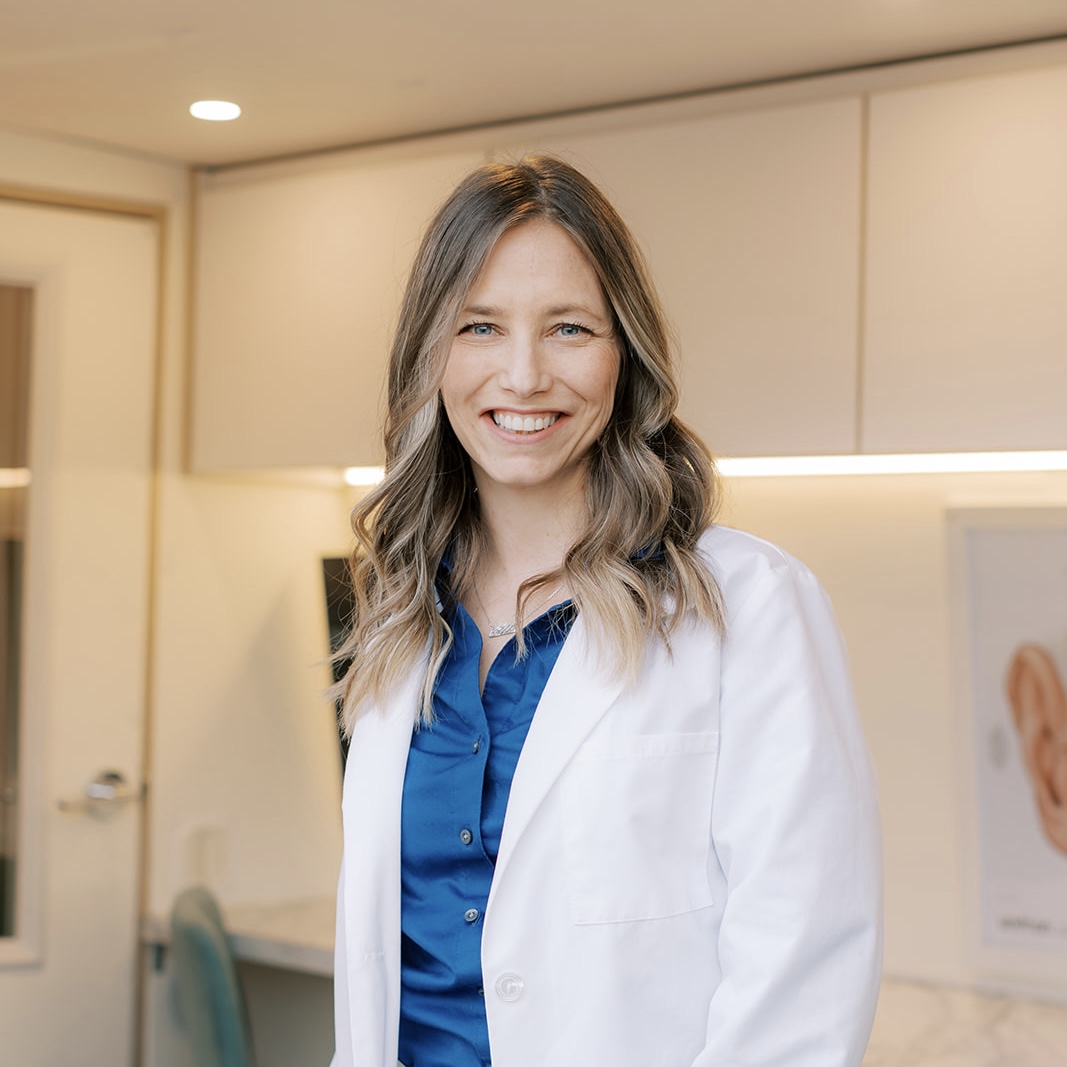
Trish Ehman
Registered Hearing Aid Practitioner, Ears To You Calgary
Calgary, AB
View Trish Ehman’s profileTranscript
Transcript note: this transcript was generated automatically and lightly cleaned for readability. [...] marks a word or phrase that could not be made out in the recording, and [unclear] marks words that were heard but could not be confirmed. Timestamps are approximate.
Allied Care Connect (00:00)
Today I'm joined by Trish Ehman, a Registered Hearing Aid Practitioner and the owner of Ears To You Calgary. Trish has 14 years of experience in hearing care and her team won a Canadian Choice Award. Ears To You is a mobile hearing clinic that brings hearing care to people, including [...] Today we're also talking about why hearing is so important for brain health. Welcome, Trish.
Trish Ehman (00:33)
Thank you for having me, I'm excited.
Allied Care Connect (00:35)
Awesome. So we'll dive into the first question. What drew you to hearing care, and what led you to take over the Ears To You franchise in Calgary?
Trish Ehman (00:46)
Well, while I was in school I was trying to actually get into social work and I didn't get in when I first applied and so I took a year of a program called Human Services Foundation. So it's basically a year to help you figure out what area of Human Services you want to be in and while I was in there I had met a couple people in this industry and had the opportunity to do some volunteering at a hearing clinic and also at a manufacturer as well and just realized it really fits me very well. I get to help people every day but maybe not in quite the same emotional capacity that social work would have led me down and I really like all the techy stuff and just learning about all these like changes as the years progress and so...
And then they just talked about how it was a good opportunity to run your own business, which I didn't do for a long time, but now that I'm here, it's been good. I was working at a traditional clinic for over a decade, and just saw a huge need for better access to care. A lot of people don't realize that hearing care is not a one and done appointment. There's a lot of appointments in the initial stages and then follow up over the maintenance of hearing aids, and regular checkups, that kind of thing. So I was seeing a lot of my patients just not being able to keep up with getting to me all the time. And so I had sought out to start to buy a van and start a clinic and I happened to find Ears To You. I joined them as an employee in 2023. And then I bought the franchise, the very first franchise a couple months later. So it's been about three years now.
Allied Care Connect (02:46)
Wow. That's been a journey.
Trish Ehman (02:48)
It has been a very, very big and hard and rewarding journey.
Allied Care Connect (02:52)
Yeah. Okay, so for listeners who have never met one, what does a hearing aid practitioner do day to day?
Trish Ehman (03:04)
So we test the adult population, we test their hearing and work with just the 18 plus. And so typically you would find us in most cases in a clinic setting. So in a clinic where we do hearing tests and then fit people with hearing aids. But sometimes some clinicians may go working for a manufacturer to keep up with the research or training of different products, but that's just different from what an audiologist is able to do. So they have a much wider scope of practice and they are able to work with children and in some bit more of a medical...
Allied Care Connect (03:46)
Okay. So why does hearing matter so much for brain health? That's my first question.
Trish Ehman (03:58)
There's been so much research over the last four or five years shows how much untreated hearing loss affects our brains and like any muscle in our body, if you don't use it, you lose it. And hearing loss creeps up on us really slowly and the symptoms of it are not always very obvious. But there's been the last few years, some really interesting studies that has actually shown that untreated hearing loss puts it at a much higher risk for dementia and Alzheimer's. It's not to say it's going to cause one of those things but if you're already predisposed to it genetically or because of other health concerns then you have a much higher risk for it to progress and progress a lot quicker. And it's, I mean, it's such important information but I also, you know, don't want to use that as a scare tactic either. It's really just to be informative and really focus more on being preventative about our health as we are getting older.
I always say to my patients, like, yes, we're living longer. Hearing loss is a normal part of just living, like from the time we're born to the time we die. We are losing our hearing, but that doesn't mean we shouldn't do something about it, right? And because we're living so much longer, we want to make sure we're actually living well and communication, being able to communicate with the people is one of the, I think, number one things that matter for how fast we decline as well. We need to be able to, we're social beings and we need to be able to stay in those environments that we love. We hear our environment, we hear the voice of our loved ones, we hear the barks or the meows of pets and also music, which is a big part of brain development and brain maintenance as well.
Allied Care Connect (06:07)
Okay, so what are some of the early signs of hearing loss do people tend to miss in themselves or in a parent?
Trish Ehman (06:18)
Well, a lot of times it's easier to see it on others than it is yourself, excuse me. Because that's a lot of times when people come to see us, it's like their family has already been bugging them, right? And a lot of the signs are really, really small. Things like turning up the TV just slightly, and you know, someone you live with is finding it's a bit too loud. But the really interesting thing about TV is we can turn the volume up louder, but it doesn't always mean it's actually easier to hear. And so that's usually a question I ask people, like, is it actually make it better or not? Because as we lose our hearing, it's more about clarity of sound and voices than it's just about volume. Like we can make it louder, but is the brain actually processing? So that's one thing.
But it's things like, when you're in a social environment, there's background noise. Are you having to focus harder? Are you having to put more effort? A lot of people will say to me, well, I can hear it, so it's fine. People who just need to talk louder or talk slower. But if we're having to rely a bit more on visual cues, which our brain is really smart, and we'll just start doing, even realizing, or if we're just more tired after a social get together, because we've had to put a lot more energy and focus. The amount of people during COVID that would tell me they didn't realize they had hearing loss until everyone was wearing masks and they couldn't read lips anymore, right? And you don't even realize you're doing it, but your brain, it learns how to fill in the gaps. So, you know, it will use those visual cues, like our visual improves our communication by like 30%, like a huge amount. And also just, like, the context of conversations, right? So if you kind of know what's being talked about, your brain is just filling in a lot of the gaps for the words you've missed. I don't even realize it's happening.
So it's like when you start to notice you need to face people to hear them better, right? If they turn when they're, and they're walking away while they're saying something, like those are all really, really like the first minor signs. And then it's just a matter of people no longer enjoying some of those more challenging environments because they're so hard to hear, right? Those are like further along, but those little mini signs are much easier to miss. And with the most common type of hearing loss, one to one conversations are no problem. Like we don't even notice it's an issue, right? It's just these other environments, there's a bit of noise or there's the TV speaker that was not very good quality or something else that is challenging.
And a lot of people will say, I don't want to hear all those things, right? Like you're saying, the dog barking or the floor creak, or, hey, my fridge has a hum. And so we just think, well, that speech is important in the conversations, which of course, that's what usually brings us in to have these appointments. But our brain is learning how, like when we have normal hearing, our brain filters the unwanted sounds. [...] we lose the ability to do that. So it kind of is the challenging part when someone gets hearing aids, and I'm getting a little off topic. Sorry. It's usually the challenging part is hearing aids will bring back everything that you've been missing, whether it's something you actually want to hear or not. And your brain needs time to retrain and learn how to filter those unwanted sounds. But that's what helps you when you're in a noisy environment, is it's learned how to filter some of the sounds happening around so you can focus on the person you actually want to be hearing, which is typically the person in front of you or at the table. It can take a bit of work up front to get used to hearing everything again. So yeah.
Allied Care Connect (10:37)
Yeah, it's fascinating. So hearing really is more than just sensory input. It's like a big chunk of it is the brain processing and filtering out what is important.
Trish Ehman (10:48)
Like a lot of the research has come in now and why, I mean, I love to get into environments like this, that you've given me the opportunity to share that, because that's the thing. But saying before, like we can turn up the volume of the sound and the ear will get the sound, but the process from the ear to the brain is sometimes where that disconnect happens. And so the longer we have a hearing loss that is not being treated, the harder it is to get that connection going again as well. And so we can improve the hearing a lot, but if that connection is damaged, and really damaged... And with time, it can come back quite a bit, but it takes time and that's where the challenging part comes in. Like any good rehab, like I joke with people, it's like any physio. If you injure your arm or your leg, you're not going to one physio appointment and then it's all better. It takes time and that's a really big part of why a[...] always wear their hearing aids, which is another topic for another day.
Allied Care Connect (12:01)
But it's actually my next question.
Trish Ehman (12:03)
I have a whole presentation that I do on why do hearing aids end up in drawers, because the biggest part is that, like, those first few months... So I'll let you ask the question maybe and then I'll keep going.
Allied Care Connect (12:19)
I just want to add, so I think it's really important to have relationship with their hearing aid practitioner. Because that, again, like you said, it's retraining the brain.
Trish Ehman (12:33)
Yeah. You want to find someone that you trust and can be comfortable with, because I hate comparing myself to certain sales people. I used to compare myself to a car salesman because you're making a large purchase. You don't always know much about what you're buying, which is not great, but it's really about having the trust in the person that you're working with to be able to ask the right questions, to know that you're making a good decision, and you have someone that you can feel comfortable enough asking what you need, right? If something's not working, if there's a problem, you got hearing aids and they don't fit well, they're hurting, they're hard to put in, whatever it is, those early stages are so important that you have someone that you really trust, because you can talk to them about what's not working well, and they'll be okay to help you through it. Tell you what's normal about the adjustment, what's not, what options to make things better. That's actually a really important part of the success of someone getting hearing aids and treating their hearing, is having trust in the provider that they're working with, for sure.
Allied Care Connect (13:50)
Yeah, yeah, yeah. Amazing, amazing. So my next question is, like, why do you think, just based on your experience with clients, why do you think people wait years to get their hearing checked?
Trish Ehman (14:07)
Um, I think there's a mixture of reasons. One is that for a long time, hearing aids weren't really very good, so the technology wasn't there to be able to, I mean, it would improve hearing for sure. But the quality of the sound and the way it could improve, especially in background, right? Like that's the number one complaint that we hear as you start to lose your hearing, in noisy social environments, and hearing aids' ability to improve the hearing in that was limited. And so I would say over the last five years that's come a huge long way, but I mean it sticks in people's heads, right? You spend a lot of money on hearing aids, but really it's not just the device, and that's again another topic for another day, but you're spending a lot, you're investing in something that you want to make yourself better. [...] go well, it's really easy to get discouraged, or, you know, people talk, and so you can have some friends who paid some money to better themselves and it didn't work out. [...] That side of it, but the technology has come such a long way.
I kind of joke now that my job isn't as difficult when it comes to actually helping people to hear better, like the hearing aids have come a long way. There's a lot of, like, research and testing that tells us how to program a hearing aid, so as long as you're doing all of those things to make sure that they're set up correctly, that part is usually the easy part now. It's like Bluetooth, my job is like Bluetooth troubleshooting all the time. You know, if iPhone doesn't update and now my hearing aids won't connect with the phone anymore. I joke, like, sometimes we're busier with that than just actual the sound quality of the devices is a problem.
So there's definitely that, and then it's also that adjustment period at the beginning. So this is the number one thing. So with our clinic we have a program that we call our ReConnect program, and it's over a certain amount of time to make sure that we're setting something up for someone that's customized to them and their needs, like learning about them, what is the most important thing about getting a hearing aid, whether it's, you know, cosmetics, the fit, the ease of use, you want all the technology and all the bells and whistles, or you just want something super simple, right? So it's really understanding someone's needs, their lifestyle, and then also that time in early days of adjusting to the sound, right?
Right, so a lot of times, you know, it's overwhelming at first, there's so much sound, they don't quite fit right, they take a bit of time to learn how to put them in. And so if there's too many of those things happening at once, it can lead to just, oh, this is too much work and I don't want to put it in. So personally what we do at our clinic is we actually set the hearing aids to their main targets, like we do the proper protocols for fitting, but we actually turn it down initially, because that part is super overwhelming for the brain. Like the brain hasn't [...] and then you're just giving it back all this sound. So usually my focus is just learning how to put them in and then use them. So let's build a habit first. And then once we do that and make sure they're comfortable, easily put them in, things are going good, then we slowly can continue to increase it. So that part can really make or break it for someone at the beginning, and then the long term too.
The reason why I became a mobile business is the long term. Like your hearing will still change, right? It's not a one and done and then five years you get new ones. It's in a year or two, if your hearing has declined a little more, we retest your hearing and then we readjust the hearing aids and reset them for those needs. And things like, simple things like earwax is like the number one problem with hearing aids. And so for someone who has poor vision or poor dexterity or just isn't able to maintain their hearing aids on their own, you know, that could completely derail the hearing aids because they'll just stop working. So being able to either learn how to do that yourself or have help with someone like us or family to be able to help maintain them.
And then I guess the last, or I mean there's probably so many reasons, but another big point to people not getting hearing [...] is just they, you know, they think it's based on their age, and it's like a bit of emotional, like, and grief sometimes for people to learn that they have hearing loss, right? Like, they think they're compensating well but then they're not, or they just see it as they're getting older, and then it's, some of it's just about the acceptance of it, right? And I had no clue when I was, I mean I've been doing it for a long time now, but I was getting into, right, having to give someone space to grieve how they thought they were. Maybe, you know, you think you're doing everything right, you're healthy, you're taking care of yourself, but you have hearing loss, and, like, just see it as a sign of getting older, even though, yeah, it really isn't always. Like I have patients 18 to 100. I actually have a lot of patients over 100 with being mobile. But, um, you know, it doesn't really, um, it's more time. Like that's what I always say, it's not really age, it's not about getting older, it's time, and your genetics will play a big role. But that's a huge thing, is a lot of it is just the emotional side of, I have hearing loss and now I have to do something about it, right?
Allied Care Connect (20:23)
Yeah, the processing part of and coming to terms with aging, I think, is pretty big.
Trish Ehman (20:31)
And independence, it's such a challenging part, right? I get to meet people in so many different areas now, being mobile, and different kinds of life transitions. And yeah, it's a big part of the independence because you no longer can hear well at doctor's appointments or just social environments, right? And so it really just pulls you back away from things. And yeah, a huge part of it. I think people just do not want to accept it.
Allied Care Connect (21:08)
You mentioned that there is a hearing loss that is a bit gradual and it's normal. Is there a difference from when it's more pathological, or there's like a, um, reason or cause behind it? Do you mean? Like a perforated eardrum or?
Trish Ehman (21:33)
Yeah, I mean the majority of hearing loss is gradual and just due to time. So naturally, the anatomy of our ear and the way sound goes, there's all these millions of little hair cells in our ear, right? And so the sound waves, and those hair cells get damaged over time because sound's just traveling and smacks them and smacks them and smacks them, and then they eventually get damaged. Things like noise exposure are going to make that happen a lot quicker. But with the shape of the ear, we lose higher pitch sounds the fastest, which is why clarity is a problem, because high pitches are what help us to understand, especially in the English language. Like certain languages are a bit different, but high pitches are all the consonants and the understanding of what someone has actually said. So because it happens so gradually, you don't realize that all these sounds are missing, because your brain does start to learn how to fill in the gaps, right? But if you've had some type of, you know, medical concern that's caused a sudden hearing loss, or like you said, a perforated eardrum, like from an infection or some kind of trauma, I mean that's going to be much more obvious of course, because it goes from good to not so good really, really quickly. But it's... did that answer your question?
Allied Care Connect (23:07)
Yes, yes.
Trish Ehman (23:09)
It just creeps up on us. And that's where, I mean, having regular checkups, you don't always know, right? So we make a point, with us being mobile, we do a lot of different hearing clinics in different areas of the city, whether they're at retirement homes or senior associations, community centers, just to give people [...] to have a screening and really just see where you're at. You don't know and you're not sure, like, at least you have a starting point, right? And then you can go from there. Because you don't always know. So yeah, just have that information.
Allied Care Connect (23:41)
Yeah, that's true. And people don't really think about it, or like, hey, I'm gonna make an appointment for a hearing test. But you do see it online. And you see it kind of, I guess, with some people who live in supportive living. They have people who come to them, people like yourself. Aside from you having that ability to come to people, are there any other advantages versus a traditional clinic?
Trish Ehman (24:10)
I would say just the personalized care that I'm able to give. Being in a clinic, I just found it was less personal. It's like a revolving door, but that's, like, what it became, right?
Allied Care Connect (24:27)
Like it was just very transactional.
Trish Ehman (24:29)
Yeah, it truly was, and this industry has become a little bit retail, where it's just about, you know, how many people can you see and, like, sell things the day. Like we are selling hearing aids and we're still a business, but I, you know, [...] people in their homes or where they are really having challenges, and it definitely just adds another layer to being able to build trust and a relationship for someone to allow me in their home.
Allied Care Connect (24:59)
Right.
Trish Ehman (25:00)
And I've had a gentleman who was having just a terrible time in noisy environments, so we actually just met at the cafe one day. It's like, let's go have a coffee or tea, and then we were able to troubleshoot his hearing aids in real time, and like I could adjust them just while we were sitting there in the cafe. And I don't do it a lot, um, but it was, it's pretty cool.
Allied Care Connect (25:22)
Because he's processing it [...] noisy environment.
Trish Ehman (25:26)
Yeah, yeah. Testing it out. We do everything in an office in a quiet room, and no one has trouble in a quiet room, and then you send them out in the world and you hope for the best. And it gives us the ability to actually help people where they are, where they actually need it, or, like, see their daily dynamics, right? I guess there's a little bit about being mobile, but like, you know, I have patients who, if they can't see, it's like me helping them figure out where their charger should go in their house to make sure, you know, it can be used well and, like, actually function for them. So there's like so many of my things... I guess I didn't fully answer your question, because that's why we're mobile and why it's so good.
Allied Care Connect (26:13)
It's really good. What I'm understanding is it is easier to translate it in real life settings because it's happening in a real life setting.
Trish Ehman (26:20)
Yeah. Yeah. It's happening where it's actually happening, all the time.
Allied Care Connect (26:30)
What happens during a hearing assessment? So for first timers out there, what would they expect?
Trish Ehman (26:37)
So with us, for a hearing assessment, for seeing someone privately, we see them for about 90 minutes. So it's a long appointment. And the first 20 to 30 minutes is just getting to know you. So, like, learning about you as a person, you know, what does your day to day look like? Where do you have challenges with your hearing? What areas are really [...] And then a lot of medical history, of course, because there's a lot of different diseases and other things like, you know, diabetes and some cholesterol or some heart concerns that can make you a little bit more predisposed to hearing loss. So, you know, we have to dig in and learn about that.
And so as we go through a hearing assessment, we are looking in your ears. You know, sometimes it's as simple as we just have a buildup of earwax and we can't hear, and then we can clean that out. Sometimes there's other medical concerns with the eardrum or other mechanical issues. So we look in the ears, we do a test called tympanometry, which is telling us how is the eardrum actually functioning. So that way, if there is any actual, like, mechanical concern, or, like, if you've had ear infections, it's caused scarring or other problems. And your eardrum is a drum, and it needs to wiggle and move with the sound. And so if it doesn't, like, a horrible enough sound can't get through. So we need to make sure that that is all functioning normally.
Then we do a bunch of different tests. So a lot of people might be familiar with the beep test, so we play sounds, have you respond with like a button or hand raised, and that tells us the level of someone's hearing. So is it normal, is it not, and then what degree of hearing loss does someone have. And then there's a bunch of speech testing, and the speech testing is super important because it tells us how is the brain actually taking the sound, right? And so one thing I always like to make sure people are aware of is how important that is. We all offer hearing screenings at a lot of places that you don't get all of these tests, right? We'll just do the quick beep test. But the speech testing tells, you know, how successful you may be with hearing aids, and then also maybe do you need more than just a hearing aid, or what other tools may you need to hear better, those scores are very poor.
So we do what we call word recognition tests, which helps us know how is the brain processing words. You're just getting single words that you have to repeat back. Because again, we rely on visual cues and contexts of conversations and don't realize, right, how much that helps us. So when we are just having people repeat words, they start [...] And then a speech in noise test as well. So again, for a long time it was like everyone complains about hearing in noise and they're just testing words in quiet, right? So there's a couple different tests now that can be done to help understand how someone actually is hearing in noise, and then again just helps us figure out, you know, what hearing aids might be the best fit that can help with that separation, or accessories that might be needed. So those speech tests are really, really important. Like the beep test tells us how to set up a hearing aid, but those really help us to determine, you know, how much time it might take to get adjusted, how much work might be involved, and what some realistic expectations are to how well a hearing aid will actually help, because it is a hearing aid at the end of the day.
And this is why, you know, being proactive is always the best, because, um, if we go a long time without hearing aids and we have a severe loss, like, it's not gonna be as successful as if we, you know, get them when it's a more mild loss. And I always just say that so, like, softly, because I never, never, never want it to be a scare tactic or to make someone feel bad for not doing something. You know, it's always like the best time to do it is now, right?
Allied Care Connect (31:08)
Well, yes. Now.
Trish Ehman (31:10)
It's like, never to make someone feel bad for not doing it sooner. But like anything, if we do it sooner, we do better, right? [...] help to maintain it a lot better, and that's a big part of it too, which we don't always focus on, our preventative side, right?
Allied Care Connect (31:30)
Not all the time.
Trish Ehman (31:31)
Yeah, all the time.
Allied Care Connect (31:33)
So that's why we have these education pieces.
Trish Ehman (31:35)
Yeah, well, 'cause, well-informed decision, right? That's all I'm there for. I just want people to know the information so they can make good decisions for themselves.
Allied Care Connect (31:44)
It also lifts the veil and they kind of, the assumptions that people may have.
Trish Ehman (31:50)
Yeah, yeah, that's all. Like, the more information you have is helping you to make good decisions for yourself. It doesn't mean you're ready for it yet, it just means you now know, and then you make the decision, right? I do think healthcare has really changed over the last decade, where before it was trust in your doctor to tell you this is a problem you have and this is what the requirement is to make it better, or what you do now, right? It was just, you do what your doctor says, and now it's a lot more about, you know, the shared discussions and care, right? And making decisions as a partnership, [...] just, I'm the professional and I'm telling you what to do. Yeah, like, of course, I am the professional. I have the expertise and knowledge. I see it every day. But because some people will tell me, like, well, do I need to have a hearing aid? And it's like, well, yeah, based on this, the test is telling us you have hearing loss, should have hearing aids. But me telling you to have it, and you actually actively, you know, wearing it and being happy with it, are two different things if you're not in a position to be ready for that yet, right? So it really needs to be, is getting hearing aids or treating my hearing loss in some way actually giving me a [...] and making me feel like it's improving my quality of life? That readiness is a very important part of it. And so again, having trust in who you're working with is also very important. So yeah.
Allied Care Connect (33:30)
Yeah. Okay, I have a question. Like, how does hearing loss affect, like, relationships? Like once they have the hearing aid and they're [...] What are some of the things that clients would typically say?
Trish Ehman (33:52)
Well, I do like to joke a little. I'm a marriage counselor, not quite in the way you think. I fix the hearing side of the communication, not the other part. I would say it's just, I mean, it brings back, like, more enjoyable conversation, instead of it being such a strain or a challenge between spouses, or, you know, the dynamic of someone with their kids. And it gives back the independence quite a bit, right? Like, before, going to a medical appointment, or being with your friends and being able to socialize again, actually engage in conversations. A big part of that, right, like independence, just enjoyment of these activities that we once [...] that have now become stressful because we can't hear.
And, you know, we've all been in a situation where we get into a noisy restaurant [...] hear. And even with normal hearing, you're like really having to focus, and think how hard that is and how exhausting it is one time, never mind every day. You know, when you get to, like, the third [...] they say something, you don't know what they said, so you ask them to repeat, and then you said again, and you're like, oh, I still don't know what they said. And then you're just kind of like, okay, hoping you're not agreeing to something, or, you know, like, reacting in the wrong way. But those things happen for people constantly throughout the day if you have hearing loss. And so it's really just, you know, bringing back the ease, and just, yeah, I mean, I guess that would be it. Yeah, easier. That's all it is. So many times they say to people, it's not about do you hear or do you not, it's about how much effort, and we want it to be easy and enjoyable and fun, right? We just don't want to have to look over at our spouse constantly, what did they say, and, like, completely rely on that person. Because you do get used to people that you know's voice, right? So you'll have your spouse or your daughter or your son's voice that you're really good with, even with hearing loss. But it's like giving back that independence. So yeah.
Allied Care Connect (36:09)
I do have a question, it was not in the others. I'm just wondering, so is there a study about people who lived in the city versus lived in the country, like kind of the prognosis of, like, their hearing, and [unclear] people? Yeah, because that would be interesting, like the amount of noise that comes through.
Trish Ehman (36:36)
I mean, like, if they live in the country, they might be more prone to, like, farm, like noisy [unclear]. Is that what you mean, or just like...
Allied Care Connect (36:44)
Oh, I thought it would be the other way around, where city traffic, there's more people, whereas I guess in my head, in the country it's like quiet.
Trish Ehman (36:54)
I don't know, to be honest. I think lifestyle does play a role in it, right? But I don't know if there's a study about that.
Allied Care Connect (37:07)
Yeah, but I guess there is a point if you are operating machine[...] a farm, and I don't think people typically would wear protection.
Trish Ehman (37:15)
There's a fine line between having hearing, like, protecting your hearing if you're working with heavy machinery and it's loud and you're in a noisy place all day, versus also not reducing it so much that you're actually then having a safety [...] because you can't hear what's happening around you. So yes, we actually just started an industrial pro[...] for that reason, because we get calls all the time. But I mean, the preventative side is so important. So we're actively, actually working with a lot of workplaces now to help.
Allied Care Connect (37:51)
That's incredible.
Trish Ehman (37:52)
Regular annual screenings. So yeah, because, like, genetics is your number one kind of cause, or, like, what will make you more predisposed to it. Because I've had people who've worked in noise for a couple of summer jobs when they were younger and they have, like, a pretty severe noise-induced hearing loss, and then someone who's worked in construction for 30 years with equipment that's noisy and it's only affected them in a mild to moderate way. Your genetics will play a huge role in that. So people will ask me all the time, is my hearing normal for my age? I'm like, it's really just not, there's no way to tell you that, because there's just too many factors that make it happen. Whether it's noise, whether it's other traumatic things that happen.
Allied Care Connect (38:46)
Are there ways to reduce risk factors, or how can we protect our risk?
Trish Ehman (38:54)
Well, of course it would be, you know, like, making sure you have proper hearing protection in noisy environments. Like, we've all gone to, you know, a loud concert and then left with our ears ringing for a day, two, three, if it was loud enough, and, you know, that is the little hair cells having some damage. So, you know, you do that enough times and there will be some permanent damage happening. I kind of joke, like, I do, I drive my hearing clinic van, and, like, you blare my music sometimes, so, like, we still have our life, like, enjoy it, right? But really, I mean, yeah, noise exposure would be the number one thing. And then treating our hearing once we actually start to have a hearing loss. That would be better: the sooner you treat it, the better you will do. Your brain, if it's getting that information, it's a muscle and it will stay stronger and be functioning a lot better if we're treating it a lot sooner.
Allied Care Connect (39:56)
Okay, thank you so much. I have one last question. So what should someone look for when [...] a hearing care provider?
Trish Ehman (40:06)
Well, I think, like, the big one is the trust. Like, you would, you know, obviously you're meeting someone for the first time, we don't always know, but I know someone that takes time with you to go through all of those things I kind of talked about, you know, go through a really in-depth discussion about you as a person, what your actual needs are, what your concerns are, does a thorough assessment. And then also, when it comes to the sales side of it, is not, you know, a salesperson. Like, of course, again, I have to, but in their best interest. And someone who gives you multiple options to choose from, or doesn't pressure you into making a decision, and really is choosing the right option for what your needs are, right?
So many times I've had people tell me they've gone to a clinic and they have hearing loss, but their concern is something like ringing in their ears. And then they were like, well, you just need these $6,000 hearing aids and there you go. But really, it's like, once I get down to learning more about them, it's like, hey, did you know, because you worked in noise, ringing is a really common effect of noise-induced hearing loss, and you would actually have coverage to get hearing aids through WCB. But because I learned that about the person, I can help them through that, instead of just, like, oh, these $6,000 hearing aids are going to fix your hearing, when really all the person's concerned about is the ringing, even though it is because of the hearing loss. So it's really just someone who understands your concerns and will work with you to make them better, as best as we all can as people. And, yeah, we just feel confident enough to ask the right [...]
I actually, when I go do some [...] have a little one-page sheet of, like, something to bring with you. I'm a list person, I will forget things the minute they're said to me, so I have a sheet and I'm like, bring this with you, bring a partner, like a spouse, a friend. That's, like, actually something we track, is having a companion with you, not because you can't make decisions, but just because there's so much information. So, you know, I've rescheduled appointments or had a secondary consult with someone because that person, whoever it is... Like, I have one patient whose sister lived out of town and actually [unclear] and wanted to be there, because she was so overwhelmed by the end of it. Like, what do I even do? Um, [...] we rescheduled the visit for when her sister could be there and, like, help, you know, make decision, help her, because she'd already kind of gone through that journey. Um, and so it wasn't all about, like, just make a sale today, right now, get this person into something. It's, like, making sure they feel comfortable and not pressured or rushed to make that decision, and it's at the right time, right? Someone that can help someone feel empowered and successful in this journey.
Allied Care Connect (43:29)
Yeah, totally. I mean, having someone else there to just help, you know, catch some of the information, help make decisions, and, like, really just make it more successful.
Trish Ehman (43:39)
It's actually a huge, huge part of people being successful. I guess that was another answer to earlier's question about being successful. Having kind of, like, a friend or a partner of some kind, whoever it is. Not that, you know, I'm all about, like, female empowerment. I'm independent. It's not anything to do with that. It's just, yeah, these things can be overwhelming. So having some super pushy [...] and you can trust and feel good with, that's really the biggest thing, I think.
Allied Care Connect (44:11)
All green flags.
Trish Ehman (44:13)
All green flags, totally. And then those, like, proper protocols, but that's a conversation for another time. Yeah, I truly think that that is, like, the biggest thing. If you feel comfortable enough to, like, say what you need to, and not just, like, oh, the person told me this, so this is what's happening. Right. That will definitely make it go much smoother and be a lot more successful, for sure. Yeah.
Allied Care Connect (44:37)
Okay. Thank you so much, Trish. This has been very enlightening, and hopefully to all the other listeners that are going to come across our podcast, that it kind of shone a light into, I guess, assumptions about hearing aids. And hopefully people who are feeling a little bit more hesitant can be more open to this information, and that it does take time and you need to find someone to trust.
Trish Ehman (45:06)
Definitely. Yeah. Thank you so much, Valerie. This has been great. I love what you're doing. Just being able to share all these different areas of healthcare, right? Like, that's what we're trying to do, and [...] people aware of it. I think what you're doing is just also so wonderful.
Allied Care Connect (45:23)
Thank you. Before we close, where can people find you?
Trish Ehman (45:29)
So they can find us on our website, which is https://earstoyou.ca/location/southern-alberta/. We're on all of the social media platforms. Christa, who works closely with me, she helps manage all of those, because we're on Instagram, Facebook, I think we're even on TikTok, to be honest. YouTube. I do have a YouTube, which is just Hearing with Trish, but the rest are all just Ears To You Calgary.
Allied Care Connect (45:55)
And yes, yeah, you're kind of everywhere. Okay, awesome, we'll put it on the show notes.
Trish Ehman (46:00)
Awesome, thank you so much.
Allied Care Connect (46:02)
Thank you so much for giving me your Sunday.
Trish Ehman (46:06)
Yeah, of course, not a problem at all. Have a great rest of your day.
Allied Care Connect (46:11)
You as well. Bye.