
About this episode
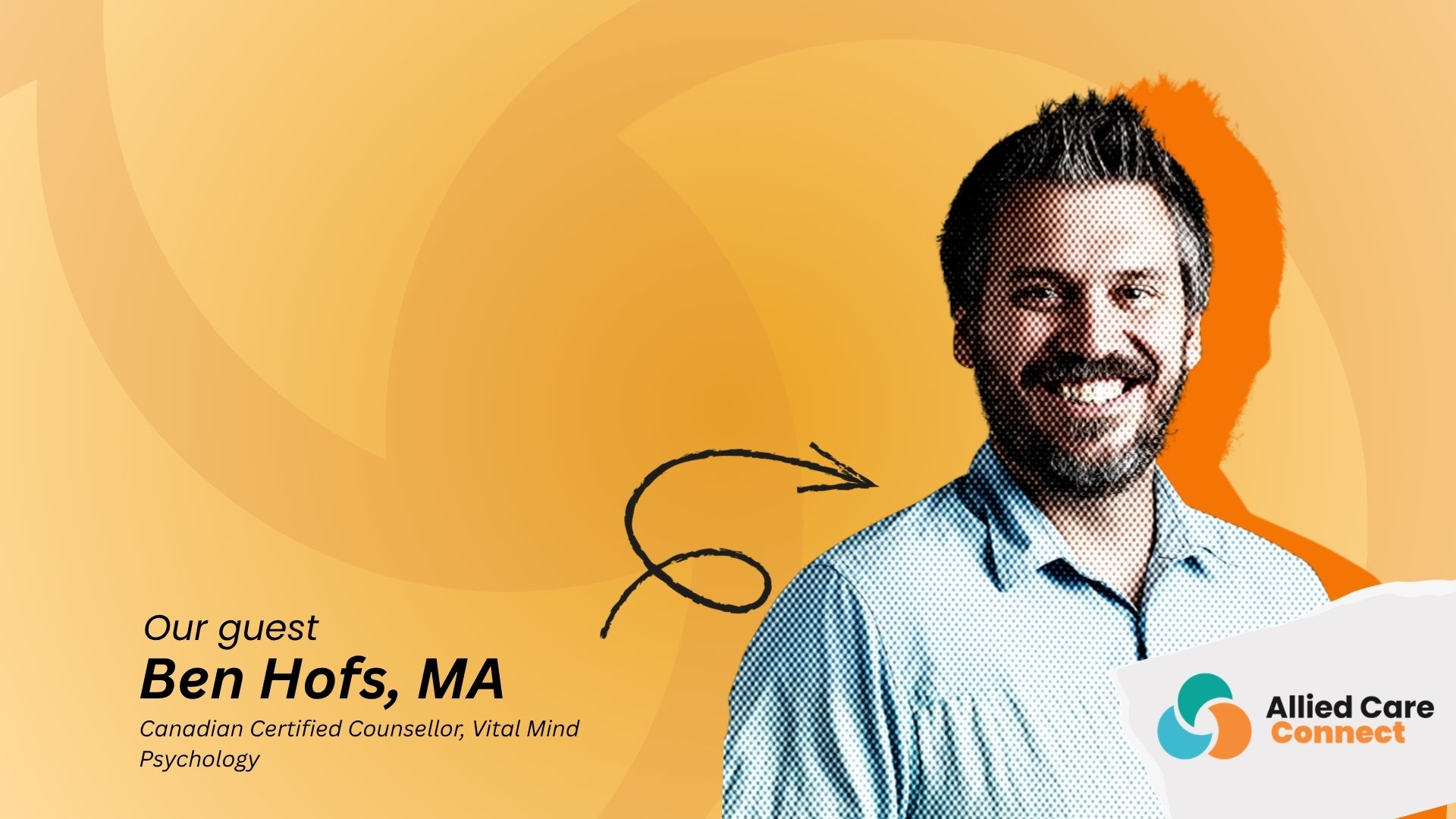
Valerie talks with Ben Hofs, a Canadian Certified Counsellor with Vital Mind Psychology in Cochrane, Alberta. Ben works with individuals and couples on relationship challenges, intimacy, grief, life transitions, anxiety, depression and neurodivergence. In this episode they focus on neurodivergence in relationships: what the word means, common patterns when neurodivergence is present, the line between support and self-responsibility, the strengths neurodivergent couples bring, and what matters most if you think neurodivergence might be part of your relationship.
Key takeaways
- Neurodiversity means different brains: real differences in how people take in and process the world, not just personality (03:19).
- The most common pattern Ben sees: the couple doesn't know neurodivergence is present, and that can explain much of their struggle (07:39).
- Some neurodivergent partners can't feel strong emotion and think/speak at the same time; pausing isn't disengaging (09:36).
- Direct communication works best: say your wants, needs and feelings clearly instead of expecting your partner to read between the lines (13:45).
- "You're not broken." If neurodivergence is part of your relationship, look for a couples counsellor who understands it (22:41, 25:38).
Meet the guest
Transcript
Allied Care Connect (00:00)
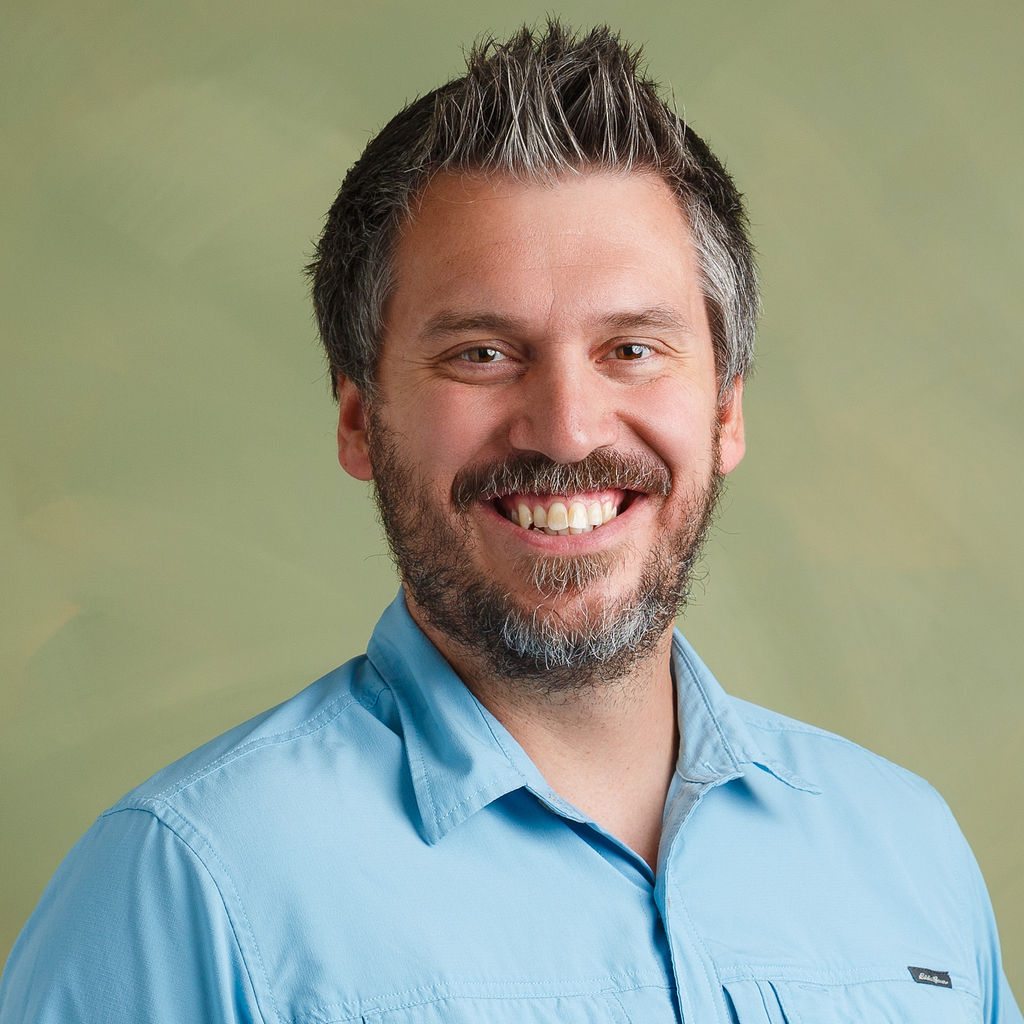
Today I'm joined by Ben Hoffs, a certified Canadian counselor with Vital Mind Psychology in Cochrane, Alberta. Ben works with individuals and couples in areas such as relationship challenges, intimacy, grief, life transitions, anxiety, depression, and neurodivergence. In today's conversation, we're going to focus on neurodivergence in relationships. Welcome, Ben.
Ben Hofs (00:29)
Thank you so much for having me. I'm very excited.
Allied Care Connect (00:32)
⁓ all right, let's dive into it. To start us off, can you share us can you share a bit about who you are and the work that you do?
Ben Hofs (00:42)
Yeah, so ⁓ I ⁓ am ⁓ a man in his forties who woke up ⁓ two and a half years ago going, ⁓ I want to change. ⁓ And my wife said, Okay, what are we doing? ⁓ And we really went through a big change. We moved, I went back to school, ⁓ I finished my master's of counseling and now working full time as a therapist. So that was a a lot of change in the span of two and a half years.
Ben Hofs (01:12)
⁓ I love what I do. I love being in the therapy office, the therapy space. ⁓ And ⁓ it's really exciting to find sort of a a ⁓ second chapter to your work life. ⁓ but I have found what's been really interesting is how much in therapy my greatest asset is my personal life as well, which I'm sure we'll touch on as we go further into this.
Allied Care Connect (01:38)
Yes. ⁓ Okay, what does a counselling ⁓ counsellor do?
Ben Hofs (01:43)
Yeah. ⁓ good qu what do I do? no. ⁓ I sit in this room. No, well th this actually is my therapy office. ⁓ I think a counselor's job ⁓ is to ⁓ walk alongside people. And I think I say that slowly because often sometimes we might say, a counselor is a guide. And and I don't think my job is to walk in front of people.
Allied Care Connect (01:52)
Yeah.
Ben Hofs (02:13)
Because I'm not telling them where they should go or how to get there. ⁓ but I'm walking alongside them. But the idea is I can maybe provide perspectives ⁓ and see around corners ⁓ and give alternate thoughts that they may not have considered. Because often if you're coming to therapy, you're stuck. You're stuck in something in some way. ⁓ And you have run it through your mind and yet you're still stuck.
Allied Care Connect (02:33)
How we
Ben Hofs (02:40)
And so I think a counselor can come in alongside you ⁓ and start providing alternative ways of thinking and feeling and processing and moving through things. And then the idea is you if you can embody some of those, if they resonate with you, now you can unstick yourself, which is a which is I think the goal of many people who are coming to therapy.
Allied Care Connect (03:00)
Mm-hmm.
Allied Care Connect (03:04)
Yeah, awesome. So let's pivot a little bit and talk about ⁓ neurodiverse clients and couples where neurodivergence is present. How do you explain that word to people who may be new to the topic?
Ben Hofs (03:19)
Yeah, so this is a a great thing I'll I'll say to a client. ⁓ do you know what neurodiversity is? And some have an idea, some have a great answer, and some are like never heard that word before. The idea is that many of us have operated under the belief we all have the same type of brain that is sort of built the same way and processes the world in a similar way to everybody else, but that's actually a myth.
Ben Hofs (03:49)
We have different brains, the idea of neurodiversity meaning different brains. And the idea that we it might not just be like differences of personality, but fundamental differences of experiencing in sensory inputs, emotional processing, ⁓ how we even think and conceptualize things. And so the idea is the the neurodiversity movement.
Ben Hofs (04:17)
kind of encapsulates some neurodiverse populations like people with autism, people with ADHD, and things of that nature. And so ⁓ though neurodiversity actually kind of does include neurotypicals, that would be the language language for those who don't experience autism or ADHD. ⁓ But I am just still a different type of brain. And I think at the core of it is not that there are people with the right brain,
Ben Hofs (04:46)
And that there are people with broken brains, it's like ⁓ we have to fundamentally scrap that idea and it's brain A, brain B, maybe brain C, and they're just different. That's what we're talking about.
Allied Care Connect (04:53)
Mm.
Allied Care Connect (04:59)
Mm-hmm. It's really fascinating. Think about it.
Ben Hofs (05:04)
Yeah.
Allied Care Connect (05:06)
Yeah. ⁓ Again, like coming back to what you spoke about ⁓ earlier and what counseling does is that offers new perspective. Right. So ⁓ I mean it comes to relationships, like what drew you into specializing in this type of work?
Ben Hofs (05:07)
Ha ha ha.
Ben Hofs (05:16)
Mm-hmm. ⁓
Ben Hofs (05:25)
Well, I remember ⁓ a professor saying, ⁓ couples counseling is a very different beast ⁓ than individual counseling. And I was like, ⁓ isn't it just individual counseling like with two people? ⁓ Yeah, times two. And then I in my practicum I asked my supervisor, can you send a couple my way? I want to dip my toes in this. And ⁓ it was a
Allied Care Connect (05:41)
⁓ Times two. ⁓
Ben Hofs (05:54)
very different experience. ⁓ it's almost like there's not just two more people in the room, there's like three more people in the room because it's like this person, this person, and like this relationship entity that exists between them. And so it's like you have to bring your a game into that space while holding that my job is not to
Ben Hofs (06:22)
pick this client or this client, but really to serve that entity, that relationship in the middle. And I kind of love the challenge of it. I mean, and I'm also a big believer in relationships. I'm a very relational human being. I believe that we are meant to be connected to each other and that our greatest joy comes from our connections with each other, but also probably our greatest distress comes from those same connections. And so
Ben Hofs (06:49)
I love entering into that space because with every couple that comes and sits on this couch, there is there is still often a desire to find each other again. And it's like, okay, let's dig into it and see if we can bring you two closer together. And I love the challenge of it. I I really do. And I love watching people find their partner again. It's
Allied Care Connect (07:03)
Mm-hmm. ⁓
Ben Hofs (07:17)
probably one of the most beautiful things to witness. And I get to like witness it. That's amazing.
Allied Care Connect (07:22)
Yeah, this is making me emotional too. So thank you for saying it's so so lovely. Like there is so much truth to it, right? So what happens when your divergence is present? What are considerations? What what are common patterns that you see or challenges?
Ben Hofs (07:24)
⁓ Yes.
Ben Hofs (07:31)
Mm. ⁓
Ben Hofs (07:36)
Mm.
Ben Hofs (07:39)
⁓ Yeah, I'll say the number one common pattern, the number one, is that the couple doesn't know its present. ⁓ And that's that's a that's a big place to start, right? Where they come in and I've got these two people and they're sharing their story, and then inevitably they're sharing sort of their patterns, the way they get into cycles of conflict or the issues that they're coming up with. ⁓ And I'm like,
Allied Care Connect (07:49)
Yeah. ⁓
Ben Hofs (08:09)
⁓ my my spidey sense, my radar is going off that actually one of these people is potentially neurodiverse. And so, you know, gently and thoughtfully, I'm kind of like in exploring that if that is in their awareness. And I I'm ⁓ fairly surprised at just how often it's not. It's not in their awareness, right? Especially for couples who are probably like 30 years or older.
Allied Care Connect (08:26)
Mm-hmm. ⁓
Ben Hofs (08:38)
⁓ individuals. It's just it's not a part of ⁓ wasn't part of the culture or vernacular to understand yourself in that way. And so then I ⁓ it's kind of two things have to happen at once. I have to explain that I'm potentially seeing neurodiversity present in one of the partners, but ⁓ but also ⁓ that it might be actually impacting the relationship.
Ben Hofs (09:05)
Because I think people are like, okay, so he has ADHD. ⁓ so what? And I'm like, that might actually explain most of what your struggle is working together. Because you are fundamentally approaching the world differently. ⁓ so that would be a big pattern I would see. Another big pattern would be ⁓ when conflict arises, ⁓ how ⁓ the two individuals process. This is a a really big one that I see that ⁓ as a
Allied Care Connect (09:05)
Yeah. ⁓
Allied Care Connect (09:31)
Yeah.
Ben Hofs (09:36)
As a neurotypical individual, ⁓ I have the ability to hold cognitive thought while experiencing emotions, and I can do that simultaneously. It's why when I get in an argument, I can feel heated, my body's physiologically changing, and yet I've got ⁓ snappy retorts ⁓ and you know thoughtful debate, like and I can go, go, go. Both can happen. Whereas
Allied Care Connect (09:53)
Yeah.
Allied Care Connect (10:05)
Hmm.
Ben Hofs (10:06)
the ⁓ somebody else who's neurodiverse, often they can either feel emotions or they can be cognitively processing ⁓ and ⁓ speaking. They can't really do both at once. There's just their brain is structured differently. And so what will happen is they'll be like, yeah, we'll get it, you know, I'm trying to have this conversation and my partner shuts down. But they're interpreting it as my partner doesn't care about me.
Allied Care Connect (10:18)
Okay.
Allied Care Connect (10:29)
Mm-hmm.
Ben Hofs (10:35)
They're disengaged, they're not invested, ⁓ it's their way out, they're using it as an excuse. When in reality, that partner feels the emotion flood their bodies, and very literally their cognitive brain goes offline. And so they come to me and like, yeah, we try to talk through these things, and you know, she just shuts down. And I'm like, ⁓ and then of course they're personalizing it.
Allied Care Connect (10:53)
You know.
Allied Care Connect (11:00)
Mm-hmm.
Ben Hofs (11:04)
And so it's like stepping back and saying there is something very big at play here. So those would be some and there are definitely more and I can get into them, but that those would be some of the initial patterns I would see.
Allied Care Connect (11:17)
Okay. I am quite curious about communication and someone who may be in the autism spectrum ⁓ and kind of what challenges ⁓ as well do people experience. ⁓ to elaborate a bit more. ⁓
Ben Hofs (11:30)
yeah, absolutely. ⁓ so at this point I have no problem sharing this and and I've talked to my wife about it. My wife is on the spectrum. ⁓ and so when we first got married, we were running into some pretty significant communication challenges, and that was because we didn't understand that neurodiversity was present at that time. So since learning that and working through things, a lot th a lot more has become apparent. So
Ben Hofs (11:57)
In terms of communication, what might happen with somebody on the spectrum is ⁓ a couple things. So one, they're bottom-up processors versus top-down. Bottom-up means you focus on the details, right? If you're building a puzzle, you're looking at each and every individual piece. When you pick that piece up, it's like the puzzle almost ceases to exist, and this is this is where I'm at. Whereas a top-down processor
Allied Care Connect (12:22)
Mm-hmm.
Ben Hofs (12:26)
starts with the big picture and then goes down to the details. So that is fundamentally different starting places. Both have value. They both absolutely have value, but they're very different starting spots. ⁓ Another communication difficulty would be ⁓
Allied Care Connect (12:34)
Yes. ⁓
Ben Hofs (12:47)
⁓ people with on the spectrum struggle to ⁓ read between the lines. They they're not inferring things. If you're implying something, they're likely to miss it. So this is very classic scenario. My wife goes, ⁓ like, you know, how are you doing? And I'm like, I'm fine. She's like, okay. ⁓ And I'm like, ⁓ what like?
Allied Care Connect (12:52)
Mm-hmm.
Allied Care Connect (13:08)
⁓ Ha ha ha.
Ben Hofs (13:14)
it clearly like read my tone, my body language, like there was a lot behind that I'm fine. Just ⁓ because direct communication is best. And I actually like so this is like it's funny as a neurotypical I'm like, ⁓ how are they not you know, how is she not seeing this? And I'm like, ⁓ but all she's asking for is direct communication. That actually has a lot of value and and so I have to like
Ben Hofs (13:45)
Just because ⁓ I ⁓ see it one way doesn't make it the right way. And so direct communication becomes very important ⁓ of just speaking very clearly to your wants, to your needs, how you're feeling, because so many couples come in and they're really frustrated and their partner's like, You're hurt? And they're like, and they're so offended, like, yeah. And I'm like, Did you tell them you're hurt? Well.
Allied Care Connect (13:50)
Mm-hmm. ⁓
Ben Hofs (14:14)
No, but like they should know. And I'm like, no. No. Their their best way of knowing how you're doing is you clearly telling them. So this is this is the type of thing and and and it's hard again when you just have this assumption that everybody processes the way you do. Like ⁓ I can tell when someone says, I'm fine, I'll be like, tell me more. It sounds like you're not fine, right?
Allied Care Connect (14:16)
Mm-hmm. ⁓
Allied Care Connect (14:24)
Hmm.
Allied Care Connect (14:34)
Yes. ⁓
Allied Care Connect (14:42)
Yeah, yeah. ⁓
Ben Hofs (14:43)
And so I assume every other brain I encounter can do that. No. Every brain has different set of abilities and strengths and we approach things differently.
Allied Care Connect (14:51)
⁓ Yes. Amazing. Thank you. ⁓ This puts me into my question next is like, where do you kind of see the line between support ⁓ and self-responsibility for ⁓ like you mentioned for the neurotypical? It's like you have to really redirect, but for ⁓ the the more neurodivergent person, like ⁓ where's the line? Yeah. ⁓
Ben Hofs (15:16)
Right, right. This is this is a great question. So fair, fair. ⁓
Allied Care Connect (15:20)
This is a per asking for a friend. ⁓
Allied Care Connect (15:24)
Ha ha ha. ⁓
Ben Hofs (15:32)
I think I'm gonna give my best attempt at the ⁓ at at an answer to this because I think you could ask ten different people and they would say ten different lines. So this is just me taking a stab at this. But ⁓ I know lots of couples where specifically if one of the partners is ⁓ on the spectrum has autism, ⁓ is the partner will complain that they don't look me in the eyes. They don't make eye contact with me.
Ben Hofs (16:00)
And now they're personalizing it, of course, right? They don't respect me. They don't want to be intimate with me. They're, you know, they're they're ⁓ they they're they're elsewhere. They won't give me the time of day by just even looking at me, right? I've I've heard this from multiple clients.
Ben Hofs (16:17)
If it's was just support and not accountability, self-responsibility, it would just be like, well, I guess you have to just, you know, you'll never get that. So suck it up. Right? We, you know, this person struggles because as we know, people on the spectrum really struggle with eye contact. It actually makes it harder for them to listen because there's so much stimulus coming into them at once, so much input, that by not looking at you, they actually can listen better. ⁓
Allied Care Connect (16:29)
Yeah.
Allied Care Connect (16:34)
Mm-hmm.
Ben Hofs (16:45)
So if it was just support, it'd be like, well, sorry. Or there might be like self-responsibility would be the person with autism saying, I hear what you're saying. Is there any other way I can make you feel connected? What if you put your head on my chest as you talk to me? And the person might be like, Well, that would be really great. I'd feel really close to you. I'd like I could hear your heartbeat and your arms would be around me.
Allied Care Connect (17:10)
Mm-hmm.
Ben Hofs (17:15)
And so then it's it's realizing that it might not actually be about eye contact so much as it is about the desire to connect. And so that's where that's where I would say the line is in the sense of you don't have to maybe ⁓ meet or meet your partner's need in the exact specific way they ask for it, but meet the underlying need. And I would say that's kind of the line. Does that make sense?
Allied Care Connect (17:24)
Okay. ⁓
Allied Care Connect (17:40)
Mm-hmm. Yes.
Ben Hofs (17:45)
Am I explaining that well?
Allied Care Connect (17:45)
Yes, it makes total sense. Absolutely. Yeah. ⁓ When you mention the underlying need. And it could be in a different way, not in the yeah. And it would vary per cup.
Ben Hofs (17:54)
Yeah.
Ben Hofs (17:57)
Yes, absolutely.
Allied Care Connect (18:00)
So my next question is, what strengths do you often see in neurodivergent couples that deserve a bit more recognition?
Ben Hofs (18:08)
Yeah, yeah, absolutely. Well, and there's a lot of strengths. I love when couples really start to see each other's strengths. ⁓ where, you know, one partner's like, ⁓ I love ⁓ how organized her thinking is. I need that in my life. Like without her our family would be lost. Or one partner saying, I love that ⁓
Ben Hofs (18:34)
She's so he or she is so like sensory superpowered, because often people on the spectrum, their sensory is so heightened, their sensory landscape, and so the things they taste, the things they smell. And some I love the idea that a partner like wants to harness that in their partner. They're like, that's so awesome. I'm so glad and lucky to have that in my life. ⁓ Or if you think, like I said earlier, about the idea of direct communication.
Allied Care Connect (18:44)
No. ⁓
Allied Care Connect (18:54)
Yeah and ⁓
Ben Hofs (19:03)
I actually think direct communication, sorry, neurotypicals, but might be the better way of communicating, ⁓ just to be really clear about our wants or needs. It could be sort of off-putting at first when, you know, I'm like, hey, ⁓ loving darling wife of mine, like, can I ⁓ give you a back rub? And she's like, no, I do not want to be touched right now. ⁓ Initially, it's like, whoa, but it's also like.
Allied Care Connect (19:03)
Mm-hmm.
Allied Care Connect (19:07)
⁓ Ha ha
Ben Hofs (19:33)
⁓ it's not me. She just isn't in a space to be touched right now. And that I don't actually have to fill in the gap and create my own story. So when couples learn to harness their different differences and accept them, I think they actually can go to some pretty incredible places because they have something to learn from their partner.
Allied Care Connect (19:39)
Mm.
Allied Care Connect (19:55)
Mm-hmm. Yeah. Yeah. That's amazing. Thank you. I have another question. Like I probably am neurotypical. I think I think. ⁓ And and ⁓ you're right, like I communicate more than just words. There's tone, there's body language. ⁓ And I guess we can talk a bit about more as to how you arrive ⁓ where you can be more direct as well. ⁓
Ben Hofs (20:06)
Mm-hmm. ⁓
Allied Care Connect (20:26)
I would say personally that that's difficult for me as well. And and kind of I guess speaking to the ⁓ self-responsibility and accountability piece for neurotypicals. Like how do you shift? ⁓ It's really hard to shift from like because you we do person I personalize it. ⁓ how can I get my head out of it?
Ben Hofs (20:39)
Yeah.
Ben Hofs (20:51)
I think it's okay to ask for clarification. So when my let's say my wife says, No, I don't want to be touched right now.
Ben Hofs (20:59)
I might have to say, hey, like, oof, like, ⁓ just want to check, because that kind of landed hard on me. Like, is it anything I did? Is it something about me? And they may say, No, I actually have been wearing this uniform for work for the last three hours, and I feel like my skin's growing. But I bet if I go for a walk, I'd be up for it. ⁓ It's like, right? It because
Allied Care Connect (21:04)
Mm-hmm.
Allied Care Connect (21:07)
Yes. ⁓
Allied Care Connect (21:19)
Mm-hmm.
Allied Care Connect (21:22)
No.
Ben Hofs (21:28)
Because sometimes that direct communication style can yeah, it can definitely be a lot. ⁓ or they ⁓ I find ⁓ people specifically on the spectrum don't always like fluff up their language. ⁓ They don't add all the niceties, they just gotta get right to the meat of it. ⁓ which again I do think is a strength. But it's okay to say, Hey, I just wanna clarify, you said that very clearly.
Allied Care Connect (21:43)
Yeah.
Allied Care Connect (21:58)
Mm-hmm.
Ben Hofs (21:59)
Abruptly, does that mean you're angry at me? And they may look at you confused, like, how did you get angry from that? I was just telling you what I was thinking. And it's like, I'm just checking and they're Nope, I'm not angry. Like, okay, good. So I do think it's okay to like to if you're feeling off, it's always okay to clarify.
Allied Care Connect (22:07)
Yeah.
Allied Care Connect (22:21)
Mm-hmm. Great advice. Great advice. ⁓ Okay. ⁓ So for someone that's listening who may be, hmm, like ⁓ I might neurodivergence might be present in my relationship. ⁓ What feels most important for for them to know?
Ben Hofs (22:41)
You're not broken. You're not. Because I think that's a big thing. I I always ⁓ something I I say to clients and people who ⁓ are neurodiverse or are who are wondering if they are. I've come to learn that neurodiverse people move through their entire life thinking one of two things and sometimes switching between the two. I'm too much or I'm not enough.
Ben Hofs (23:11)
And and that fundamentally feels like the neurodiverse person's experience moving through a neurotypical world. ⁓ interrelationally, ⁓ in in any arena. I'm either too much or I'm not enough. And ⁓ I think it's important to understand you're not broken. You're not broken. You have a different brain and you process the world differently, and you deserve the right to understand that, that you shouldn't be
Allied Care Connect (23:20)
Hmm.
Ben Hofs (23:41)
Forced to just adapt to the way that neurotypicals do it. There needs to be space for your experience, the way you move through the world, the way you process. ⁓ and so it's sort of like allowing that for yourself. ⁓ and if you can start from the the place of I'm not broken, I'm not wrong, I am different.
Ben Hofs (24:08)
That would be the best place to start. And then it then it would be exploring with a professional. ⁓ you know, is this the case? Am I actually neurodiverse? There's lots of ⁓ tests and quizzes you can do online that maybe don't definitively ⁓ would say one way or the other. That's if you're actually wanting a diagnosis, you would have to get assessed for that, or ⁓ you know, through either through a psychologist, a psychiatrist, or a family doctor.
Allied Care Connect (24:20)
Yeah, you know.
Ben Hofs (24:35)
But there's lots of people who self-diagnose. They do the research, they watch the YouTube videos, they read the articles, they talk to other people, and they're like, yeah, this is this is my experience. This is what is happening for me. So I don't I want to be clear, I don't think that everybody needs to go get ⁓ medically diagnosed. I think self-diagnose is is very valid because you know yourself better than anybody. So trust that. ⁓ but with those online tests and quizzes, it it'll certainly point you in a direction.
Ben Hofs (25:06)
I I've done them because I thought, as a neurotypical, like I want to see, and I'm like, yeah, I score like low. So there is there e and and I and my then I my wife and I did it and she did it and I've watched and it's like, we are answering things that I thought I actually thought we thought the same about things or experienced things and I'm like even watching her do the test I realized just how different we are.
Allied Care Connect (25:10)
Mm-hmm.
Allied Care Connect (25:24)
Yeah, ⁓
Allied Care Connect (25:32)
Okay. Thank you so much for your insight and perspective. Is there anything else that you'd like to add?
Ben Hofs (25:38)
⁓ I I will say this. If you are wanting to go to couples counseling, because ⁓ one or both of you even are neurodiverse, I really think the best care you're going to receive is somebody who understands neurodiversity. Because ha the strategies I ⁓ would give clients would change dramatically if I knew a neurodiverse partner was present. Something again, let's ⁓ to a
Ben Hofs (26:08)
Referring to something earlier, I wouldn't tell a couple to face each other on my couch and stare lovingly into each other's eyes for 10 seconds if one of them was on the spectrum and found that really uncomfortable. But that might be something that a typical couple counselor might say as a strategy. And so ⁓ you deserve specialized care with somebody who understands that your brain is not broken, but it is different.
Allied Care Connect (26:14)
Mm-hmm.
Allied Care Connect (26:36)
Amazing. Thank you so much for your time today and your perspective. Can you tell people how they can find you?
Ben Hofs (26:43)
Yeah, you can find me. well, first of all, if you want to physically find me, you can find me in Cochrane, Alberta at ⁓ Vital Mind Psychology. ⁓ come upstairs to the second floor. But digitally, if you want to find me, you can send me an email at ⁓ so Ben at VitalMind Psychology.com or check me out on ⁓ our clinic's webpage, which is VitalMind Psychology.com. ⁓
Allied Care Connect (26:47)
Yeah.
Allied Care Connect (27:09)
Yeah. I just also want to add, I know you have an Instagram page as well. Yes.
Ben Hofs (27:13)
Yes, I yeah, sorry. I'm I haven't been in social media for a while. I'm on it now. Yes, I have an Instagram page. I don't know how to tell you how to find me. Put it on the thing. Yeah, I ⁓ I I'm embarrassed. I am showing my age here right now. Yeah. I definitely am on Instagram and I'm active on it. I just don't know how to tell you to find me on it. ⁓
Allied Care Connect (27:24)
That's okay. I I we'll put it on the show notes. But ⁓
Allied Care Connect (27:40)
⁓ Awesome. We'll put it on the show notes. ⁓ Thank you so much for your time today and I really appreciate your insight perspectives on neurodivergence in relationships.
Ben Hofs (27:51)
Well, thank you so much for having me.