About this episode
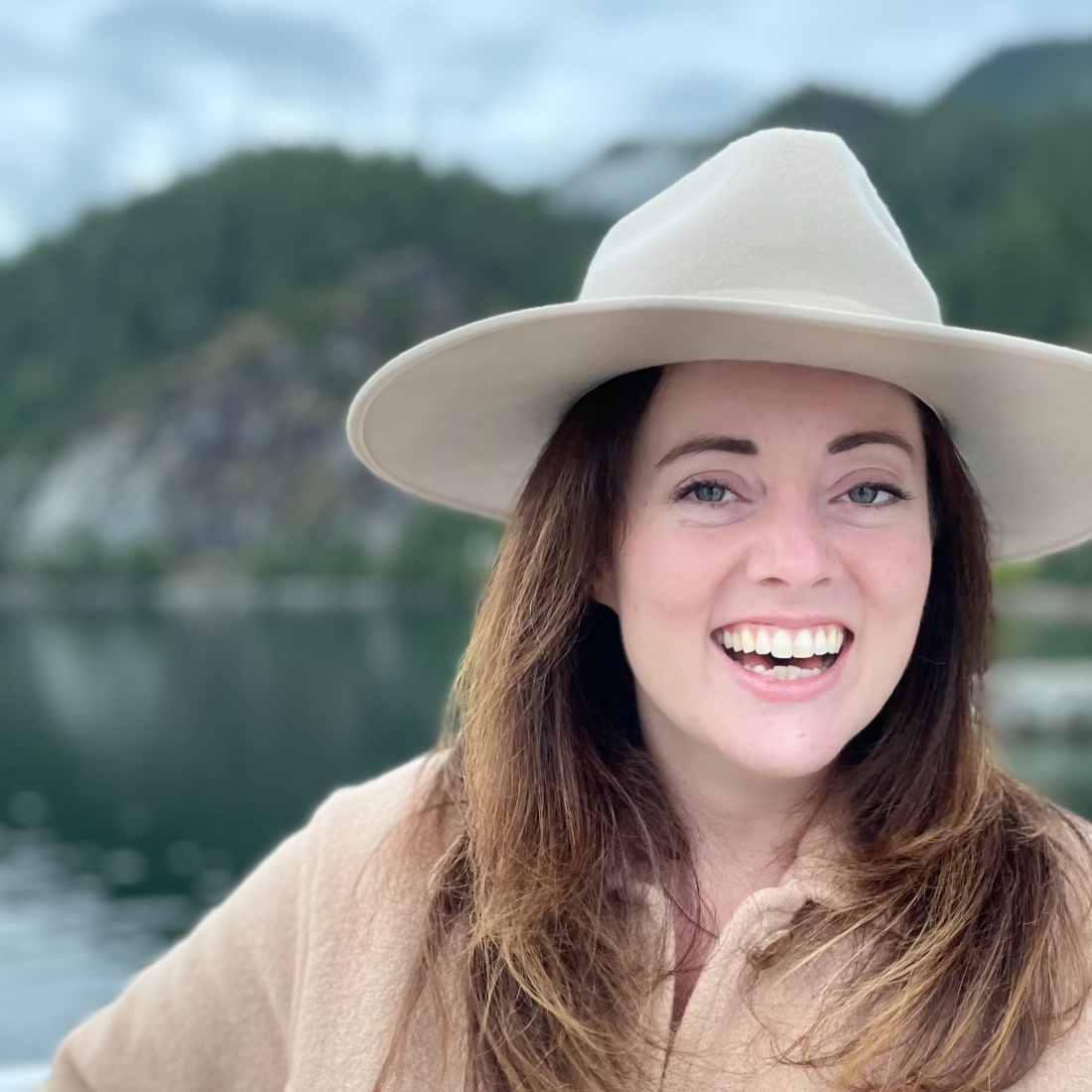
Valerie is joined by Laura MacLeod, a certified music therapist and counselling therapist with Heartland Music & Wellness in Alberta. Laura has over 15 years of experience across hospitals, schools, community settings, long-term care and private practice, including supporting autistic children and their families. They talk about what music therapy is, how autistic children may experience the world, what a session looks like, the cues Laura watches for, the training music therapists need, and why music is so powerful.
Key takeaways
- Music therapy is a clinical, goal-based therapy delivered by a certified music therapist, not just playing music (01:18).
- You don't need to be musical to benefit (03:37, 29:38).
- With autistic children, turn-taking and echoing rhythms on drum or xylophone build connection: "I hear you and I see you" (04:07).
- Sessions have a predictable structure (welcome song, goodbye ritual) with flexibility inside it (10:33, 13:54).
- Music engages every part of the brain, and music therapy is evidence-based, with certified therapists holding university degrees (14:50, 21:54, 31:19).
Meet the guest
Transcript
Allied Care Connect (00:00)
Okay. Today I'm joined by Laura McLeod, a certified music therapist and counseling therapist with Heartland Music and Wellness here in Alberta, Canada. ⁓ Laura has over 15 years of experience supporting clients across hospitals, schools, community settings, long-term care, and private practice. ⁓ She also has experience supporting autistic children and families.
Allied Care Connect (00:27)
And today we're focusing on autism in children and the role music therapy can can benefit them. All right, welcome to the podcast.
Laura MacLeod (she/her) (00:36)
Thanks so much for having me, Valerie. I'm so glad to be here.
Allied Care Connect (00:40)
Awesome. Let's start off with share ⁓ a bit about what music therapy is and how you came into the field.
Laura MacLeod (she/her) (00:48)
Good question. So many people, even music therapists, sometimes struggle to communicate a definition. So I'm gonna give you two if that's okay. ⁓ One's a bit ⁓ yes. So the first one is my personal definition of music therapy, and that is music therapy is ⁓ the art and the science of using music and musical elements by a certified music therapist to affect change. ⁓ And I'll give you another definition and then I'm gonna just flesh it out a little bit because ⁓ it can be ⁓ so much easier to see it in action.
Allied Care Connect (00:55)
Yes.
Allied Care Connect (01:14)
Yes. Okay.
Laura MacLeod (she/her) (01:18)
Than to hear a definition, but ⁓ music therapy is a clinical, goal-based therapeutic modality in which a certified music therapist uses music to improve communication, ⁓ regulation, and social skills, not just playing music, ⁓ but really using music as a tool. ⁓ so I learned about music therapy for the first time ⁓ when I was in my third year of a music degree. ⁓ I was going to be a music educator because that's kind of what I assumed I could do with music, ⁓ and ⁓
Allied Care Connect (01:35)
Mm-hmm.
Laura MacLeod (she/her) (01:48)
A music therapist reached out to a prof of mine and was looking for someone to record a project. So I got involved thinking it was just a recording project. ⁓ and then it turns out that this music therapist was using music ⁓ and musical tools and songwriting to help this individual with dyspraxia communicate their feelings and communicate their thoughts to the world. ⁓ So ⁓
Laura MacLeod (she/her) (02:10)
When I first heard the words music therapy together, it's like, you know when people say like they have an aha moment or like a light bulb goes on? Well for me it's like the whole theater was just like flooded with light. It it just made sense. Like something clicked in me where I was like, ⁓ music therapy, like it's it's using music to ⁓ help people in all kinds of ways.
Laura MacLeod (she/her) (02:31)
whether that to be ⁓ whether that's to increase something or to decrease something like increase ⁓ c communication skills or clarity in communication or whether that's to decrease pain or decrease anxiety. ⁓ so ⁓ I first heard about it from men ⁓ and that it's that scenario and I finished my undergrad ⁓ in music and then I went on to do another undergrad in music therapy at Capilla University ⁓ and have just been hooked ⁓ hooked line and sinker since then.
Allied Care Connect (03:00)
⁓ That's amazing. ⁓ It I've interviewed quite a lot of people, and it's always that aha moment ⁓ that ⁓ is very common in a lot of the answers that I've gotten. So ⁓ I I I think you're in the right place. I'm so excited to learn more about it. ⁓ so as a regular listener of music, consumer of music, ⁓ not really a maker, ⁓ how does music
Laura MacLeod (she/her) (03:07)
Hm.
Laura MacLeod (she/her) (03:18)
All good.
Laura MacLeod (she/her) (03:26)
Mm-hmm.
Allied Care Connect (03:30)
creep into a person's life and how is it used as a tool within ⁓ your sessions?
Laura MacLeod (she/her) (03:37)
Yeah, well, the good news is you do not have to be a musician to benefit from music therapy. So I I hear what you're saying about like I'm not really a music maker, and that's that is just fine. With music therapy, you ⁓ you definitely don't need to be an accomplished musician to sincerely benefit from the use of music therapy. ⁓ music is really just that tool that's helping motivate and helping give that container and that space to ⁓ affect all kinds of change. ⁓ so, like what we're talking about today specifically.
Laura MacLeod (she/her) (04:07)
With kids with autism. ⁓ Music isn't just something that they're learning how to play. I'm not teaching them how to play a scale. ⁓ I'm maybe doing something with improvisation on a drum and a xylophone where we're taking turns and we're listening to each other and we're waiting to take ⁓ to be able to kind of speak through music to each other as well. ⁓ Our attention is shared. ⁓
Allied Care Connect (04:15)
Okay.
Laura MacLeod (she/her) (04:30)
in one area. We're both attentive to the music and attentive to each other. And it's incredible to see when an individual recognizes that I hear them and I see them, ⁓ when they play a rhythm and I echo it exactly back. And it's like this moment of like, they know. Like they know, they heard me. It's so exciting. Yeah. So ⁓ music can can creep in in in all kinds of ways, especially especially with with individuals with autism.
Allied Care Connect (04:48)
He's so moving. Yeah. ⁓
Allied Care Connect (04:59)
Can you talk talk more about autism and like what a person with autism might experience, the world, how they experience the world?
Laura MacLeod (she/her) (05:08)
Yeah.
Laura MacLeod (she/her) (05:08)
Yeah. And and I'm speaking as someone who's not autistic. So ⁓ I'm recognizing that I am speaking as ⁓ as someone who works and lives with and loves a lot of autistic individuals. ⁓ but ⁓ just wanna recognize that that that I can't speak to the personal experience of it, but what I see and what what I witness ⁓ is that s oftentimes music is a language for ⁓ all people. ⁓ music can be this this vessel ⁓ by which ⁓ individuals who
Allied Care Connect (05:22)
Yeah. Yeah.
Laura MacLeod (she/her) (05:38)
don't speak, ⁓ can communicate laughter, can communicate ⁓ longing, can communicate frustration, and it's safe, ⁓ it's wanted, it's welcome, it's celebrated. ⁓ And music therapy really meets the individual where they are, ⁓ so that there's not this like ⁓
Laura MacLeod (she/her) (05:58)
be more this or don't do that. It's more like who are you and what do you have to offer? What are your strengths? What are your capabilities? What are your interests? Let's take that in music and then let's expand. Let's explore, let's connect. ⁓
Allied Care Connect (06:12)
⁓ what I'm hearing is like creating an avenue where individuals with autism can be seen who they are, not yeah, yeah. ⁓
Laura MacLeod (she/her) (06:20)
Yeah. ⁓ Yeah, definitely. Like I think of, ⁓ I'll give you some personal examples, because oftentimes that can be a little bit more concrete ⁓ if you if you haven't seen it in a session. I'm thinking of one individual who ⁓ had a really ⁓ difficult time communicating verbally. ⁓ and ⁓
Allied Care Connect (06:26)
Yes.
Allied Care Connect (06:28)
Yeah.
Laura MacLeod (she/her) (06:39)
They chose to communicate through different sounds, ⁓ different humming, different things like that. ⁓ And what we did is we ⁓ recorded those kind of samples of their voice and put it into a song, ⁓ by which like they were playing the piano or they were making rhythms on the drums ⁓ and through garage band and all the technology we have now. Like it was it was so beautiful and so cool to see like who they are and what they sound like be ⁓ really put into this really cool ⁓
Laura MacLeod (she/her) (07:09)
soundtrack that they could share with their family and friends and be seen in that context and celebrated for that strength. ⁓ I'm thinking too of like ⁓ there's this amazing girl band out in Montreal that I got to work with and these are girls with autism ⁓ and ⁓
Laura MacLeod (she/her) (07:24)
⁓ some of them were communicating verbally, some of them were communicating not. ⁓ And these girls ⁓ are able to meet every single week and be able to make friends with other children who have the same kind of interest that they do and and connect in different ways. ⁓ And ⁓ it's just so beautiful to see how music can be this like shared experience, ⁓ this shared ⁓ focus, ⁓ and this vessel for them to write songs together. So they have a welcome song about their fireball.
Allied Care Connect (07:47)
Mm-hmm.
Laura MacLeod (she/her) (07:54)
rainbow group. ⁓ and ⁓ yeah, it's just really cool to see how music can really bring people together and connect people within that context. ⁓
Allied Care Connect (07:56)
Okay. ⁓
Allied Care Connect (08:04)
Yeah. Seems to be across all abilities, across all cultures, across whether you're verbal or not verbal, or whether you communicate verbally or not. ⁓ yeah, there's a way to connect. I think I'm getting it a little bit more now. ⁓ So ⁓
Laura MacLeod (she/her) (08:14)
Definitely. Yeah. ⁓ No, for sure, for sure. ⁓ I mean we think of like when we're at a concert and we have a shared experience, ⁓ or when we're doing a meditation after yoga, and you have this kind of shared sense of like ⁓ we did that together. ⁓ and sometimes for a lot of people, not just not just people on the spectrum, ⁓ but for a lot of people, sometimes ⁓
Allied Care Connect (08:34)
Mm-hmm. ⁓
Laura MacLeod (she/her) (08:41)
connecting with typical forms of communication, there's just there there's some awkwardness or there's some anxiety about it. ⁓ there's some ⁓ hesitation. ⁓ And music is just this nice ⁓
Laura MacLeod (she/her) (08:54)
third thing in the room where we can attend to that ⁓ and then learn from each other by focusing on that in a way that's strengths based and person centered. You know, like I had one individual that I worked with every Saturday and they always wanted to hear the same song. ⁓ And I loved it. Like it was great. It was their song. We celebrated it each time ⁓ and in what other context would someone be like, good, let's hear ⁓ like jingle bells in May again, you know? ⁓
Allied Care Connect (09:23)
Yeah, exactly. Yeah.
Laura MacLeod (she/her) (09:24)
⁓ But that was that was for them, and that that that was a great way for us to connect. And ⁓ and in that, so in that structure of that song, we were able to take turns or explore using a high voice, using a low voice, ⁓ using different feeling sounds to express ⁓ ourselves of like, okay, let's sing jingle bells like monsters, or let's sing jingle bells like we're really sad about it. ⁓ and that just ex helps people ⁓ explore the range ⁓ of of their feelings and be able to learn how to communicate it in a
Laura MacLeod (she/her) (09:54)
safe ⁓ in a safe way. ⁓
Allied Care Connect (09:57)
Okay, awesome. Can people feel catharsis within a session and how ⁓ and ⁓ cause that's what I'm ⁓ I guess inferring to that's what I'm kind of because when I listen to music, there are songs where ⁓ it shifts me and that's how powerful it is. Yeah. ⁓
Laura MacLeod (she/her) (10:14)
Yeah. ⁓ definitely. Yeah, definitely. And I've seen that so often, especially with autistic children, ⁓ where ⁓ before a session, like I see them in the waiting room, they're a little bit anxious or they're fidgeting or they're just kinda like not really grounded. ⁓ And then through the activities in the music session, ⁓
Laura MacLeod (she/her) (10:33)
The beautiful thing in in music therapy too that we use a lot is there's some flexibility, but there's also a container. So we have a plan and we choose the plan with with the individuals. So there's always a welcome song, there's always a goodbye song. There's these rituals we do together that are predictable that a lot of individuals with autism ⁓
Laura MacLeod (she/her) (10:50)
love and and feel grounded by and feel ⁓ contained in in a really nice way. And then within that structure, we offer that flexibility to expand and explore and grow in different ways. ⁓ So I've seen be from beginning to end of a session, it's amazing to see parents collect their children afterwards and just see the children just kind of bouncing out the walls, like ⁓ bouncing out the door with a smile on their face and like just ⁓ feeling like they really accomplished something and they were really connected to something.
Allied Care Connect (11:13)
Okay.
Allied Care Connect (11:19)
Yeah. ⁓
Laura MacLeod (she/her) (11:20)
⁓ So yeah, definitely there can be catharsis in in a session. I mean you've experienced it in life without a music therapist as well. So imagine having a certified music therapist who's trained how to use the power of music ⁓ in this ⁓ like contextual, ⁓ concentrated way. ⁓ definitely it can be and be it can be really, really therapeutic. ⁓
Allied Care Connect (11:25)
Yeah. ⁓
Allied Care Connect (11:33)
Yes.
Allied Care Connect (11:37)
Mm-hmm.
Allied Care Connect (11:41)
Mm-hmm. And also very healing, I would say the word healing. Yeah. ⁓
Laura MacLeod (she/her) (11:46)
⁓ Definitely, definitely. You can definitely say that word. ⁓ yeah, music music ⁓ there's there's an organization actually out in Vancouver called Music Heals and they raise millions of dollars for music therapy work. ⁓ and so we're we're all about ⁓ yeah, we're all about the message that music can heal. It doesn't always like a like a music therapist isn't going to cure someone ⁓ of of certain things, but but music is healing for sure.
Allied Care Connect (12:00)
Wow.
Allied Care Connect (12:08)
Yes. Yeah. Yeah.
Allied Care Connect (12:15)
Hmm. Thank you. ⁓ So what would a session look like? For example, for someone who might be very curious and someone who's listening that I'm interested in that. ⁓ you mentioned also having a welcome song or and then a goodbye song. ⁓ Depends. ⁓ can you speak more about that?
Laura MacLeod (she/her) (12:33)
Yeah, well that's a really good question. ⁓ so if you were to enter my music therapy studio in Cochrane, Alberta, ⁓ you would be met with ⁓ a welcome song. ⁓ And ⁓ like I said, music therapy is person-centered and strength-based. So it would be age appropriate to you, it would acknowledge who you are, ⁓ and maybe you would even have input into that welcome song of like, okay, what's our first song we're gonna do together? ⁓ and then there would be activities ⁓ that foster whatever ⁓ needs or whatever.
Laura MacLeod (she/her) (13:03)
⁓ Maybe aches or challenges you have or areas of growth you want to pursue. ⁓ If an individual is wanting to work on communication, it might involve ⁓ singing. We might involve doing some singing with a microphone. We might involve ⁓ doing certain songs that focus on certain ⁓ vowels or consonant sounds. ⁓ If your goal is more regulation, we might be doing some improv that involves like turn-taking, like drum improvisation or ⁓
Laura MacLeod (she/her) (13:32)
Drum improvisation on the piano where we're listening to each other, we're stopping, we're starting. ⁓ it would always involve maybe one of your favorite music activities or favorite music songs. ⁓ Maybe it involves even listening to a song together ⁓ and either discussing it afterwards or ⁓ playing along in some capacity. ⁓
Laura MacLeod (she/her) (13:54)
Music therapists use live and recorded music ⁓ when appropriate. ⁓ And then at the end we would close with some kind of ritual that's repeated each time. And that could be a goodbye song for a child. It could be saying their name, like, goodbye, Valerie. Goodbye, Valerie. It was nice to see you today. ⁓ Or it could be just their favorite song. Like, okay, at the end of music, we we're gonna do ⁓ we're gonna do this pattern on the drum and we're gonna play as loud as we can and be excited that we're we did it and we're finished and it's great.
Laura MacLeod (she/her) (14:23)
and proud of ourselves ⁓ and then I would see you next week. ⁓
Allied Care Connect (14:28)
⁓ That's so great. ⁓ I love it. ⁓ Thank you so much for sharing that. I'm just so curious since ⁓ music is so universal, like what training did you have to aside from school? Like I'm assuming you need to know how to play music instruments or know how to sing. Tell me more about that.
Laura MacLeod (she/her) (14:31)
⁓ Ha ha ha ⁓
Laura MacLeod (she/her) (14:50)
Yeah, that's a good question. So certified music therapists definitely have that university degree. We ⁓ we all have undergrads in Canada. There's a Canadian Association Association of Music Therapists that regulates ⁓ that that gives guidelines for what music therapists need to have. And so there's an undergrad, there's a thousand hours of practicum, ⁓ there's placements, ⁓ sorry, thousand hours of internship, but before that you're doing practicums in different sites, getting experience with populations such as
Laura MacLeod (she/her) (15:21)
long-term care, working with seniors, ⁓ maybe in an educational setting, maybe in a community setting, maybe in a medical setting, ⁓ maybe in private practice. So you have experience with a variety of different settings. ⁓ Now in Canada you need to write an exam as well ⁓ and pass that exam to be a music therapist. You need to maintain credentials. So ⁓ every year doing communic continuing education.
Laura MacLeod (she/her) (15:45)
⁓ So I say all that, all that to say a lot of music therapists are also getting additional master's degrees like master's in counseling, ⁓ master's in social work, kind of ⁓ allied ⁓ fields that that help round out the services we provide. ⁓ I did my master's in music therapy and specialized in neonatal intensive care unit music ⁓ music therapy.
Laura MacLeod (she/her) (16:09)
So my thesis was about using music with ⁓ premature infants ⁓ and how ⁓ that can benefit them and their parents and staff and ⁓ all kinds of things like that. ⁓ But I will also say that music therapists have years of their life that they've already been training. They've already been taking piano lessons since they were five, or they've already been taking voice lessons or guitar lessons or investing in self-self-study. ⁓ So when you see a music therapist, you don't just see this ⁓ certificate that they've received afterwards.
Allied Care Connect (16:26)
Yeah. ⁓
Laura MacLeod (she/her) (16:39)
like maybe a year after high school, they have at least four years of an undergrad, they have at least a thousand hours of an internship, and they've been playing music probably their whole lives as well. ⁓
Allied Care Connect (16:49)
Yeah. ⁓
Laura MacLeod (she/her) (16:50)
And to get into universities in Canada for a music therapy degree, you need to be proficient. You need to be really good ⁓ on at least one instrument. There's one university in Canada that you could do like flute or violin or things like that. ⁓ The university I went to at Capilano ⁓ in Vancouver, you had to be proficient on piano and guitar and voice. ⁓ So your music therapists have a variety of tools to use when they're working with clients.
Allied Care Connect (16:59)
⁓
Allied Care Connect (17:17)
Wow. Okay. ⁓ Proficiency in both piano, guitar, and and sorry, what's the other one? And boys. ⁓ okay. ⁓ So this is like an entrance exam or like an entrance. Okay. Yeah.
Laura MacLeod (she/her) (17:24)
And voice, yeah, singing. ⁓ Yeah. ⁓
Laura MacLeod (she/her) (17:30)
Yes. ⁓ Yeah, you have to audition. ⁓ there's a panel t that will audition you and interview you and it's pretty in depth, which is good because we want music therapists across Canada to be skilled ⁓ and to be ⁓ yeah, providing excellent care to everyone. ⁓
Allied Care Connect (17:39)
Yeah.
Allied Care Connect (17:42)
Yeah.
Allied Care Connect (17:46)
Absolutely. I have more questions about that. ⁓ So do you ⁓ do you study different songs ⁓ or I don't know, I'm trying to like these yeah the repertoire of songs that you continue to use. Yeah, okay.
Laura MacLeod (she/her) (17:50)
Perfect. ⁓ I love talking about it. ⁓
Laura MacLeod (she/her) (18:01)
⁓ Yeah, yeah. So if you were to look at my iPad at all the songs that I have on there, you'd be like
Laura MacLeod (she/her) (18:07)
just floored by the variety, I think, number one. ⁓ I worked for many years in long-term care and I absolutely love the songs that I was singing in that population because we want to use music that's client-centered, that honors and acknowledges who that person is, their likes, their familiarities. So when I was working in long-term care, I was often singing songs like, ⁓ My Bonnie Lies Over the Ocean, or You Are My Sunshine, or songs by Elvis. ⁓
Laura MacLeod (she/her) (18:33)
⁓ And each song, like there's no one prescriptive song that will heal the world. ⁓ although I'm sure there are many artists that are trying to write that magical tune. ⁓ but yeah, that it really depends on the person. So, with a lot of children with autism that I work with, it's whatever they're listening to. Sometimes ⁓ there were individuals that I was working with, young kids that ⁓ had an amazing ear for music, ⁓ and they would just listen to a song on the radio and just be able to play it on the piano.
Allied Care Connect (18:39)
Yes. ⁓
Laura MacLeod (she/her) (19:03)
⁓ Or they were able to hear a song ⁓ anywhere in a movie and be able to like kind of sing it verbatim back to you after one listens. So ⁓ the music and the instruments, it's all like who is that person? What's their interest? ⁓ what's appropriate for them, ⁓ and then bringing that to the musical therap music therapy space.
Allied Care Connect (19:24)
Yes. Okay. Beautiful. ⁓ I am curious about when you work with children at autism, do you what are the cues that you kind of watch out for? ⁓ if initially they might be hesitant or shy or ⁓ like we ⁓ can you talk more about that?
Laura MacLeod (she/her) (19:45)
Yeah, cues that I'd be looking for. That's a good question. ⁓ so I would say that music therapists are really ⁓ one of our ⁓ biggest ⁓ trainings and and the feedback that we get when we're in school is our skills of observation and reading the room. ⁓ a lot of times we're working with groups ⁓ or with one-to-one clients. And if I'm working in a classroom, ⁓ an adapted classroom with children of all different needs ⁓ and all different skill sets and interests, ⁓ I have to have eyes in the back of my head, eyes coming out of my fingers.
Allied Care Connect (19:47)
Yeah.
Allied Care Connect (20:00)
Yes. ⁓
Allied Care Connect (20:14)
Yeah.
Laura MacLeod (she/her) (20:15)
Like being very attuned to what's happening in the room. And ⁓ honestly, who isn't a little bit hesitant or shy when they meet someone new as well? ⁓ So ⁓ you acknowledge that and and and see what you can do to create a safe space for that person and a fun space, an engaging space. ⁓ So I'm looking for ⁓ eye contact. I'm looking for ⁓ when I worked in the NICU with premature infants, I would often look at the hospital monitors to see what their oxygen saturation was or what their heart rate was telling me. ⁓
Allied Care Connect (20:21)
⁓ Yeah.
Allied Care Connect (20:42)
That was my next question. Okay, keep going. ⁓
Laura MacLeod (she/her) (20:45)
Yeah. It's very ⁓ it's very helpful when there's an actual T V screen being like, this is what's happening, it's going well ⁓ Or maybe change this. ⁓
Allied Care Connect (20:51)
Yeah.
Laura MacLeod (she/her) (20:55)
Yeah, I I worked in ⁓ my most recent job was working in oncology at BC Children's Hospital. So I would look at the monitor, but I'm also looking at yeah, looking at energy level, looking at eye contact, signs of engagement, signs of tiredness. ⁓ So with children with autism, ⁓ that I've worked with, they they tell me who they are. They show me who they are, they show me h how they're feeling ⁓
Laura MacLeod (she/her) (21:18)
without any verbal s verbal communication. ⁓ So I'm looking for, yeah, just their energy in the room and and feeding off of that in the music too. And what is their music telling me? And ⁓ what is their tempo, their speed of playing music? ⁓ how can we is like is is that a good feeling? Do we follow that? Or does it need redirection? ⁓ A lot of it's intuitive, a lot of it is years of experience, ⁓ and a lot of it is getting to know that individual. ⁓
Allied Care Connect (21:39)
Yeah, mm-hmm.
Laura MacLeod (she/her) (21:45)
By paying attention, paying really good attention. ⁓
Allied Care Connect (21:47)
Yeah. ⁓ Awesome. ⁓ What do you think makes music so powerful? This is a person. Yeah.
Laura MacLeod (she/her) (21:54)
Ooh, yeah. ⁓ if I get science-y and like a little neuroscience-y, I'd say ⁓ that music is so powerful because it interacts with every single part of our brain. ⁓ When someone is making music, ⁓ their hippocampus is lighting up, both spheres, the hemispheres of their brain are are lighting up, their corpus callosum is going crazy, if they're if they're doing things with both hands or both sides of their body, ⁓ the amygdala, like every part of our brain ⁓ lights up when we
Allied Care Connect (21:58)
Yeah. ⁓
Laura MacLeod (she/her) (22:24)
Do music. ⁓ So I think that we were wired for music, just how we were designed or or what's in us. ⁓ We've had rhythm ⁓ in our bodies and surrounding us since before we were born. ⁓ there are so many research studies that prove that a mother's voice is the baby's favorite sound when they come into the into the world. ⁓ And we also know that even in end of life, ⁓
Allied Care Connect (22:24)
Yeah.
Laura MacLeod (she/her) (22:48)
music can still really, really impact ⁓ a person's ⁓ a person's somatic system. ⁓ so I'll say that like ⁓ physiologically and neurologically, we are wired to be affected and to engage with music. ⁓ And then I'll just say on a personal level, ⁓ there's something ⁓
Allied Care Connect (22:56)
Mm-hmm. ⁓
Laura MacLeod (she/her) (23:10)
that's not within the senses, like the immediate. Like it's there's something inta intangible ⁓ about the magic of music. And that's what I love seeing every day is that intangible ⁓
Allied Care Connect (23:13)
⁓ Yes. ⁓
Laura MacLeod (she/her) (23:22)
Not quite able to place it with words, not quite able to describe it. ⁓ Moment where you're in the music ⁓ and magic's happening and connections happening and people are feeling themselves ⁓ and they're feeling grounded in themselves. ⁓ so yeah, there's there's the neuroscience-y ⁓ version of why music ⁓ just gets us and gets to us. And then I think there's that ⁓ mystical level and layer as well that yeah, we can't always describe the feeling, but it's there.
Allied Care Connect (23:44)
Yeah.
Laura MacLeod (she/her) (23:52)
Yeah. ⁓
Allied Care Connect (23:53)
Yes, can't we haven't measured everything just yet, but it doesn't mean it doesn't exist. That's yeah. ⁓ I was in a drum circle once and they always talk about how we are our own bodies, our ourselves are musical instruments, like our heartbeating. ⁓ And ⁓ I was wondering like if you could speak more about that and how I don't I know across cultures ancient and modern, like drums are a great tool ⁓ to like invoke ⁓
Laura MacLeod (she/her) (23:56)
Hm. ⁓
Laura MacLeod (she/her) (23:59)
Yeah.
Laura MacLeod (she/her) (24:09)
Mm. ⁓
Allied Care Connect (24:24)
I guess a state. ⁓ Yeah. Yes. Yeah.
Laura MacLeod (she/her) (24:26)
Yeah, no, definitely. And can I tell you something exciting that I learned when I was learning about Nikki music therapy, so music therapy with premature infants. ⁓ There's one technique out of New York where they use ⁓ a tongue drum to ⁓ help a baby learn how to suck to the rhythm, ⁓ when they're nursing. ⁓ So ⁓ even from premature infancy, like even from like before term, ⁓ infants can l can use rhythm, ⁓
Laura MacLeod (she/her) (24:54)
very very like very expertly like a music therapist would need specific training about this, be very attuned to that infant. ⁓ But even from infancy, ⁓ rhythm can help with things like feeding and ⁓ pacing of s of feeding and sex strength of feeding. ⁓ And then ⁓ even ⁓ even throughout the lifespan I think of kids that I've worked with with autism and how rhythm can be really grounding and rhythm can be like once there's that kind of crossbody, both hands motion, ⁓ there's
Laura MacLeod (she/her) (25:24)
sense of like yeah like this yes moment of ⁓ of engagement of connection and and when I'm doing the same tempo as that person they're feeling hurt they're feeling like yeah I'm in the space too they're in the space too and it's good ⁓
Allied Care Connect (25:31)
Mm-hmm. ⁓
Allied Care Connect (25:41)
Mm-hmm. ⁓
Laura MacLeod (she/her) (25:41)
I think of doing drum circles in long term care. ⁓ and maybe not everyone has exact rhythm, ⁓ but when we're jamming to Hound Dog by Elvis, ⁓ there's this like exciting atmosphere and there's this this like ⁓ energy lift, you know, when you're in a group setting, maybe you experienced this in your in your drum circle ⁓ where you felt like energized by this pulse around you. ⁓
Allied Care Connect (25:44)
Yeah. ⁓
Allied Care Connect (25:50)
Yeah.
Allied Care Connect (25:58)
No. ⁓
Allied Care Connect (26:01)
Yes. Yeah.
Allied Care Connect (26:06)
Mm-hmm.
Laura MacLeod (she/her) (26:09)
Yeah, I need to get in a drum circle, that's what I'm thinking. I need I need to find a drum circle to to be part of right now. ⁓ okay. ⁓ Thank you. That's exciting. Okay, please do. ⁓
Allied Care Connect (26:10)
So cool. Yeah. ⁓ There's one in Inglewood. Yeah, there's one in Inglewood. Yeah. Every Friday. ⁓ Anyway, I'll send you details. ⁓ So uh ⁓ uh have a couple more questions here. ⁓ Um you are dual certified. Do you also do counseling with adults? And do you also bring in music ⁓ or is it mostly talk therapy?
Laura MacLeod (she/her) (26:37)
It's it's all when it's appropriate and all when it's ⁓ wanted. ⁓ So ⁓ with adults, ⁓ sometimes songwriting can be a really, really valuable tool. ⁓ and this is for someone who's either neurotypical or on the spectrum. ⁓ all people can can communicate in so many different ways. So maybe it's songwriting, maybe in the session we're exploring a scenario or a feeling, ⁓ and then we bring it to the piano ⁓ and ⁓
Laura MacLeod (she/her) (27:06)
maybe sing a phrase over and over again or ⁓ start with a feeling ⁓ and then sing like sing that feeling like I'm feeling whatever ⁓ and then move it to ⁓ but I know and then some kind of positive message or some kind of ⁓ but I want or ⁓ and ⁓ and I also know this about the world or about myself or about the possibilities of something. So sometimes it's it's ⁓
Laura MacLeod (she/her) (27:31)
It's as concrete as that, ⁓ where it's a little bit of songwriting. Sometimes it's sharing lyrics of like, I had this song come to me ⁓ and like I can't tell you how I'm feeling, but this song really does. Let's listen to it together. ⁓
Allied Care Connect (27:33)
Yes.
Laura MacLeod (she/her) (27:45)
So we listen to it together ⁓ and do a lyric analysis. ⁓ So maybe that person is just like, I'm not into singing. I d I I don't want it. ⁓ But I can tell you what this means to me. And that that song can be a vessel ⁓ for ⁓ yeah, this ⁓ this aligns with me, this doesn't. ⁓
Allied Care Connect (27:45)
Okay.
Laura MacLeod (she/her) (28:03)
so that can be really useful with that kind of counseling piece, like that verbal processing, and then that experiential piece of the music. And that's all what people are comfortable with, what they what they want to try and explore. ⁓ yeah, and it's really fun to do. ⁓
Allied Care Connect (28:18)
That's really cool. ⁓ Yes, that's really cool. ⁓ And I'm just kind of imagining it, imagining it in my head. ⁓ so it's really cool that music therapists have this like tool ⁓ skill set that you can bring in lyrics. Cause sometimes you would go to therapy and I would listen to a song and I would bring it in the therapy space ⁓ and it kind of ends there at times. Although it
Laura MacLeod (she/her) (28:27)
Mm.
Laura MacLeod (she/her) (28:41)
Mm.
Allied Care Connect (28:45)
And at times people would prod into it, but with someone who's a music therapist, you can expand more within. Am I getting it? Yeah. Yeah. ⁓
Laura MacLeod (she/her) (28:52)
Yeah, no, I love that you said expand. Like that's exactly it. It's it's someone brings something that they're they're offering of like, this is what I have. ⁓ And then a music therapist is like, yes, tell me more. ⁓ Like what else? ⁓ there music therapists aren't aren't afraid to dive deep into ⁓ more of that. So what you said, explore, expand. That's that's exactly it.
Allied Care Connect (29:03)
Yeah. ⁓
Allied Care Connect (29:15)
Thank you. ⁓ that's really cool. Is my last question is ⁓ what do you wish ⁓ the public knew ⁓ or well maybe there's a misconception that you would want to clear about music therapy, or it's just like a knowledge that you would like to share right now to have whoever is listening about music therapy. Yeah. It's okay. ⁓
Laura MacLeod (she/her) (29:38)
that's a really good one. ⁓ I'll try to keep it to three things. ⁓ and one is what I said at the very beginning is you don't need to be musical to benefit from music therapy. ⁓ it can be something else that you try. Like ⁓ you know, I see I see my own personal counselor to grow in my own personal life. ⁓ And that's part of my team, my wellness team. So music therapy can be an amazing addition to your wellness circle, to your village of care. ⁓
Allied Care Connect (30:00)
Yeah, yeah. ⁓
Allied Care Connect (30:05)
Yes. ⁓
Laura MacLeod (she/her) (30:05)
⁓ So I'd say yeah, you don't have to be musical. ⁓ Two, I would say that ⁓ a lot of people don't know the training that comes ⁓ with a music therapist, a certified music therapist in Canada. ⁓ Not everyone could just call themselves a music therapist. We've done years and years of study and intentional work to hone our observational skills, ⁓ to hone our musical skills, ⁓ to expand upon our knowledge about various ⁓ conditions, diseases, disorders, ⁓ strengths.
Laura MacLeod (she/her) (30:35)
And populations. So music therapists have usually worked with like from age zero to 106. have a wide variety of experience in our in our tool belt, and ⁓ it is an evidence-based modality. ⁓ The things that we do are research-based and research-founded. ⁓ So ⁓ even when I was writing my thesis, I wasn't just saying, we think music therapy works for babies because it's cute. ⁓ I was saying, ⁓ I was drawing on all the research from many, many different countries. ⁓
Allied Care Connect (30:50)
Thank you. ⁓
Laura MacLeod (she/her) (31:05)
countries, the States, Australia, ⁓ Asia, there's so many different places that have already done incredible research that proves and ⁓ quantifies the benefits of music therapy. So ⁓
Laura MacLeod (she/her) (31:19)
I would say also it's not just hoity toody floofy ⁓ fairy dust. It's it is evidence-based. And then the last thing I would say is just ⁓ you can find a music therapist. Reach out. I love talking about music therapy, as I'm sure you can tell through our conversation. ⁓ So please reach out to me at Heartland Music and Wellness. But there are many, many music therapists all across Canada that would love to answer more questions and give a taste of what music therapy can do.
Allied Care Connect (31:30)
⁓ Mm-hmm. ⁓
Allied Care Connect (31:46)
Awesome. Thank you so much, Laura, for your time. I was gonna ask again, like, because you already mentioned where can they find you and like if you have a website as well, this is your time to tell ⁓ them. Yeah. ⁓
Laura MacLeod (she/her) (31:58)
I love that. Thank you. Well, ⁓ that's very generous of you for giving me a space for that. ⁓ They can find me straight up Google, Heartland Music and Wellness. You can see ⁓ me on Google there. ⁓ And the same on all platforms: Facebook, Instagram. The website is on route, ⁓ so stay tuned for that. But you can already find me being very active on Instagram and Facebook with different ⁓ tips and tools and ways to get connected. ⁓ So if you're in the Cochrane area, I would love to chat with you.
Laura MacLeod (she/her) (32:28)
music groups that I'm doing for parents and babies ⁓ and parents and th children three and under but ⁓ yeah excited to expand a whole lot more so stay tuned for all the good stuff coming up.
Allied Care Connect (32:41)
Thank you so much, Laura, for your time.
Laura MacLeod (she/her) (32:44)
My pleasure. Thank you so much for having me. It was a pleasure to chat.
Allied Care Connect (32:47)
Thank you.