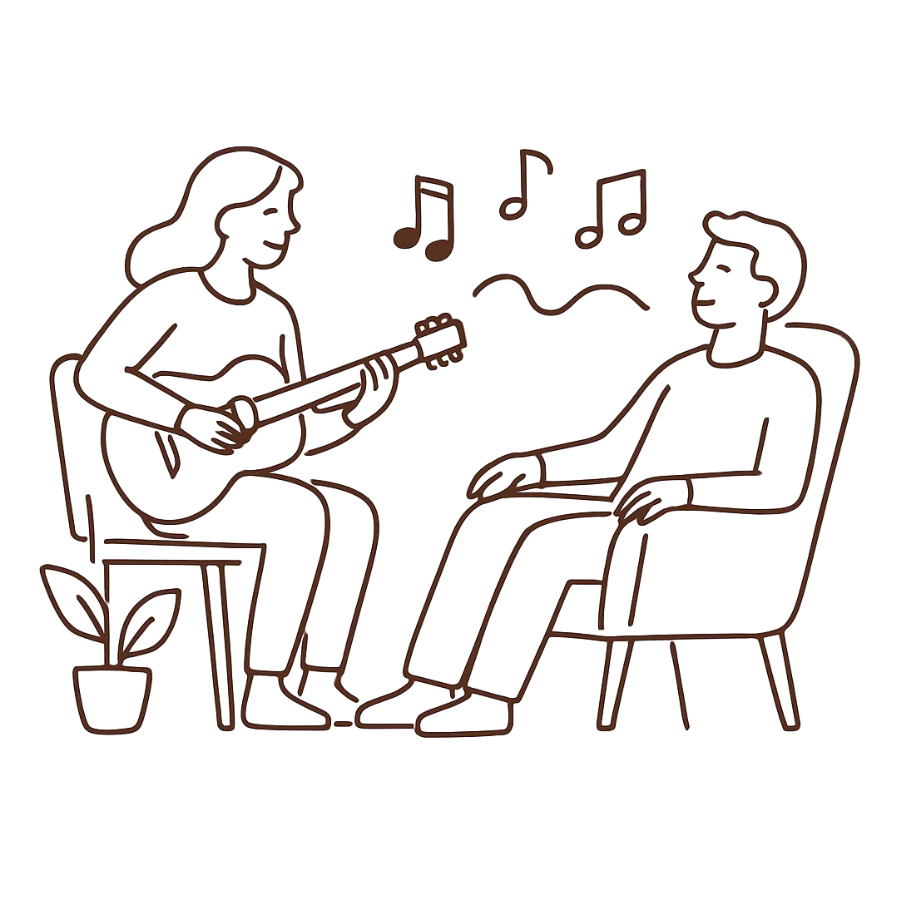
Today we are featuring Music Therapy
What is music therapy?
Music therapy is a discipline in which Certified Music Therapists (MTAs) use music purposefully within therapeutic relationships to support development, health, and well being. Music therapists use music safely and ethically to address human needs within cognitive, communicative, emotional, musical, physical, social, and spiritual domains.
How do music therapists work?
Music therapists use a range of music based techniques tailored to the individual’s needs, including:
• singing
• playing instruments
• rhythmic movement
• improvisation
• songwriting or composing
• lyric discussion
• imagery
• listening
What do music therapists help with?
Depending on the person’s needs, music therapists may support areas such as:
• emotional expression and processing
• communication and social connection
• memory and cognitive stimulation
• attention, engagement, and motivation
• stress reduction and anxiety management
• movement and coordination through rhythm
• sensory regulation
• development and maintenance of functional skills related to daily life and participation
Who do music therapists support?
• acquired brain injury or stroke
• autism and developmental disabilities
• mental health challenges
• neurological conditions such as Parkinson’s disease
• dementia and other cognitive challenges
• chronic illness or pain
• palliative care needs
• trauma or emotional difficulties
• substance use and recovery
• speech and language impairments
• sensory or visual impairments
Where do you find Music therapists?
Music therapists practice in hospitals, long term care settings, community programs, schools, and private practice settings.
So there you have it, Music Therapy in a nutshell. If you are curious to learn more, feel free to connect and network with
the music therapists listed on Allied Care Connect!