

One of the goals of Allied Care Connect is not only to make allied health practitioners more visible to the public, but also to help practitioners better understand each other’s work.
Today we are featuring Kinesiologists
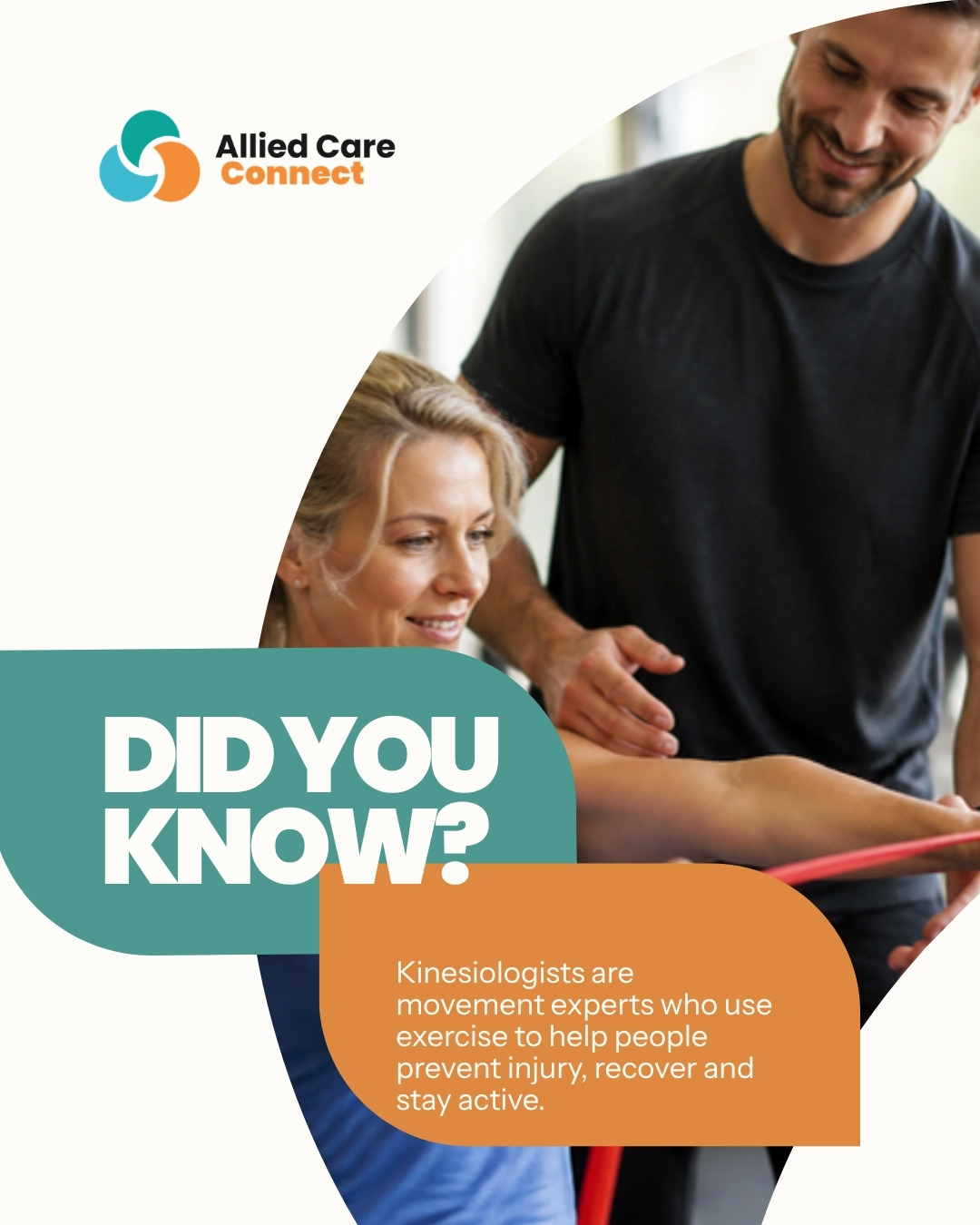
Kinesiologists are experts in human movement. They use the science of how the body moves, along with exercise and activity, to help people prevent injury, recover, manage chronic health conditions, and perform better at work, in sport, and in daily life.
In Alberta, kinesiologists typically hold a four-year university degree in kinesiology or a closely related field. Did you know? Kinesiologists are the movement experts of allied health. They use exercise as medicine, and you'll find them in workplace ergonomics, return-to-work programs, chronic disease management and sport performance.
Kinesiologists use a range of approaches tailored to the individual’s needs, including:
• individualized exercise programs
• active rehabilitation after injury or surgery
• ergonomic and workplace assessments
• education on posture, activity, and healthy habits
• support for safe return to work or sport
Depending on the person’s needs, kinesiologists may support areas such as:
• chronic conditions such as arthritis, diabetes, heart disease, and chronic pain
• strength, balance, and fall prevention
• returning to activity after surgery
• sport performance and injury prevention
• general health and staying active
• workers returning to the job after an injury
• adults living with chronic health conditions
• older adults wanting to stay strong and independent
• athletes and active individuals
A first visit usually starts with questions about your health history, your goals, and what brought you in, followed by an assessment of how you move, your strength, and your fitness. Your kinesiologist will explain what they found and build a program that fits your goals and abilities, and they will ask for your consent and check in as you go. Some extended health plans cover kinesiology, so it is worth checking your benefits.
Kinesiologists work in active rehab and multidisciplinary clinics, workplace health and disability management programs, fitness and sport settings, and community health programs. Many work alongside physiotherapists, chiropractors, occupational therapists, massage therapists, and family doctors as part of a client’s circle of care, referring to each other when someone needs something outside their scope. You can find kinesiologists right here on Allied Care Connect, where you can browse their profiles, specialties, and approach to care.
So there you have it, Kinesiologists in a nutshell. If you are curious to learn more, feel free to connect and network with the kinesiologists listed on Allied Care Connect.