
One of the goals of Allied Care Connect is not only to make allied health practitioners more visible to the public, but also to help practitioners better understand each other’s work.
Today we are featuring Athletic Therapists
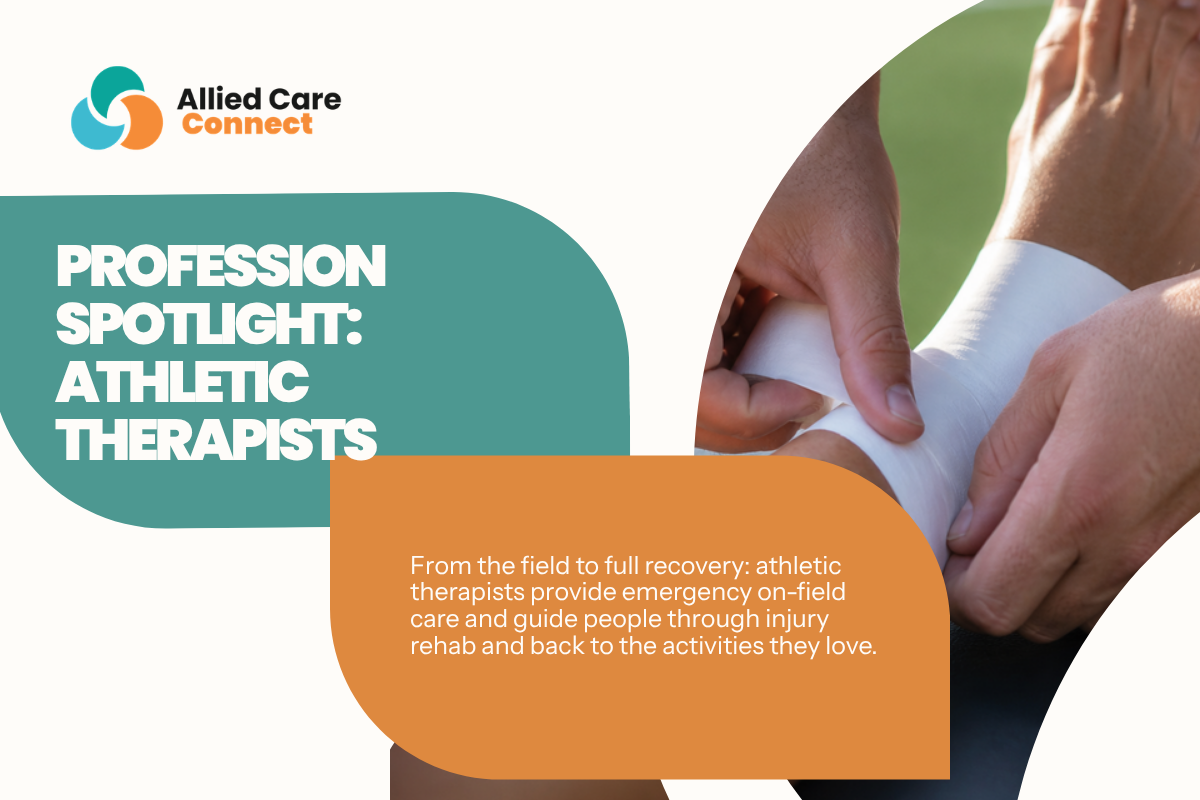
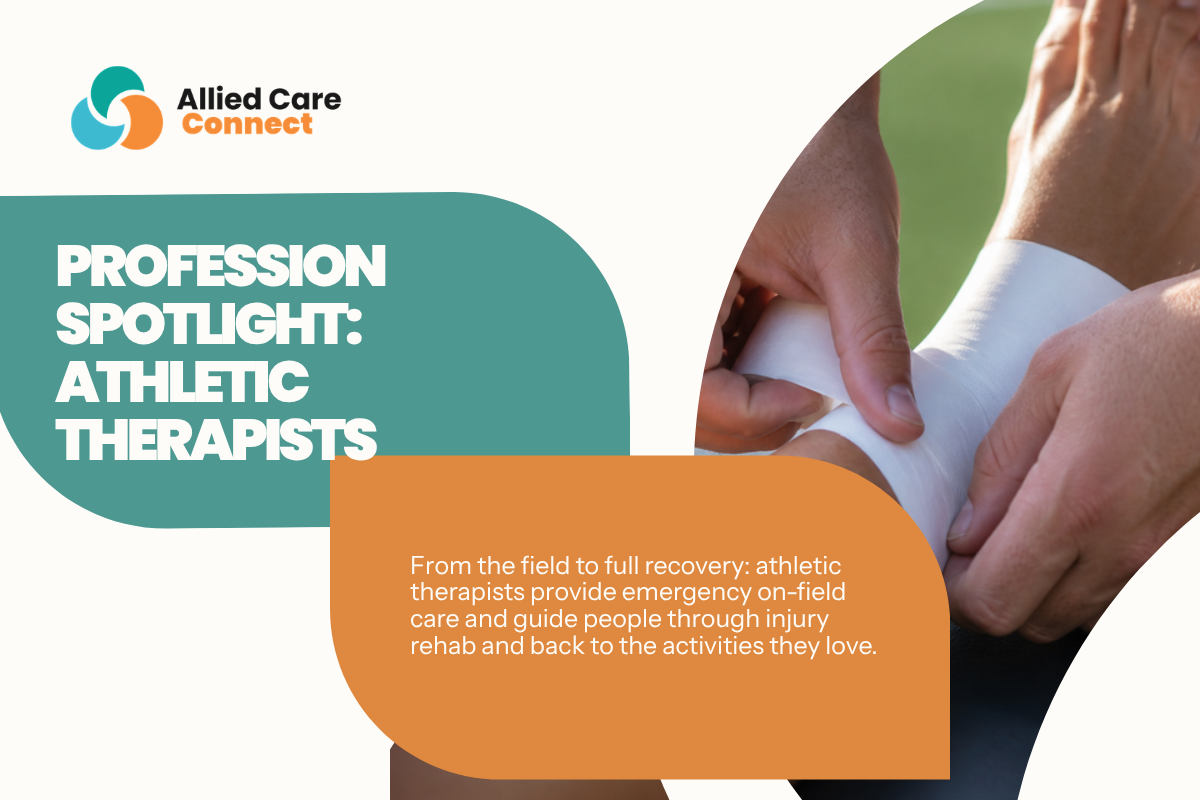
Athletic therapists are experts in musculoskeletal injuries, from the first moment an injury happens all the way through to a safe return to activity. They are often the first health professional on the scene when someone gets hurt on the field, the court, or the ice, and they are trained to provide emergency and on-field care. Back in the clinic, they assess injuries, guide rehabilitation, and help people get back to the sport, work, and activities they love.
In Canada, the Canadian Athletic Therapists Association (CATA) is the organization that certifies athletic therapists nationwide. To earn that certification, someone first completes a bachelor’s degree and an Athletic Therapy program at one of ten schools CATA has accredited. That program includes hands-on training both on the field and in the clinic.
After graduating, candidates also need to:
• pass CATA’s National Certification Examination, a written test of 200 multiple-choice questions
Once they have met those requirements, they can use the title Certified Athletic Therapist, shown as CAT(C) after their name.
Certification doesn’t end there. To keep it, athletic therapists complete 21 continuing education credits every three years and hold a valid Basic Life Support certificate, which is renewed each year.
Athletic therapists use a range of approaches tailored to the individual’s needs, including:
• injury assessment at the side of the field and in the clinic
• taping, bracing, and protective equipment
• manual therapy and soft tissue techniques
• individualized exercise and active rehabilitation programs
• return-to-sport and return-to-work testing and planning
• education on injury prevention, conditioning, and load management
Depending on the person’s needs, athletic therapists may support areas such as:
• concussion recognition, management, and graduated return to activity
• recovery after surgery, such as ACL or shoulder repairs
• overuse and repetitive strain injuries
• back, neck, and joint pain
• recovery from workplace injuries and motor vehicle collisions
• injury prevention and staying active safely
• weekend warriors and active adults
• people recovering from injury or surgery
• workers returning to the job after an injury
• dancers, performers, and other physically demanding professions
• teams, schools, and event organizers who need on-site care
A first visit usually starts with questions about your health history, how the injury happened, and what you want to get back to. Your athletic therapist will then assess how you move, test your strength and range of motion, and look closely at the injured area. They will explain what they found and build a plan that fits your goals, which might include hands-on treatment, taping, and exercises you can do at home, and they will ask for your consent and check in as you go. Many extended health plans cover athletic therapy, so it is worth checking your benefits.
Athletic therapists work in sports medicine and multidisciplinary clinics, on the sidelines with sports teams, at universities and colleges, at community and professional sporting events, and in workplace health programs. Many work alongside physiotherapists, kinesiologists, chiropractors, massage therapists, and family doctors as part of a client’s circle of care, referring to each other when someone needs something outside their scope. You can find athletic therapists right here on Allied Care Connect, where you can browse their profiles, specialties, and approach to care.
So there you have it, Athletic Therapists in a nutshell. If you are curious to learn more, feel free to connect and network with the athletic therapists listed on Allied Care Connect.